
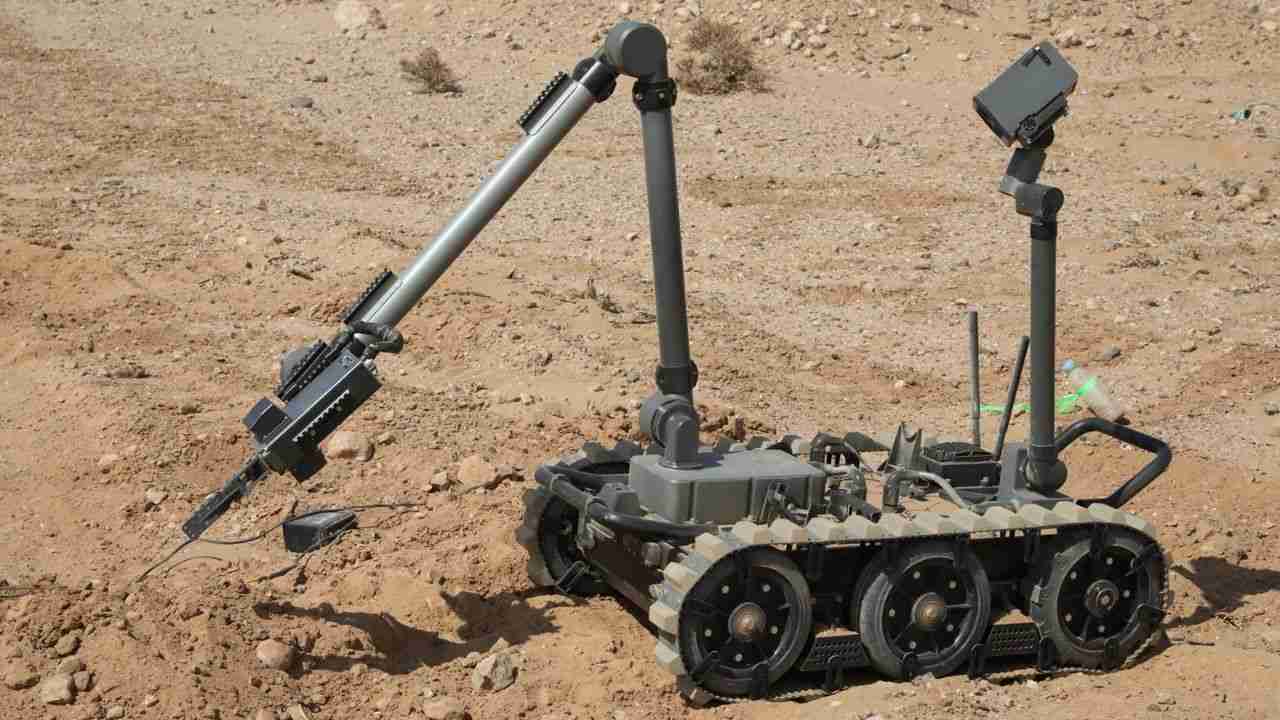
The United States Army is intensifying its efforts to incorporate artificial intelligence on the battlefield, focusing on the automatic detection of mines, improvised explosive devices (IEDs), and other dangerous obstacles.
The initiative was formalized through a request for information released in April 2026, seeking industry solutions capable of reducing the risks faced by combat engineers in critical missions.
The proposal includes the development of automatic target recognition systems capable of identifying everything from anti-tank and anti-personnel mines to unexploded ordnance and artificial barriers. Interested companies must submit technical studies by May, while field testing is scheduled for the end of fiscal year 2026 at a military center in Virginia, where the technologies will be evaluated in real-world scenarios.
Currently, identifying these threats relies primarily on human observation and specialized training, a process considered slow and highly dangerous. With the use of advanced sensors and algorithms, the Army aims to speed up detection and reduce errors, requiring new systems to match or exceed the performance of experienced operators while producing fewer false alarms.
The initiative reflects growing concern over the evolution of explosive threats, which are becoming increasingly diverse and widespread in modern conflicts. In this context, the adoption of autonomous solutions combining robotics and artificial intelligence emerges as a key element to make advance operations safer, faster, and more efficient, reducing the direct exposure of troops in hostile environments.
Source: Defence Blog | Photo: X @DylanMalyasov | This content was created with the help of AI and reviewed by the editorial team
The U.S. Army is looking for AI-powered systems that can automatically detect mines, IEDs, unexploded ordnance, and battlefield obstacles, aiming to reduce risk for combat engineers during breaching operations.
Read more: [https://t.co/1oe1rG1iMy](https://t.co/1oe1rG1iMy) pic.twitter.com/6Omp2BoqiR
— Dylan Malyasov | 🧐 (@DylanMalyasov) April 8, 2026
