
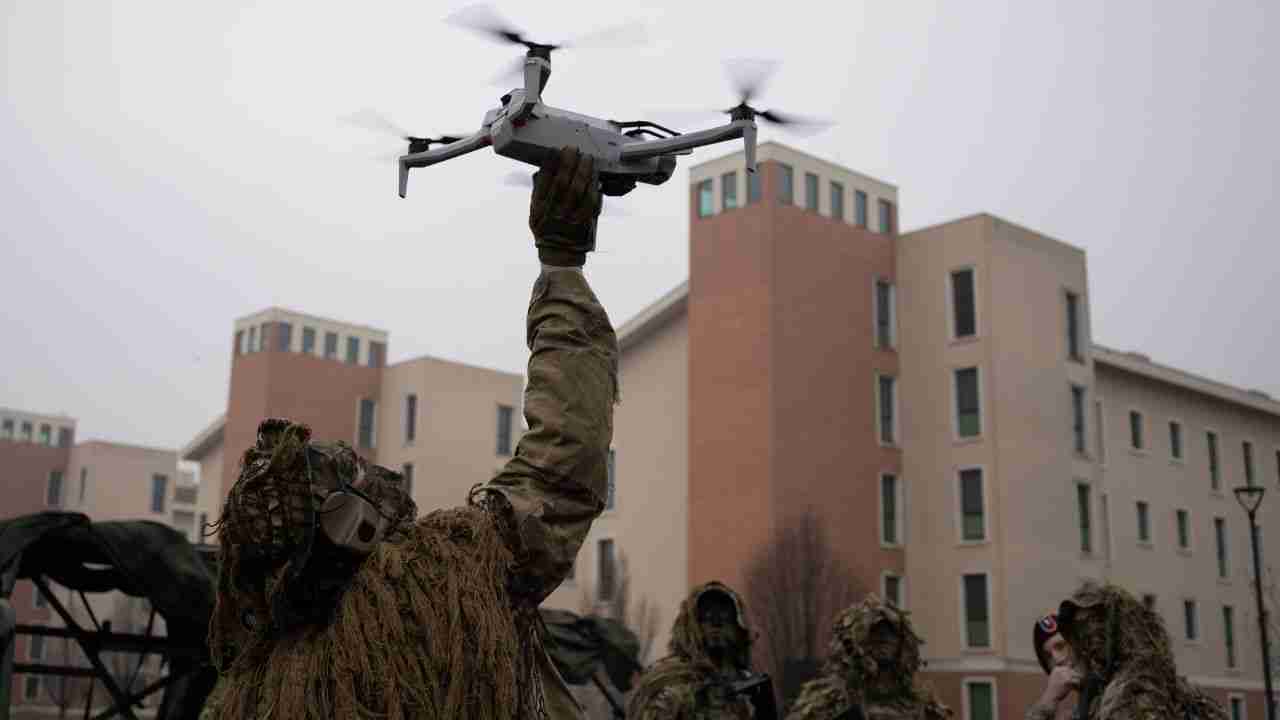
The United States Army is still behind global trends in adopting drones and anti-drone defense systems, admitted Lieutenant General Charles Costanza, commander of the V Corps in Europe.
According to him, units stationed on the continent face a continuous cycle of experimentation, seeking to operationalize relevant capabilities, especially in small formations, driven by strategic Army initiatives. Costanza emphasized that recent conflicts, such as the war between Azerbaijan and Armenia in 2020 and Russia’s invasion of Ukraine, have highlighted the importance of accelerating the development and use of these technologies.
The general stressed the need for layered systems that integrate detection, decision-making, and action, using artificial intelligence and connected networks to coordinate anti-drone defenses with broader air protection. Projects such as Flytrap, led by the Army in Europe, aim to train troops and test tactics, techniques, and procedures to counter kamikaze drone threats and other types of unmanned aerial vehicles. In addition, the 2nd Cavalry Regiment established Delta Company, a unit specialized in combining lethal and non-lethal capabilities for a rapid and integrated response to aerial attacks.
The advancement of drone capabilities by Russia, Ukraine, and other countries, including the production of Shahed-136 variants, has underscored the urgency for the US to update its own forces. NATO initiatives, such as the Eastern Flank Deterrence Line, and the creation of the JIATF 401 task force in the United States seek to accelerate the development and deployment of drones and countermeasures across the military force, especially in smaller units, ensuring greater readiness against modern threats.
Source: The War Zone | Photo: X @USArmy | This content was created with the help of AI and reviewed by the editorial team
