
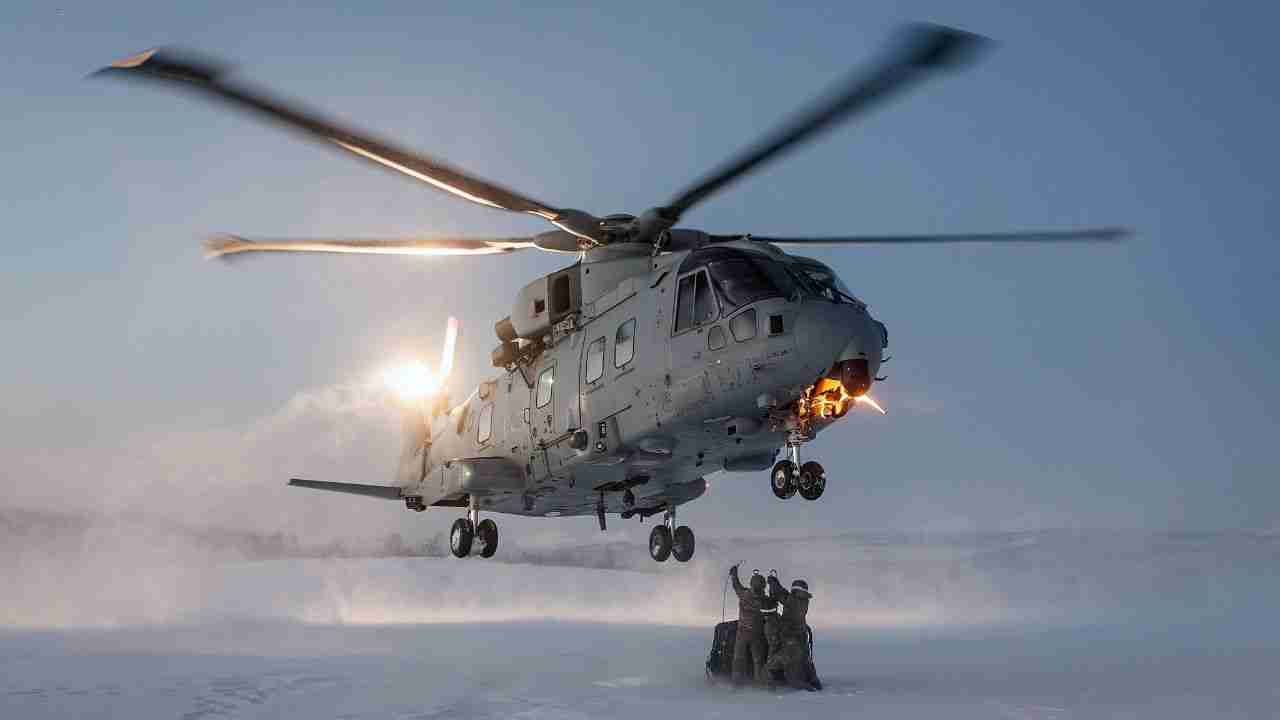
UK military helicopters have started a new training cycle in the Arctic by being deployed to northern Norway as part of Operation Clockwork, an annual program focused on preparing crews to operate in extreme cold environments.
The aircraft operate from Bardufoss Air Base, inside the Arctic Circle, where British troops train under severe conditions ahead of major NATO activities scheduled for this year.
The training involves Merlin, Wildcat, and Chinook helicopters, as well as ground maintenance and support teams, all focused on maintaining operational capability in deep snow, ice, and constant subzero temperatures. One highlight was the modification of the Chinooks with special skis attached to their wheels, allowing for safe landings on soft snow-covered terrain during external load transport missions.
The exercise also benefits from the support of Viking BVS10 armored vehicles, used by the Royal Marines to transport troops and equipment in hard-to-reach areas. In addition to air missions, the teams participate in Arctic survival training, including navigation in isolated areas, building improvised shelters, and techniques to sustain life in remote environments.
Air operations extend across fjords and mountainous regions of Norway, posing constant challenges to the crews and testing the performance limits of the aircraft and maintenance protocols in extreme cold.
Operation Clockwork is part of the UK’s strategy in the Far North and will serve as direct preparation for the Cold Response 2026 Exercise, considered the largest military exercise of the year in Norway, aimed at strengthening NATO’s presence and readiness in the region.
Source: UK Defence Journal | Photo: X @RoyalMarines | This content was created with the help of AI and reviewed by the editorial team
Running like clockwork… ⏰#RoyalMarines are currently working in the Arctic Circle, with Commando Helicopter Force carrying out intensive flying operations on Operation Clockwork ahead of a major #NATO exercise aimed at the defence of Norway.
➡️https://t.co/Bo5JAv1cuu pic.twitter.com/smHaZLYzC3
— Royal Marines (@RoyalMarines) January 15, 2026
