
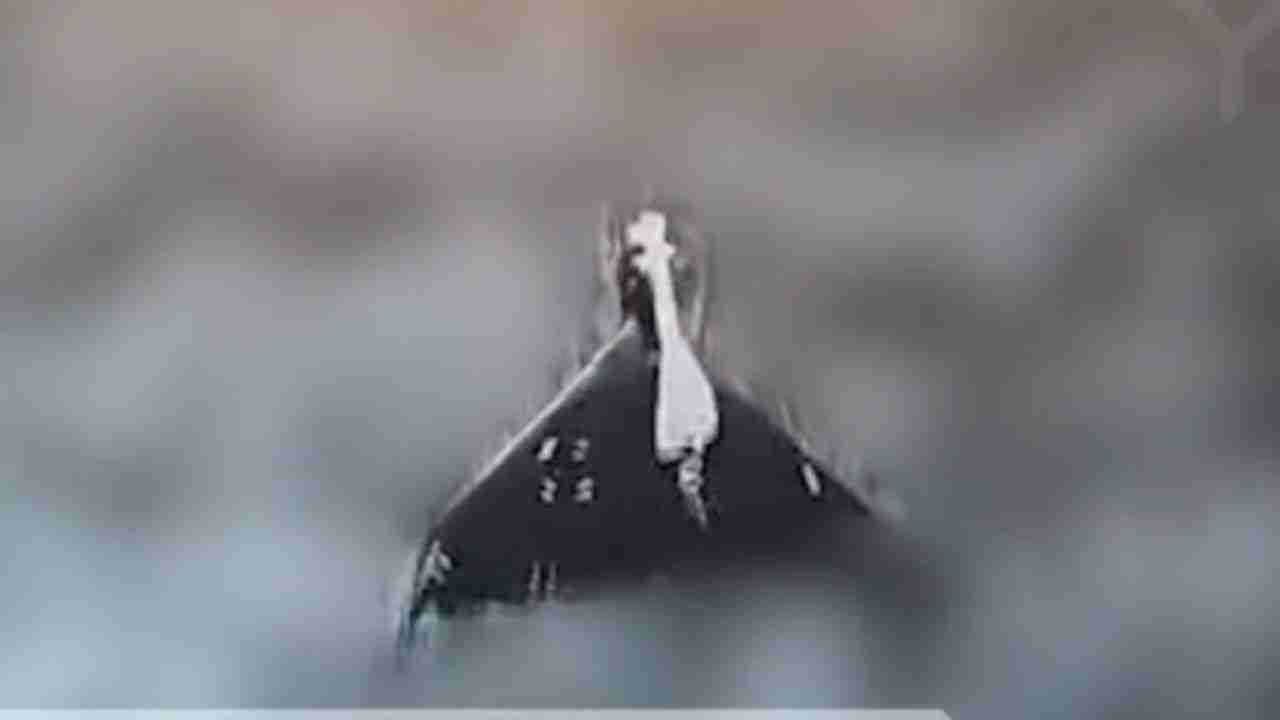
The Ukrainian interceptor drone STING downed a Russian Shahed equipped with a jet engine and armed with an air-to-air R-60 missile, in another incident highlighting the growing adaptation of kamikaze drones in the conflict.
Footage of the confrontation was released by the company Wild Hornets, while the operation was conducted by operators from the 1020th Anti-Aircraft Missile and Artillery Regiment of the Ukrainian Ground Forces.
According to the information released, the impact hit directly the rear section of the R-60 missile, an area that houses critical components like the turbo-generator and the sustainment engine. The collision might have triggered the solid fuel detonation or, at the very least, completely disabled the projectile, preventing its use against airborne targets.
This was the third confirmed instance of Russia using kamikaze drones armed with R-60 missiles. Previous incidents were recorded in December and January, although in one case, the recovered missile showed no visible damage, suggesting the impact may have only hit the drone’s fuselage.
The modified Shaheds use an adapted APU-60-1MD launcher, dual cameras for navigation and combat, communication via a Chinese mesh modem, and navigation systems resistant to interference. After launch, the R-60 missile autonomously guides itself using infrared, with an estimated range of 7 to 8 kilometers, demonstrating Russia’s progress in attempting to turn kamikaze drones into hybrid air defense platforms.
Source: Militarnyi | Photo: X @wilendhornets | This content was created with the help of AI and reviewed by the editorial team
Interception of a jet-powered Shahed carrying an R-60 air-to-air missile 🔥
The enemy is increasingly using UAVs as universal platforms for multiple roles.
Defenders of the 1020th Anti-Aircraft Missile Regiment put a stop to this, engaging the target with an interceptor STING. pic.twitter.com/PBavtVnGNR— Wild Hornets (@wilendhornets) January 15, 2026
