
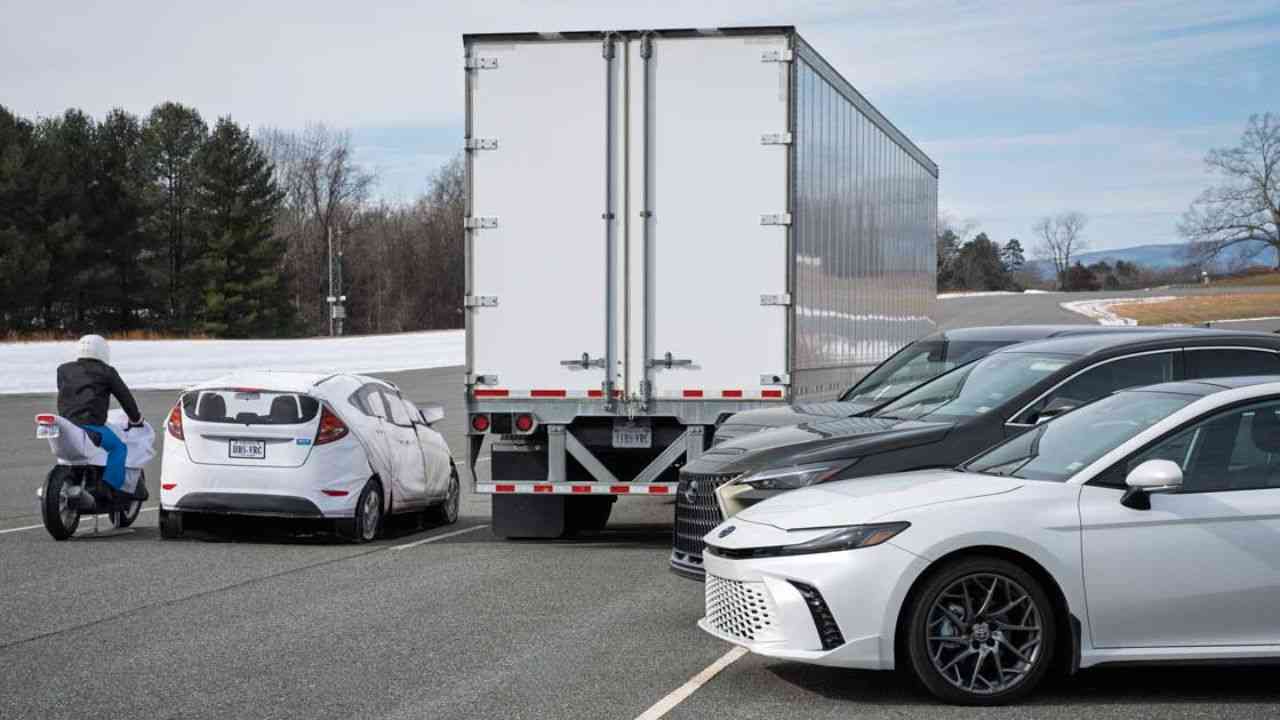
 IIHS reports improvements in automatic braking and difficulties with motorcycles (X @TheBrakeReport)
Recently, the Insurance Institute for Highway Safety (IIHS) enhanced its automatic emergency braking (AEB) tests by raising the test speeds to better simulate real-world crashes.
Previously, the tests were conducted at lower speeds, but now they reflect conditions closer to those found in real collisions. Of the 29 vehicles tested, 21 received “Good” or “Acceptable” ratings, a significant improvement compared to last year when only two out of ten vehicles achieved these scores.
The tests were adjusted to include speeds between 50 and 70 km/h, as many non-fatal rear-end accidents occur on roads with speed limits of 55 to 72 km/h. Additionally, the IIHS incorporated new collision targets such as motorcycles and semi-trailers into the passenger car tests.
While many “Good” rated vehicles were able to stop before impact, detecting motorcycles remains a challenge for AEB systems.
Models with “Acceptable” ratings struggled to avoid collisions with motorcycles at higher speeds, while vehicles with “Poor” ratings failed to detect both passenger cars and motorcycles.
Despite this, most vehicles tested were able to issue timely collision warnings during the tests. The report highlights the importance of continuing to improve the effectiveness of AEB systems to ensure road safety.
Ratings of tested models:
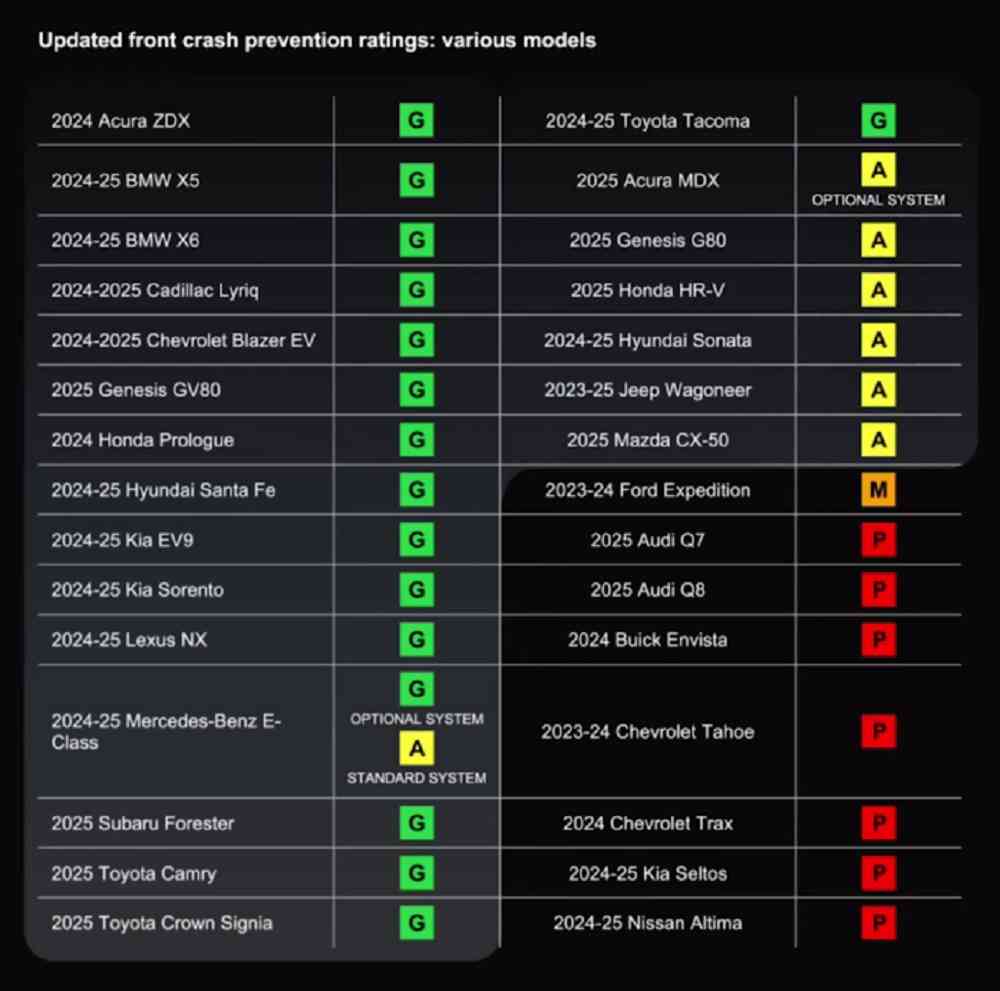 (YouTube @iihs-hldi)
Source: Motor1.com | Photo: X @TheBrakeReport / YouTube @iihs-hldi | This content was created with the help of AI and reviewed by the editorial team
#ICYMI | IIHS releases front crash prevention ratings for 30 more vehicles.
Read the latest: https://t.co/qACauQFUay
Automakers are delivering major improvements in their automatic emergency braking systems after the introduction of a tougher front crash prevention evaluation. pic.twitter.com/Gb9M9ckIPR
— IIHS (@IIHS_autosafety) February 14, 2025
