
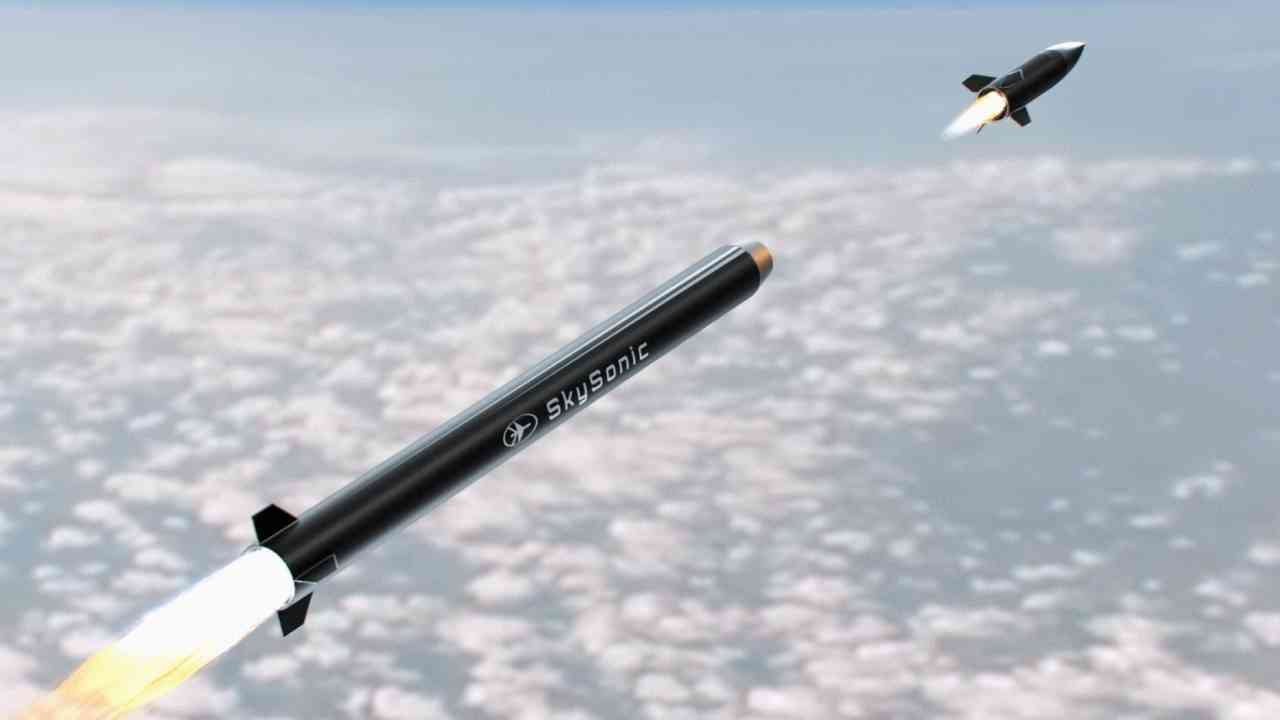
Hanwha Aerospace, from South Korea, has signed a contract with the country’s Defense Research Agency to develop a new highly maneuverable interceptor missile, as part of the advanced air defense system L-SAM-II.
The initial investment is US$144 million, and the project includes the integration of the missile’s control system, technology validation, and the development of launchers, with completion expected by 2028.
The missile will feature cutting-edge technologies, such as a guidance system with 10 adjustable thrusters (DACS), enabling hit-to-kill interceptions — that is, direct impact with the target. The rocket motor is expected to expand the air defense zone by 3 to 4 times compared to the previous model, reaching altitudes comparable to the U.S. THAAD system, between 40 and 100 kilometers high and with a range of over 150 km.
The L-SAM II will be capable of intercepting missiles beyond the stratosphere, strengthening multi-layered missile defense — including against threats such as hypersonic weapons and North Korea’s intercontinental ballistic missiles.
The project, officially launched in January by DAPA, will involve around 19 South Korean companies and a total investment of US$389 million by 2028. A similar project, called the Glide Phase Interceptor, is being developed by Japan in cooperation with the U.S.
Source: Militarnyi | Photo: X @Barong369 | This content was created with the help of AI and reviewed by the editorial team
🇰🇷🛡 Hanwha Aerospace develops interceptor missile for extra-atmospheric air defence
South Korean company Hanwha Aerospace is launching an ambitious project to develop a highly manoeuvrable interceptor missile for the advanced L-SAM II air defence system – with the aim of… pic.twitter.com/Qiu6vtogOB
— Barong (@Barong369) June 12, 2025
