

The Russian MC-21-310 and Sukhoi SJ-100 aircraft are undergoing a new phase of certification testing under extreme conditions in northern Russia.
Flights are taking place at Syktyvkar Airport, the capital of the Komi Republic, where temperatures have dropped to around -40°C.
+ Russia uses Garpiya-A1 with Kometa-M16 to bypass electronic warfare in Odesa
Focus on certification for severe climates
The Arctic environment tests are part of an additional operational validation program aimed at demonstrating performance, system reliability, and structural resilience under extreme cold — conditions common across several regions of the Russian Federation.
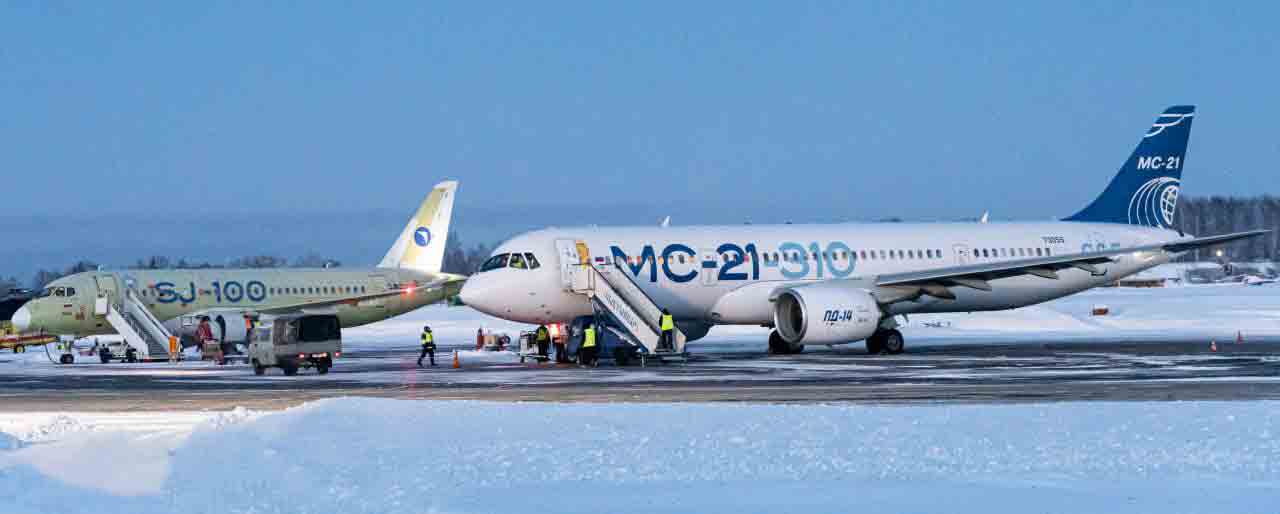
On Monday, February 16, the MC-21-310, tail number 73055, carried out a training flight on the Zhukovsky–Vorkuta route. After the mission, the aircraft landed for the first time in Syktyvkar, marking a new stage in the low-temperature certification campaign.
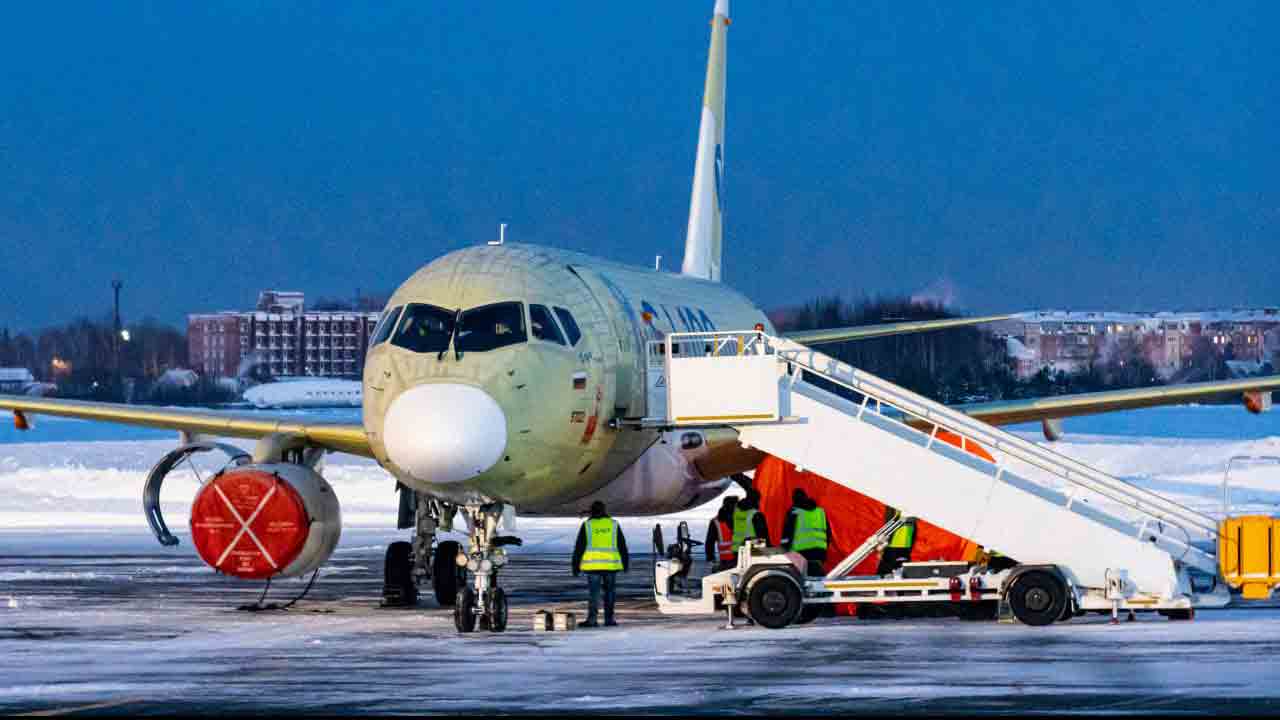
The SJ-100 is also participating in evaluations at the northern airfield, reinforcing the testing schedule required to expand the operational envelope of Russia’s new-generation jets.
Strategy to consolidate the aviation industry
The MC-21-310 represents the version equipped with domestically produced engines and systems, while the SJ-100 is part of the import substitution effort in the regional segment. Both programs are considered strategic for the Russian aviation industry, particularly amid international restrictions and the need for technological self-sufficiency.
Images released by the official channels of KomAvia and United Aircraft Corporation show the aircraft operating on ice- and snow-covered runways under polar lighting and extreme temperatures — a scenario highlighting the technical challenges faced during this phase of testing.
Source and images: Telegram @oaokomiavia, @uac_ru. This content was created with the assistance of AI and reviewed by the editorial team.
