
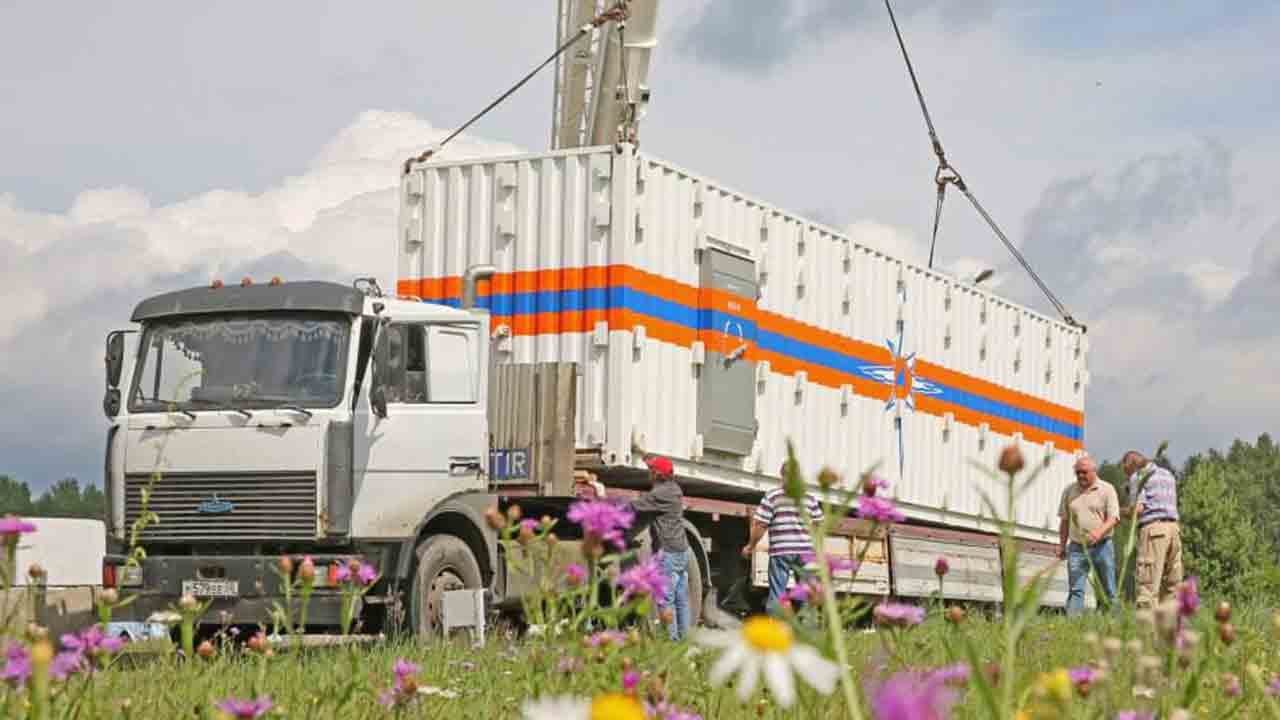
Two scientists linked to the development of the Kub-M mobile nuclear shelter have been detained in Russia on suspicion of accepting large-scale bribes.
According to information published on Saturday, January 31, by RBC, the head of the All-Russian Research Center for the Improvement of Protective Measures (VNII GOChS), Nikolai Posokhov, and the institute’s deputy head, Igor Sosunov, have become defendants in a criminal case.
+ Germany transfers nine IRIS-T air defense systems to Ukraine
According to security service sources cited by RBC, investigators intend to ask the Zamoskvoretsky District Court in Moscow to place Posokhov under house arrest, while Sosunov is expected to remain in pre-trial detention. If convicted, both could face prison sentences of up to 15 years. So far, authorities have not disclosed additional details about the charges.
The case is being handled by Russia’s Investigative Committee, which has already submitted a formal petition to the court to determine the preventive measures.
What is the Kub-M bunker
The modular Kub-M shelter was developed by VNII GOChS at the request of Russia’s Ministry of Emergency Situations. Work began in 2015, as Posokhov previously stated in an interview with RBC.
The standard Kub-M model consists of two main modules: an accommodation space with capacity for up to 54 people and a technical unit. Serial production began in the fall of 2024 in the city of Dzerzhinsk, in the Nizhny Novgorod region.
According to its developers, the system provides three levels of protection:
- shelter against explosions and fragmentation from conventional weapons
- anti-radiation protection
- protection against nuclear, chemical, and biological weapons
In its maximum configuration, the Kub-M is said to be capable of withstanding even a direct hit from modern missiles such as the HIMARS, while also mitigating the effects of a nuclear attack.
The detention of those primarily responsible for the project casts uncertainty over the future of the program, which had been presented by Russian authorities as a strategic civil protection solution for high-intensity conflict scenarios.
Source and images: Russian media | Deutsche Welle. This content was created with the help of AI and reviewed by the editorial team.
