
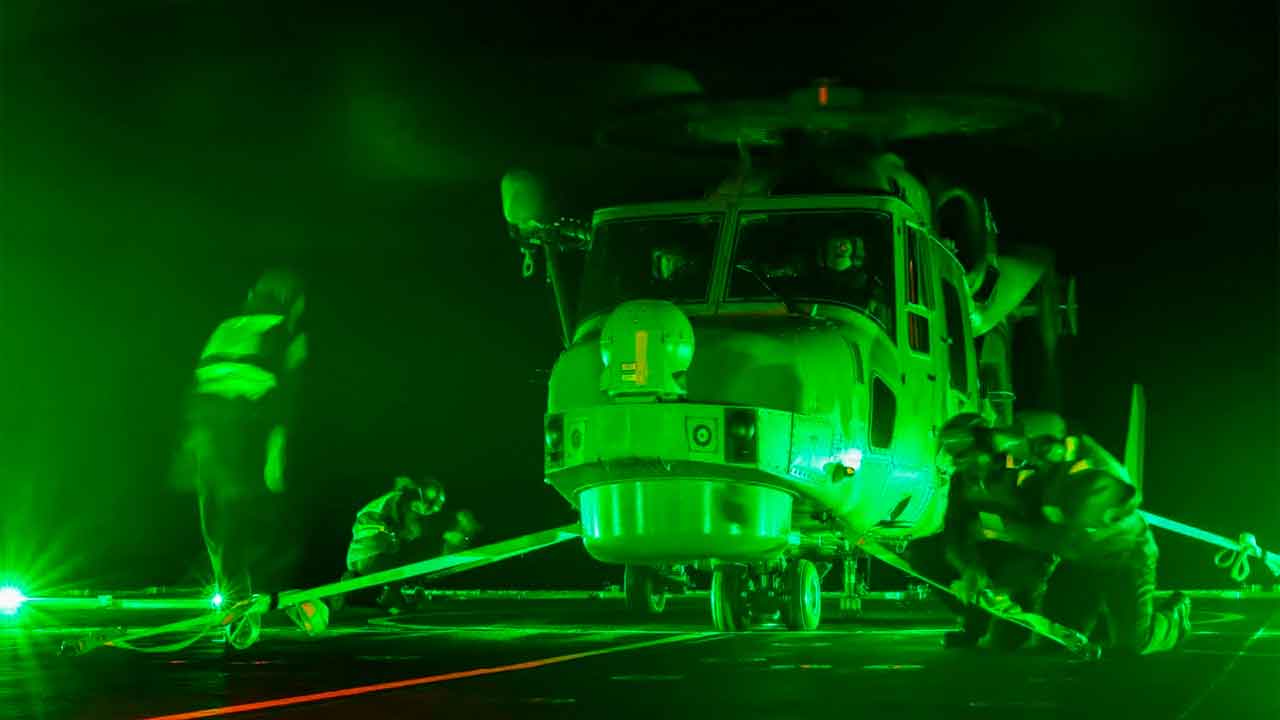
The offshore patrol vessel of the Royal Navy, HMS Trent, has completed testing of a new Helicopter Visual Landing Aid System (HVLAS), designed to enhance safety during helicopter operations in adverse conditions such as bad weather or nighttime flights.
+ Last FREMM Frigate Delivered to Italy; New Generation Already Under Construction
After five years operating in the Mediterranean, West Africa, and the Caribbean, and following a recent refit in Malta, HMS Trent returned to the UK for a period of Fleet Operational Standards Training. Over the course of three days at sea off the coast of Plymouth, the ship conducted take-offs and landings with a Wildcat helicopter, testing the newly installed HVLAS on its flight deck.
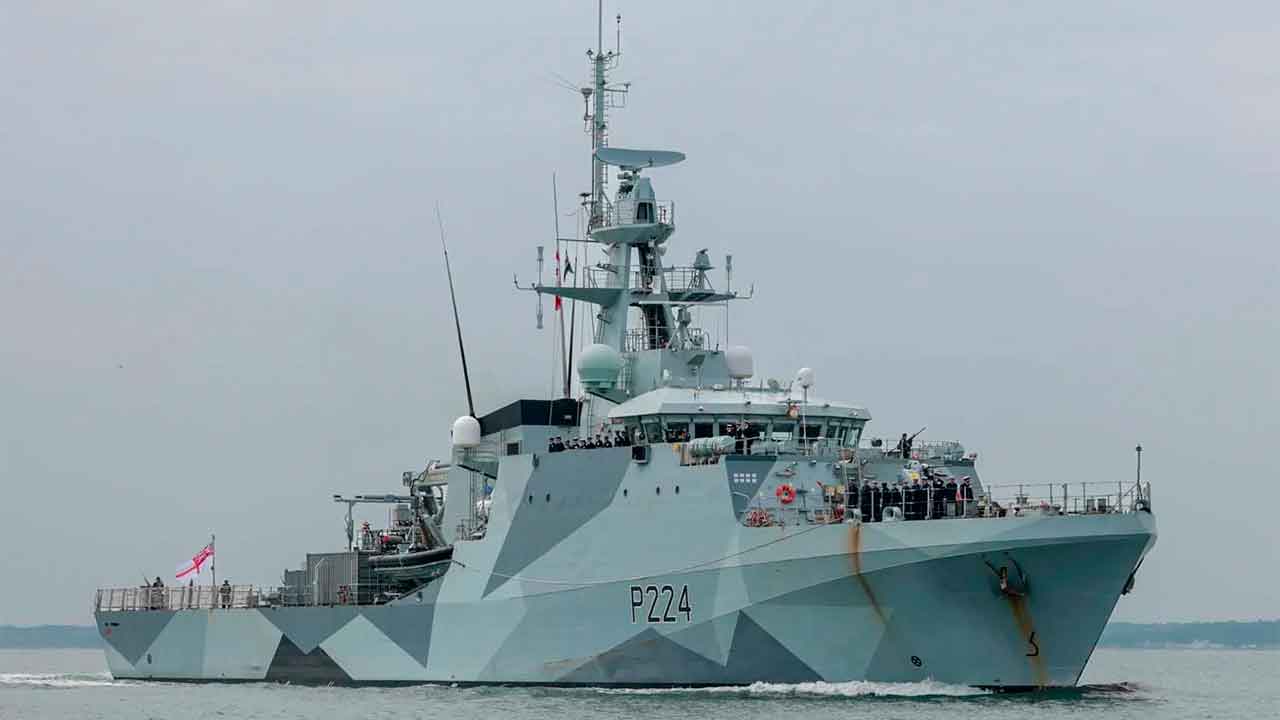
The system introduces innovations such as a stabilized horizon bar—which remains level despite ship movements—and a glide path indicator that helps pilots maintain the correct approach angle. Additionally, deck edge lighting and laser guidance lines provide essential visual support for pilots using night vision goggles or flying in low visibility.
Although it lacks a hangar—a limitation of the Batch II OPV design—HMS Trent is capable of supporting helicopter operations with aircraft like the RN Wildcat and U.S. Coast Guard helicopters, especially during missions in the Caribbean such as counter-narcotics patrols and hurricane relief operations.
This marks the first time in three years that a helicopter has operated from HMS Trent. The new HVLAS represents a significant upgrade over previous models and is the first installation of its kind on Royal Navy OPVs. Compatible with night vision and featuring adjustable light intensity, the system is designed to ensure safety and precision even in challenging environments.
The trials were part of a broader Operational Sea Training package, overseen by the FOST (Fleet Operational Sea Training) team, and included evaluations of the flight deck’s lighting systems, refueling capabilities, and overall performance.
HMS Trent is currently docked in Portsmouth, completing final preparations before being redeployed to the Caribbean, where it will replace HMS Medway and continue to support regional security and humanitarian relief efforts in the British Overseas Territories.
Source and images: Royal Navy. This content was created with the help of AI and reviewed by the editorial team.
