
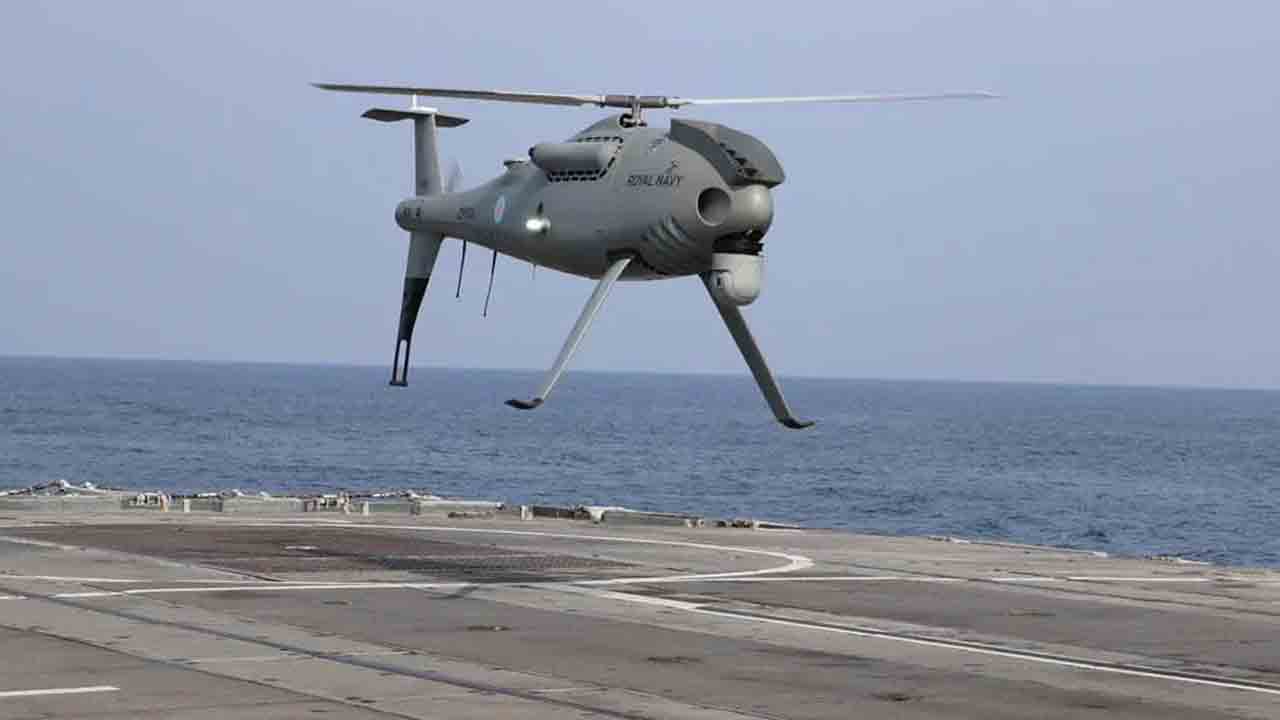
The quick reflexes of a Royal Navy drone pilot prevented an aircraft valued at £2.5 million from plunging into the ocean during a mission in the Gulf of Oman.
Lieutenant Commander Adrian “AJ” Hill took manual control of the Peregrine drone just moments before impact with the sea, safely guiding the aircraft back to the flight deck of the frigate HMS Lancaster.
The action earned Hill a historic distinction: he became the first drone operator to receive a Green Endorsement, the highest safety award granted by both the Fleet Air Arm and the Royal Air Force.

The incident occurred at the end of a patrol lasting approximately two and a half hours. The Peregrine, a surveillance drone measuring about three metres in length, was operating in autonomous mode at an altitude of around 18 metres just astern of the frigate when it suffered a computer failure and began descending rapidly toward the sea.
“It went very low, about one to two feet from the water. A quarter of a second later it would have touched the sea — and that would have been the end,” said Hill, a flight commander with 700X Naval Air Squadron. According to him, it was necessary to assume manual control within seconds, executing the correct sequence of commands and applying maximum power to regain altitude.
After stabilising the drone, Hill managed to land it manually and safely on the ship’s flight deck. “Once I climbed to a safe height, I took a deep breath and carried out the manual landing. With the adrenaline high, it ended up being one of my best landings,” he said.

The manoeuvre was witnessed only by two squadron engineers who were monitoring the landing procedure and were also surprised by the aircraft’s sudden loss of altitude.
Peregrine is the designation used by the Royal Navy for the militarised version of the S-100 Camcopter, developed by the Austrian company Schiebel and fitted with additional sensors and systems for naval missions. At the time of the incident, the drone was still undergoing operational testing aboard HMS Lancaster.
Hill officially received the award from the Commander of the Fleet Air Arm, Rear Admiral Anthony Rimington. The citation notes that although the episode did not pose a risk to life, it involved significant danger to high-value equipment and to the Navy’s operational capability.
According to the citation, the officer demonstrated “exceptional professional skill, keen awareness and extremely rapid reactions” in the face of a critical situation.
+ Kalashnikov unveils MP-512S-11 air rifle styled after the Dragunov SVD
Source and images: Royal Navy. This content was created with the help of AI and reviewed by the editorial team.
