
Designed to withstand the Moon’s hostile environment, Michelin’s new wheels promise to revolutionize space mobility — and, in the future, mobility on Earth
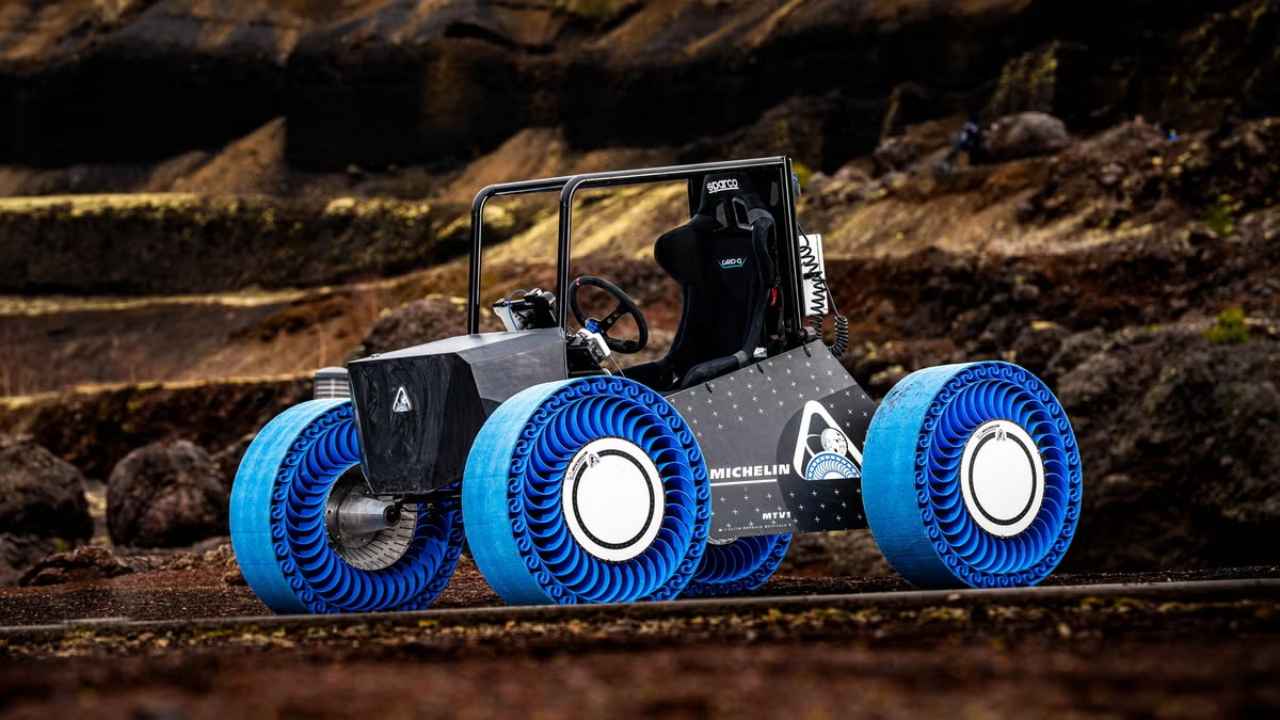
Think of a lunar rover. Maybe the 1971 model comes to mind, or the vehicle Matt Damon used in *The Martian*. But the next generation of American rovers will look very different — starting with the wheels. According to Cyrille Roget, director of scientific innovation at Michelin, they can’t even be called tires anymore: they contain no air, are fully solid, and made from high-performance thermoplastic.
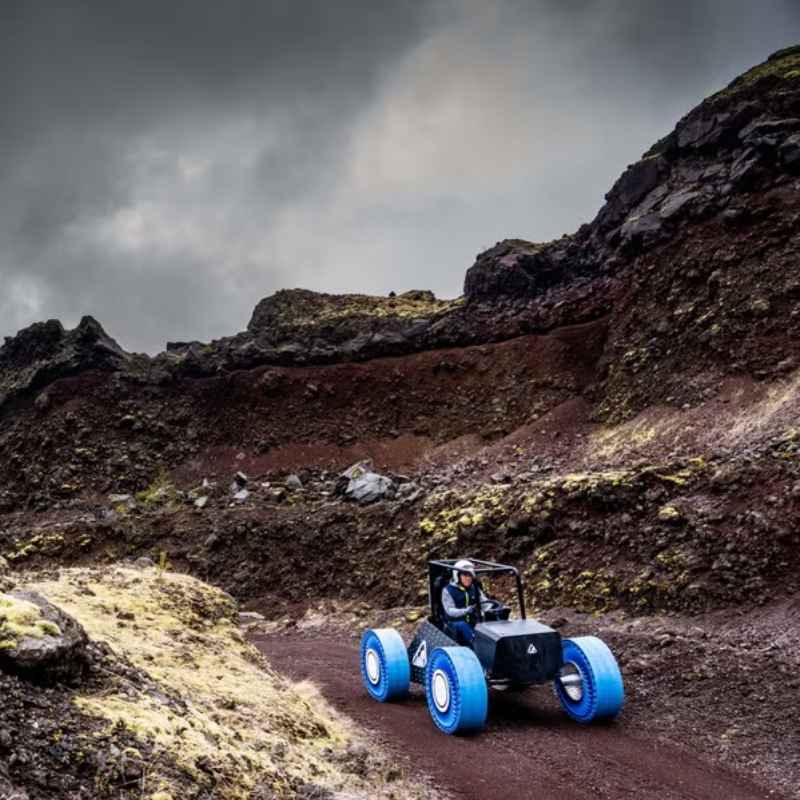
These wheels must meet extreme requirements. The new vehicle will explore the Moon for about ten years, tackling both crewed and autonomous missions over hostile terrain. To prepare, each wheel underwent severe testing, withstanding temperatures from -240°C to over 100°C, resisting solar and galactic radiation, and maintaining traction on the highly unstable lunar surface.
Why invest so much in technology that seems far from everyday life? Michelin believes that the lessons learned from space applications will lead to innovations in tires and wheels here on Earth.
In 2023, NASA selected three finalists to develop the new lunar rover: Lunar Outpost, Venturi Astrolab, and Intuitive Machines. The latter partnered with Michelin, AVL, Boeing, and Northrop Grumman, receiving $30 million to conduct a feasibility study for the mission.
In the search for a robust solution, Michelin’s team started with what they know best: rubber. But they quickly realized that while reliable on Earth, rubber would become brittle in the Moon’s extremely low temperatures. The alternative was to design wheels made of S-shaped flexible thermoplastic “spokes” connecting the hub to the outer tread.
Since rovers can’t carry spare wheels, the design must ensure full durability. If one spoke breaks, the wheel still functions — preventing critical failures during missions.
Another challenge is the lunar terrain and gravity, which is only one-sixth that of Earth. This requires wheels with a large contact area and the ability to handle slopes of up to 20 degrees on sandy ground.
For Roget, the true value lies in the learning. He points out that tires are, by nature, improbable combinations of materials that, when well-balanced, can perform over millions of cycles. The lunar environment will serve as an extreme laboratory to test and refine these ideas.
“We have a team driven by an extraordinary purpose,” says Roget. “Beyond finding solutions for the Moon, we are creating technologies that can improve life here on Earth.”
Source and images: Car and Driver / Michelin. This content was created with the help of AI and reviewed by the editorial team.
