

Millions of residents in England are facing temporary restrictions on water use after a prolonged period of hot weather and low rainfall. Among the affected activities is washing vehicles with a hose, requiring drivers who want to keep their cars clean to change their routines without wasting water.
Temporary Use Bans have been introduced by several water supply companies across the United Kingdom. Depending on local regulations, violations can result in fines of up to £1,000.
In response to this situation, experts from British car-care product manufacturer Autoglym have compiled guidelines for reducing water consumption during cleaning. Although they were developed for regions subject to restrictions, the recommendations can also be adopted by drivers interested in making car washing more economical.
Washing the car in the shade prevents water spots
The first precaution is choosing the right time to wash the vehicle. Ideally, the job should be done early in the morning, while the bodywork is still cool, or the vehicle should be parked in a shaded area.
Surfaces heated by the sun accelerate the evaporation of water and cleaning products. In addition to increasing consumption, this can leave marks on the paintwork and make dirt more difficult to remove.
The vehicle should be washed in small sections, without allowing the soap to dry on the bodywork.
Pre-washing helps remove heavier dirt
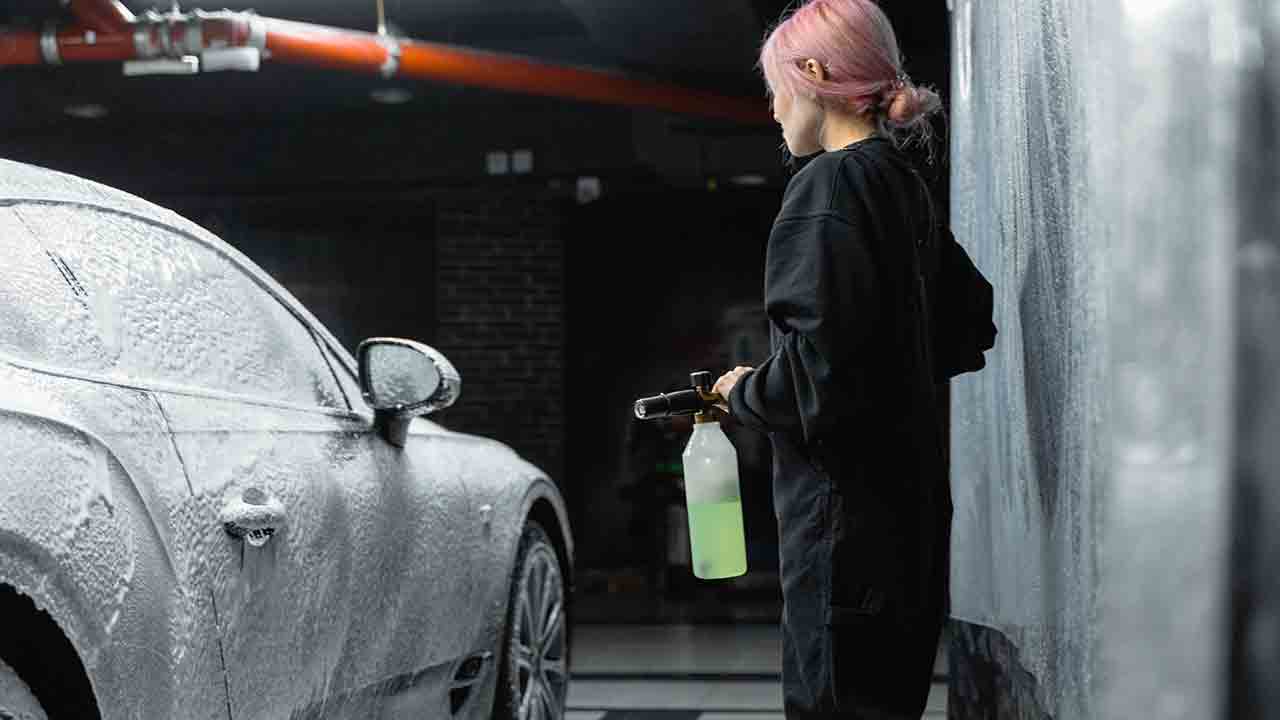
Even without a hose, pre-washing remains important to reduce the risk of scratching the paintwork. Special spray products can be used to soften mud, dust, insect residue, and other accumulated particles, particularly on the bumpers and lower parts of the vehicle.
Rinsing can be done with a watering can fitted with a sprinkler head or with a manual pressure sprayer. These tools help control the flow and direct water only to the areas where it is needed.
Instead of scrubbing more stubborn residue, the recommendation is to reapply the product and wait a few moments before removing it.
Wheels should be cleaned before the bodywork
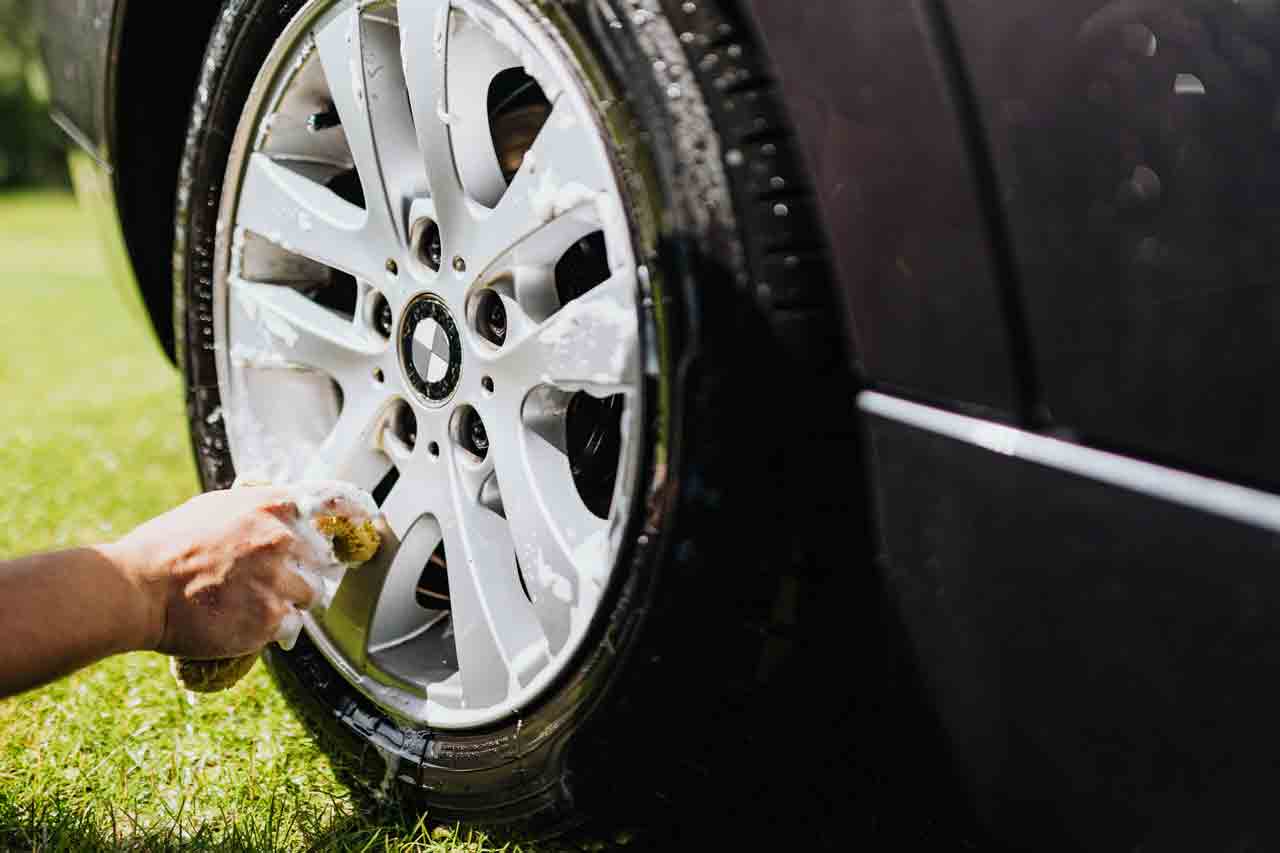
Wheels usually accumulate brake dust, asphalt residue, and road dirt. For this reason, they should be washed before the bodywork.
Otherwise, rinsing the wheels may spray contaminants onto panels that have already been cleaned.
Before starting, it is important to check that the wheels and brake components are cool. Applying products to very hot surfaces can cause staining and reduce cleaning efficiency.
Special wheel brushes and manual sprayers help reach inner areas and difficult corners while using a limited amount of water.
The two-bucket method reduces the risk of paint scratches
One of the best-known techniques among professional automotive detailers is the two-bucket method.
One container should hold water mixed with car shampoo. The second should be filled only with clean water and used to rinse the wash mitt after cleaning each panel.
This process prevents particles removed from the bodywork from returning to the bucket containing soap and being spread across the paint again.
Washing should begin at the roof and move toward the lower sections, which are generally dirtier. It is also advisable to use a microfiber wash mitt and make gentle movements without pressing or scrubbing the surface excessively.
Household detergents are not recommended, as they can remove protective waxes and affect rubber, plastic, and exterior finishes.
Persistent stains require specific products
Asphalt residue, tree sap, insects, and bird droppings cannot always be removed with water and shampoo alone.
In these cases, products formulated for each type of contaminant provide safer cleaning than attempting to remove the dirt by force.
Bird droppings should be removed as quickly as possible, especially on hot days. When left on the bodywork for too long, they can mark the clear coat and require polishing to restore the finish.
Tar residue, meanwhile, appears more frequently along the sides of the vehicle and in areas close to the wheel arches.
Washing and rinsing in sections saves water
Without the continuous flow of a hose, washing the entire vehicle before rinsing may cause the soap to dry on the paintwork.
The alternative is to divide the car into sections. Each section should be washed and rinsed before moving on to the next.
During rinsing, working from the bottom upward can make it easier to identify areas where foam remains. At the end, a quick rinse from top to bottom helps remove the final residue.
Watering cans and pressure sprayers are especially useful for cleaning grilles, badges, gaps, and the inside of the wheels.
Drying is necessary even on hot days
Allowing the vehicle to dry naturally in the sun may seem like a way to save time, but it increases the risk of spots caused by minerals present in the water.
After rinsing, the bodywork should be dried with a clean microfiber towel without rubbing forcefully. The cloth should be turned or folded regularly to prevent small particles from being dragged across the surface.
If some water marks have already appeared, a quick-detailing product may help remove them. Older or deeper stains may require polishing.
Light cleaning can postpone a full wash
Between washes, small amounts of dust can be removed with a detailing spray and clean microfiber cloths.
However, this technique should be limited to light dirt. Wiping a cloth directly over mud, sand, or heavy dust can cause micro-scratches.
When using the cloth, it is best to fold it into sections and change sides frequently. If dirt accumulates, several cloths should be used to prevent contaminants from being spread.
Windows and lights should be prioritized
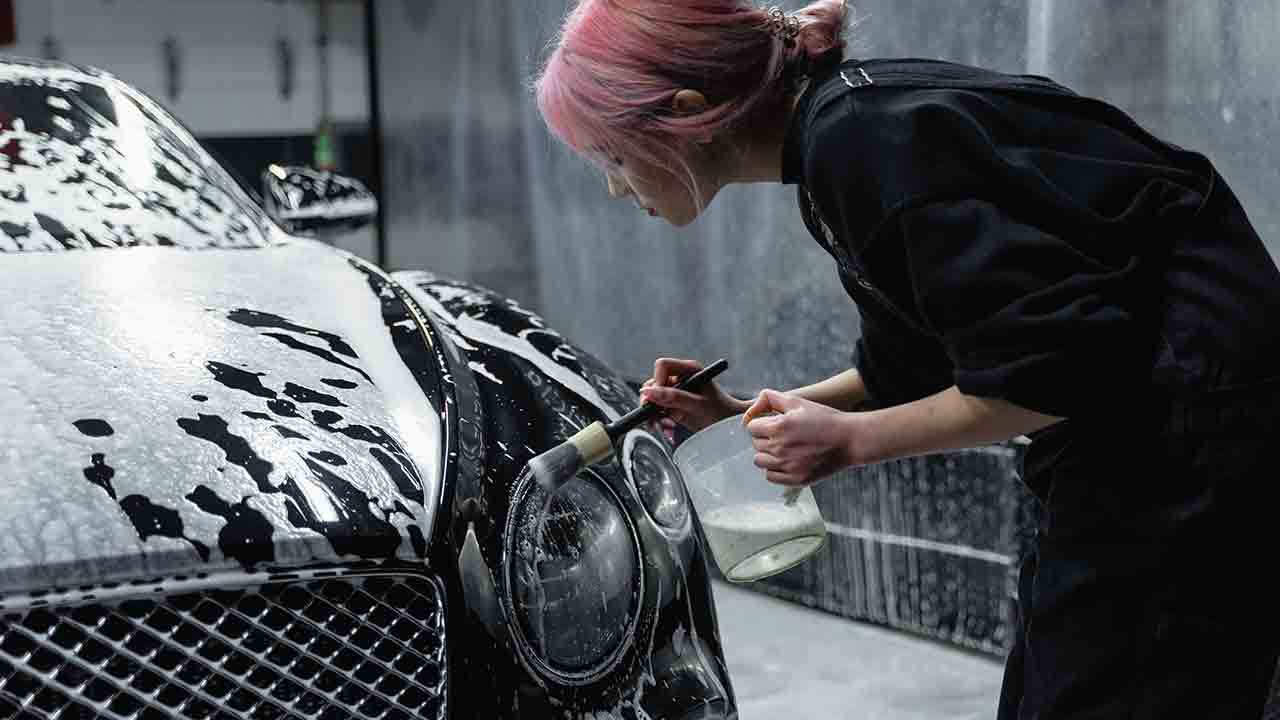
When it is not possible to wash the entire vehicle, windows, mirrors, headlights, and taillights should receive special attention.
Removing dust, insect marks, and residue from the windshield improves driver visibility, especially at night or in the rain.
Spray-on automotive cleaners make it possible to perform this task without a hose. It is also important to check the wiper blades, as particles trapped in the rubber can scratch the glass.
Paint protection makes future washes easier
Waxes, sealants, and protective coatings create a layer that reduces the adhesion of dust, water, and contaminants.
With the surface protected, dirt tends to be removed more easily, reducing the need for lengthy washes and lowering water consumption during future cleaning.
Protection does not eliminate the need for maintenance, but it can extend the interval between full washes.
Basic precautions for washing a car with little water
The main recommendations are:
1. Wash the vehicle in the shade and while the bodywork is cool;
2. Carry out a pre-wash using a sprayer or watering can;
3. Clean the wheels before the bodywork;
4. Use the two-bucket method;
5. Avoid household detergents;
6. Work in small sections;
7. Do not scrub stubborn dirt;
8. Dry the paintwork with a microfiber towel;
9. Prioritize windows, mirrors, and lights when it is not possible to wash the entire car;
10. Apply protection to make future cleaning easier.
In addition to complying with the restrictions introduced in the United Kingdom, these measures show that it is possible to care for a vehicle while using less water. The correct technique also reduces the risk of damage to the paintwork and prevents waste caused by the continuous use of a hose.
+ Video shows Russian aircraft adapted to launch drones against aerial targets
Source: technical guidelines published by Autoglym. Photos: Pexels. This content was created with the help of AI and reviewed by the editorial team.
