
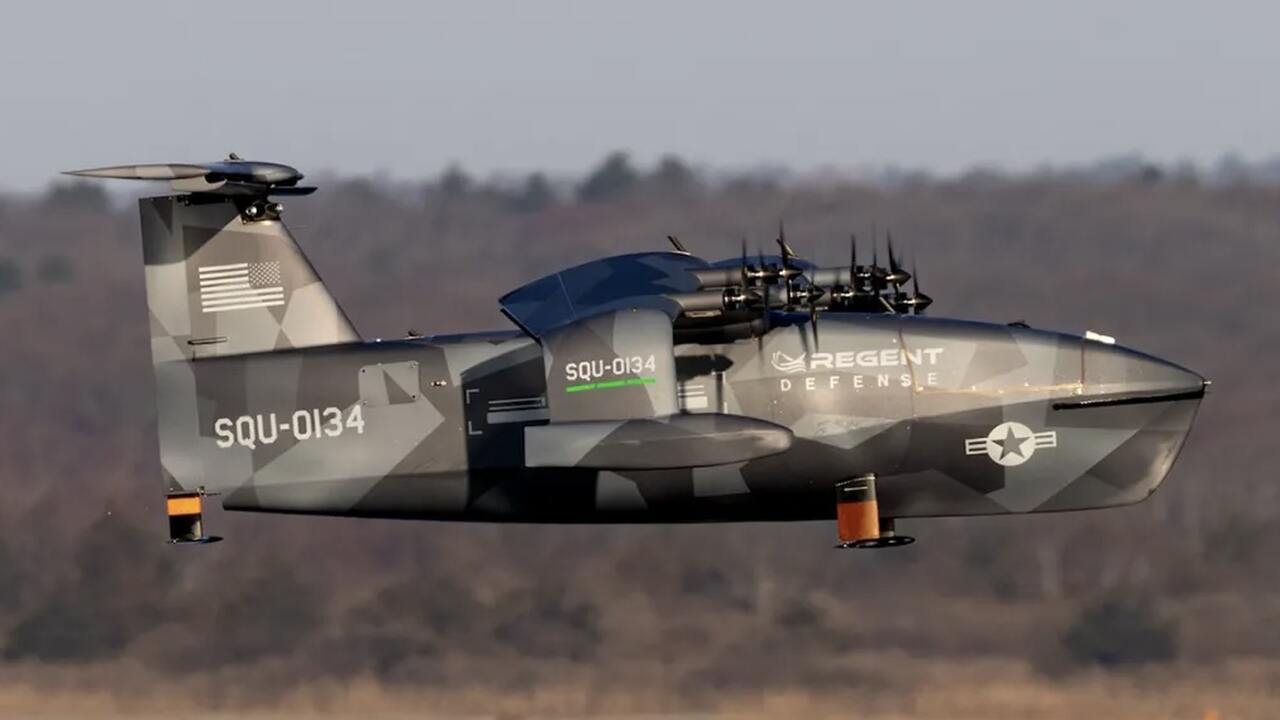
Regent has conducted the first test flight of the Squire drone, which is expected to support future U.S. Navy intelligence, surveillance, and reconnaissance (ISR) missions in the Pacific.
According to the website The War Zone, a key feature of the Squire is its wing-in-ground (WIG) effect, which uses a hydrofoil to move across the water before flying at an altitude of roughly one wingspan above the surface.
These ground-effect flights are designed to take advantage of the dense cushion of air above the surface, providing an optimal balance of increased lift and reduced drag.
In addition to its planned ISR roles, the Squire is also expected to take on logistical support missions and assist sailors in combat search and rescue (CSAR) operations in contested areas.
For this reason, its ability to fly close to the water could prove extremely valuable in future conflicts in the Pacific region.
The Squire, which the company describes as “the first Unmanned Surface and Aerial Vehicle (USA-V),” recently completed a test flight in Narragansett Bay, Rhode Island (USA).
A video of the event showed a scale model of the Squire going through its three flight stages, from floating to hydrofoiling across the water and then taking off into the air. According to the company, the Squire reached speeds of up to 40 knots.
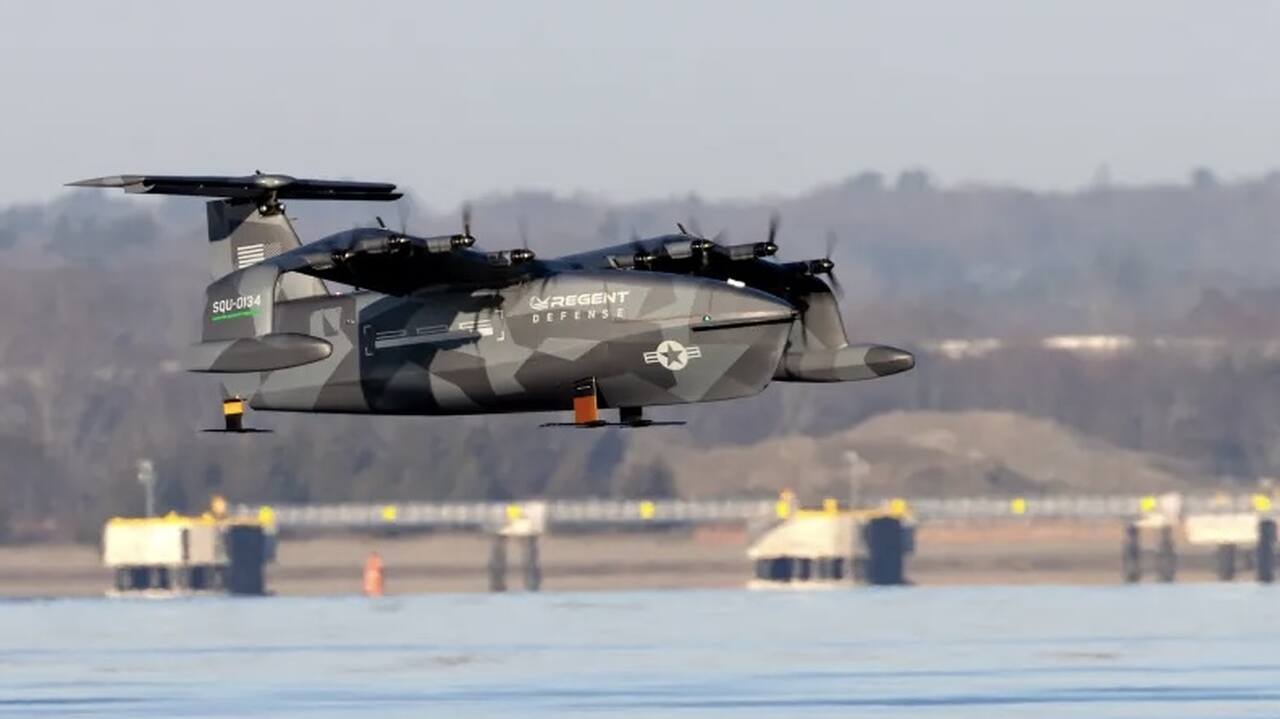
In the clip, it is possible to see that as it gained altitude, the two hydrofoils of the Squire retracted. Two support boats escorted the drone as it traveled over an unspecified distance.
According to the company, the Squire has a planned operational payload of 22 kg with a range of up to 100 nautical miles and a top speed of around 80 knots.
“We are designing the payload interfaces so that a two-person team with minimal specialized training can perform reconfiguration as conditions change and mission requirements evolve,” Regent told TWZ.
The company stated that this USV-A concept “combines the speed and maneuverability of an aerial vehicle with the persistent presence and endurance of an unmanned surface vessel.”
For now, the company has been validating systems, controls, and operational envelopes step by step. “Moving forward, Regent will continue to expand the performance, autonomy, and operational capabilities of the Squire for mission-ready maritime operations.”
+ Click here to watch the video
Photos and video: Regent / YouTube @regentcraft. This content was created with the help of AI and reviewed by the editorial team.
