
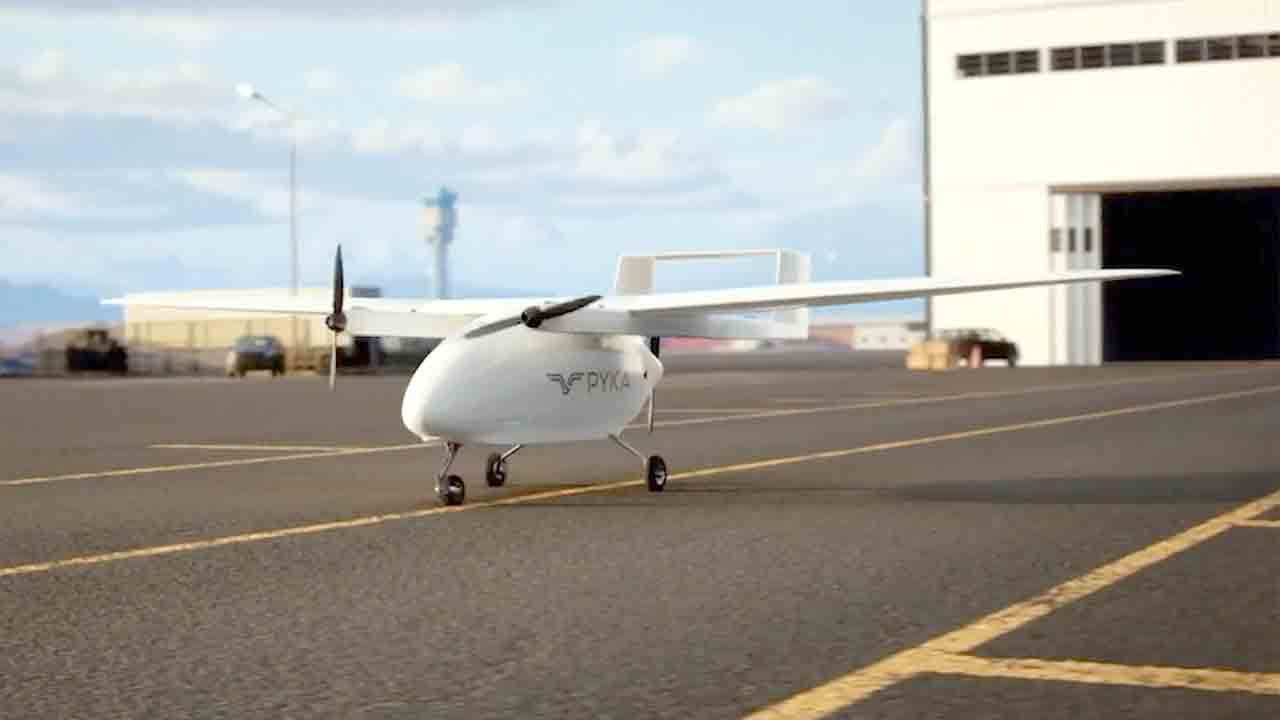
U.S.-based company Pyka announced on February 23, 2026, progress in the development of the DropShip autonomous cargo drone, designed to carry out logistics missions and casualty evacuation in contested environments without exposing pilots or high-value aircraft to risk.
The platform was conceived to operate in high-threat airspace, offering a more cost-effective and scalable alternative to traditional unmanned systems.
+ Turkey showcases armed ASLAN robot during NATO exercise in Germany
According to the company, military planners face increasing challenges in sustaining logistics operations in areas where modern air defenses and low-cost interception systems make both crewed aircraft and legacy large drones vulnerable.

This environment has forced commanders to limit missions in high-risk regions, creating operational dilemmas.
Pyka states that DropShip was developed to address two central challenges: transporting supplies or extracting wounded personnel from conflict zones without putting lives and multimillion-dollar assets at risk, and replacing high-cost unmanned platforms that can be neutralized by systems costing only a fraction of their value.
The company notes that for decades, critical missions requiring large sensors and communication equipment have relied on drones valued between $10 million and $30 million. Today, however, those systems can be shot down by means that cost only a fraction of that amount.
In response, Pyka argues for a solution that combines the capability of large systems with the cost and scalability of smaller tactical drones, expanding access to logistics operations in contested areas.

DropShip has been designed from the ground up as an autonomous cargo aircraft tailored for high-threat environments. The company reports that the program is nearing its first flight, while operational demonstrations are already underway alongside armed forces and emergency teams, conducting real-world missions to validate autonomy, navigation, and structural performance.
Aligned with the concept of distributed logistics, the project reflects a strategic shift: replacing limited fleets of expensive aircraft with multiple lower-cost autonomous platforms capable of sustaining supply flows even under the threat of air defenses and electronic warfare.
Source: Defence Blog | Photo: Pyka | This content was created with the help of AI and reviewed by the editorial team
Pyka test DropShip, autonome drone voor logistieke missies in gebieden met hoge dreiging pic.twitter.com/HlsXD0bIC9
— saibadetudo.com.br (@saibadetudo25) February 26, 2026
