
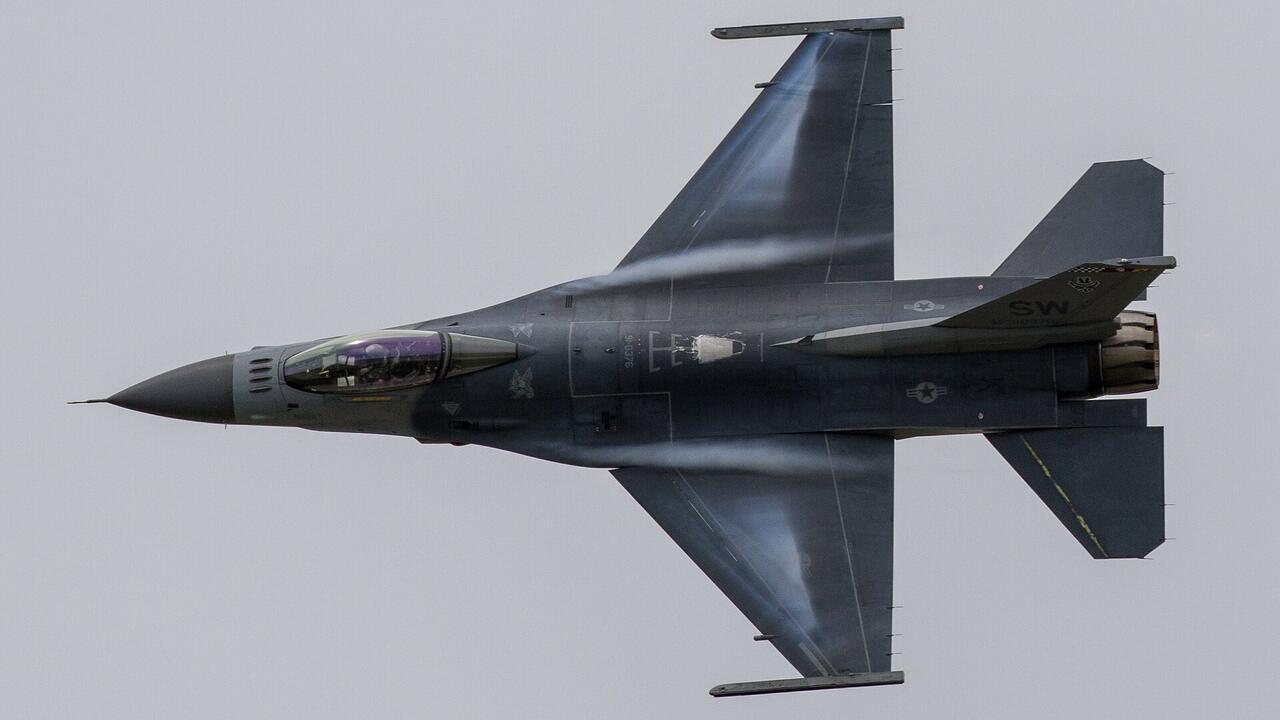
The Peruvian government has finalized a technical agreement with Lockheed Martin for the acquisition of F-16 Block 70 fighter jets. However, although it was welcomed in Washington, the contract immediately sparked a political crisis in Lima.
According to a report by Defence Blog, everything began in 2024, when Peru launched a formal competitive bidding process. Lockheed Martin responded with a proposal for the F-16 Block 70, and after a year and a half of negotiations, the technical agreement was finally signed on April 20, 2026.
The entire process was kept confidential by Lockheed, at the request of the Peruvian government, which chose to share updates on its own national procurement. The announcement was made during a technical ceremony at De Las Palmas Air Base, with the official signing scheduled for the same day at the Presidential Palace.
U.S. government officials and senior executives from Lockheed Martin were already present at the venue, but the signing was ultimately postponed. A technical signing between authorized parties finally took place earlier in the week, with what the U.S. described as full awareness at the highest levels of the Peruvian government.
The delay, according to Defence Blog, was caused by a public statement from Peruvian President José María Boluarte, who said on April 17 that he did not want to assume responsibility for the fighter jet acquisition and would not allow the government to proceed with it.
Boluarte’s announcement immediately ignited the cabinet, generating widespread criticism, even from members of his own government. The signing went ahead regardless, but the political consequences also unfolded immediately.
Following the announcement of the signing, Peru’s Minister of Defense and Minister of Foreign Affairs resigned. Now, Peruvian media report that the president himself may face impeachment, although his term is set to end only in July 2026.
At the center of the controversy is the F-16 Block 70, the newest and most capable production variant of the F-16 platform. In Peru’s case, the United States offered to include two weapons systems that had never previously been integrated into an F-16, a customization specifically designed to meet Peru’s stated operational requirements.
For Washington, however, these delays have represented significant costs. “Currently, each delay results in significant additional cost for industry partners. The same package will not be available in a few months, or even a few weeks, due to rising supplier costs and interest from other countries,” said U.S. Ambassador Navarro.
This pressure shaped the timeline in ways that are now visible in the unfolding political crisis in Lima. The U.S. side pushed for a decision, while the Peruvian government—facing political instability with a president unwilling to support the acquisition—ultimately decided to sign anyway.
Photo: Creative Commons. This content was created with the help of AI and reviewed by the editorial team.
