
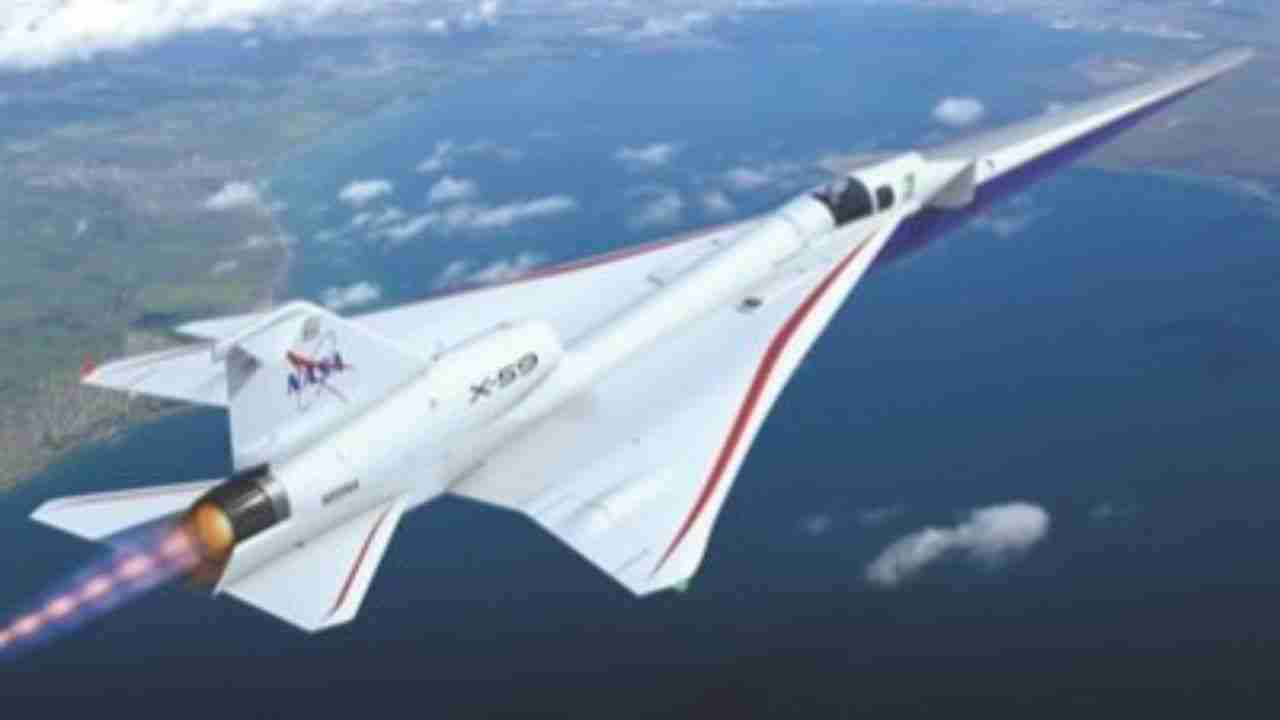
NASA is set to transform aviation with the X-59, a supersonic jet capable of reducing travel time between New York and London to just over three hours.
Developed as part of the Quesst mission, the X-59 is in its final testing phase and promises to break the sound barrier quietly, producing a “sonic boom” comparable to the sound of a car door closing at a distance—much lower than traditional supersonic aircraft noise.
The secret of the X-59 lies in its aerodynamic design: a conical fuselage and long, thin wings that disperse shock waves, minimizing noise impact over populated areas.
This technological breakthrough aims to lift the ban on supersonic flights over U.S. territory, in effect for more than 50 years, allowing commercial aviation to explore new routes and schedules without disturbing the public.
The aircraft is undergoing rigorous safety testing at Air Force Plant 42, including in-flight engine restart tests and low-speed stability evaluations. With a length of 30.4 meters and a wingspan of 9 meters, the X-59 is designed to reach speeds up to 1,600 km/h, halving transatlantic flight times and ushering in a new era of ultra-fast travel.
Source: O Globo | Photo: X @NASAaero | This content was created with AI assistance and reviewed by the editorial team
The X-59 is ON THE MOVE!👏@NASA‘s X-59 quiet supersonic research aircraft has successfully completed its first low-speed taxi test, moving under its own power for the very first time!
This is the last series of ground tests for the X-59 to complete before first flight.✈️… pic.twitter.com/B6guVIx7rw
— NASA Aeronautics (@NASAaero) July 17, 2025
