
Aviation is one of the major contributors to global carbon emissions, and reducing its environmental impact has been a constant challenge.
Despite decades of research into alternative fuels and new aircraft designs, there is still no definitive solution to eliminate emissions in the sector. In this context, NASA, which is also involved in aeronautics, continues to invest in sustainable technologies and has recently funded the development of a hydrogen-powered hybrid engine.
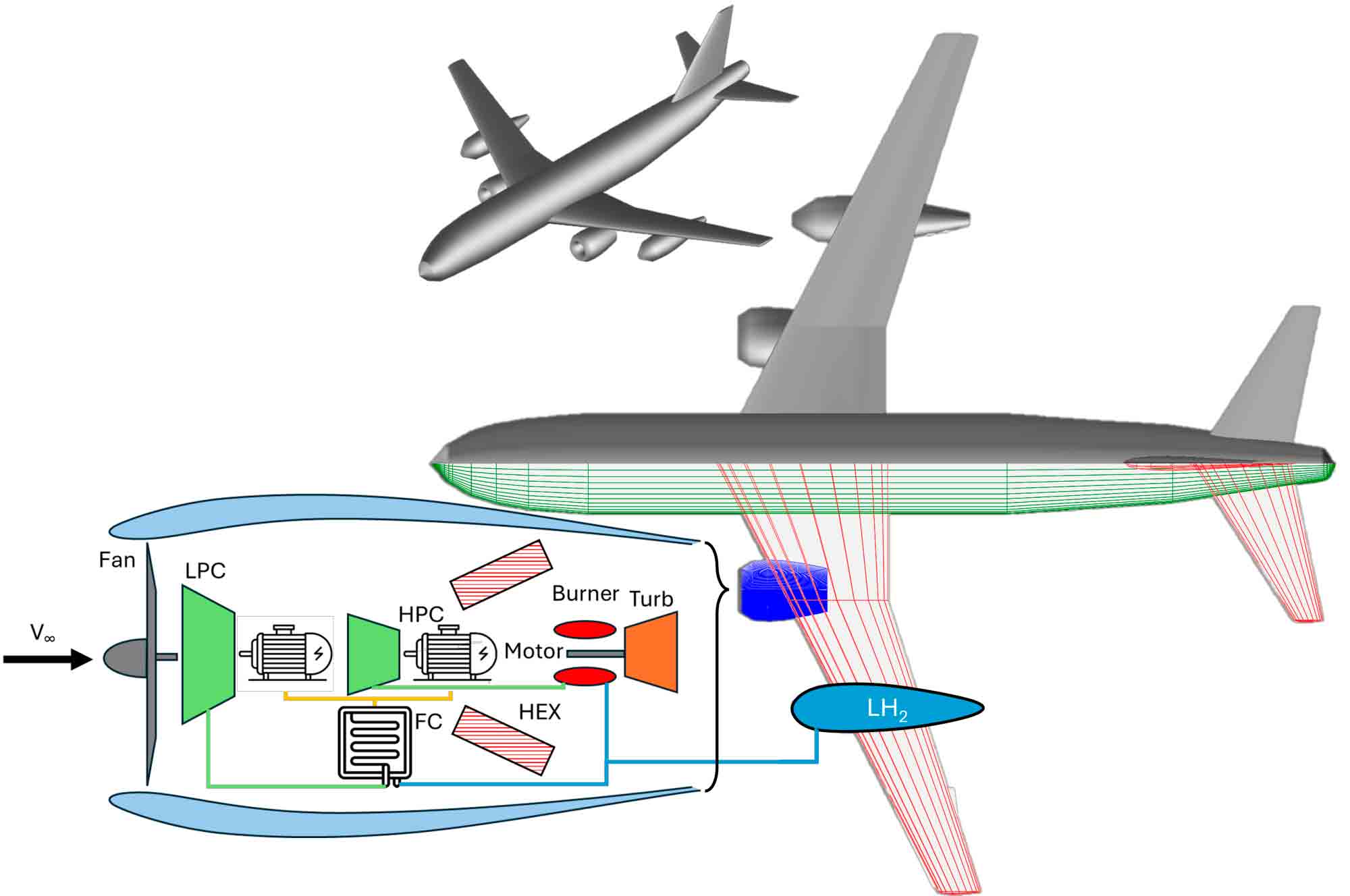
The project, called Hy2PASS, was created by Phillip Ansell from the University of Illinois and combines a fuel cell with a gas turbine. The key innovation of this technology lies in how air is managed within the system. By decoupling the compressor from the turbine, the design reduces energy losses and improves efficiency. Additionally, the compressor can operate independently, adjusting its speed using advanced algorithms. As a result, the system virtually eliminates pollutant gas emissions, producing only water as a byproduct.
Although still in its early stages, the Hy2PASS project will undergo testing to validate its efficiency and practical feasibility. If the results are positive, this innovation could revolutionize the aviation industry, enabling more sustainable and emission-free flights.
If successful, the development of this technology could mark a major milestone in the search for ecological solutions for global aviation.
Source: NASA | Photo: NASA | This content was created with the help of AI and reviewed by the editorial team
