
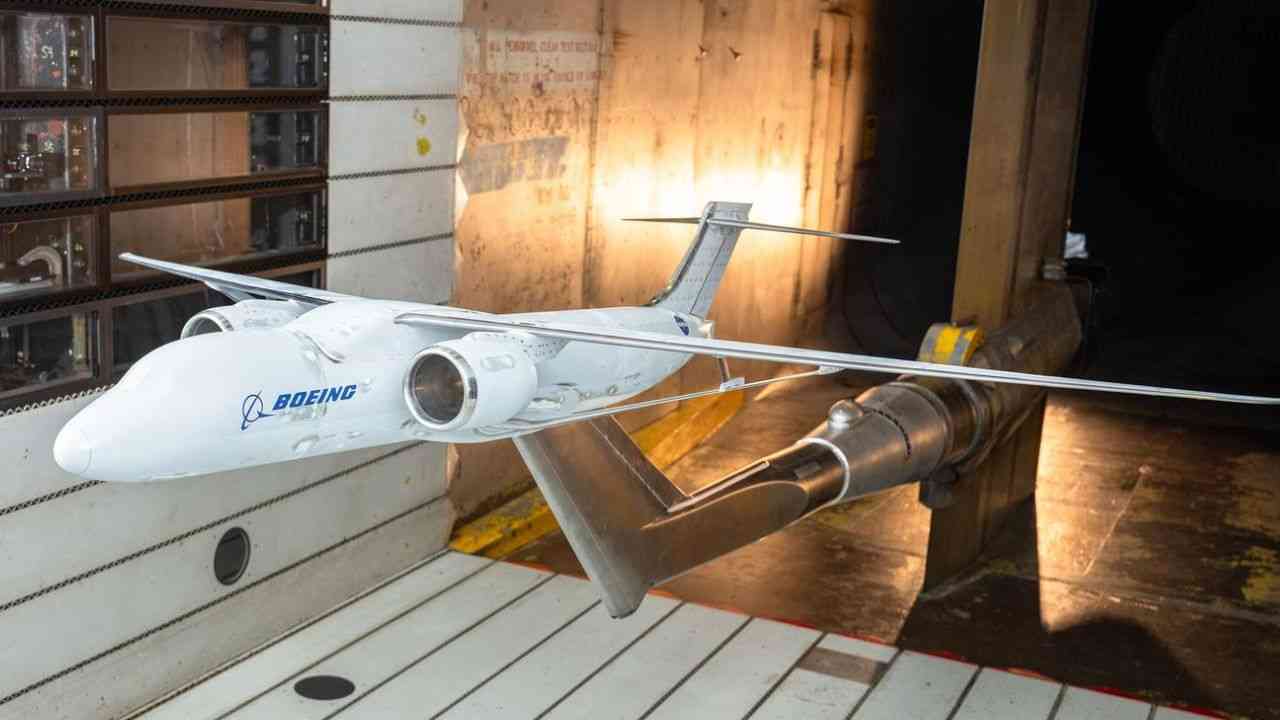
 NASA and Boeing suspend X-66 experimental aircraft project (NASA / Brandon Torres)
NASA and Boeing have decided to halt the development of the X-66, an experimental aircraft with ultrathin wings and a lattice support structure, designed to improve aerodynamic efficiency at transonic speeds.
The project, which aimed to reduce pollutant emissions and increase efficiency on flights near the sound barrier, has been suspended, and the focus will now shift to ground testing.
The X-66, based on a modified McDonnell Douglas MD-90, will no longer be built, and the focus will be on simulations and analyses to explore the feasibility of the concept.
The experimental aircraft was intended to feature 44.2-meter wingspans, wider than those of the 737 MAX, and next-generation engines to optimize fuel consumption. The estimated range was 5,556 km, suitable for medium-haul routes. However, despite the project’s potential, it faced technological challenges, such as air flow instabilities at transonic speeds. Airlines showed interest in the technology, which could reduce travel time and increase profitability.
The cancellation of the X-66 seems to be related to financial difficulties for both NASA and Boeing. NASA had already invested $425 million, while Boeing contributed $725 million. Additionally, NASA may be redirecting its resources to projects more aligned with its primary mission, especially given the potential for budget cuts.
The future of the TTBW concept will now depend on the results of ground testing and a new political and economic context.
Source: Olhar Digital | Photo: NASA – Brandon Torres | This content was created with the help of AI and reviewed by the editorial team
NASA and Boeing have effectively cancelled the X-66 Transonic Truss-Braced Wing (TTBW) concept demonstrator aircraft. Officially described as a “pause,” development of the thin-wing airplane is being halted in favor of ground-based testing.https://t.co/eXMYCew4wU#X66… pic.twitter.com/BguGg4gfSD
— New Atlas (@nwtls) April 29, 2025
