
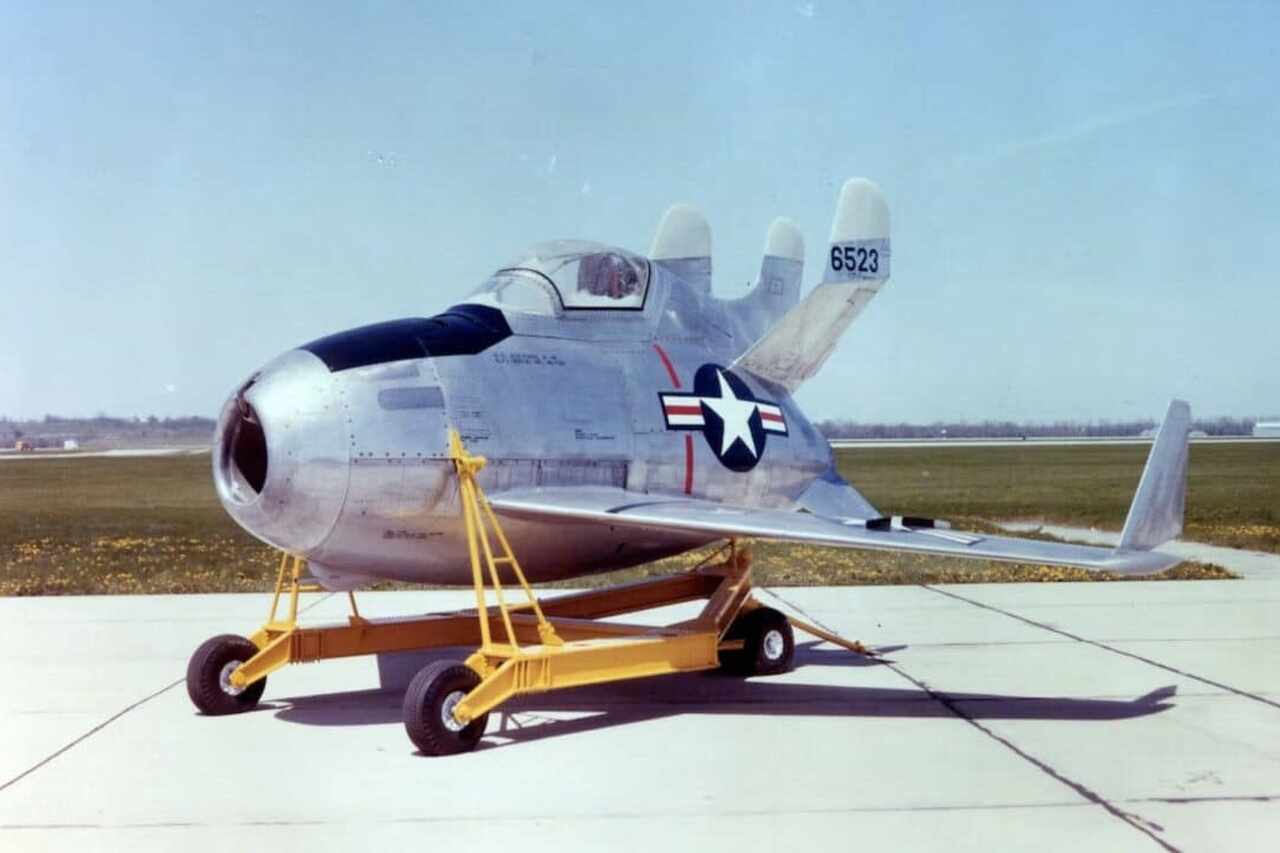
The XF-85 Goblin was designed during the Cold War to serve as an ultra-compact fighter that could be housed inside a bomber and released when needed for escort missions.
Developed in the late 1940s by McDonnell Aircraft, the Goblin was intended to be a “parasite” fighter stored in the bomb bay of the Convair B-36 Peacemaker, a strategic bomber with unprecedented range for its time.
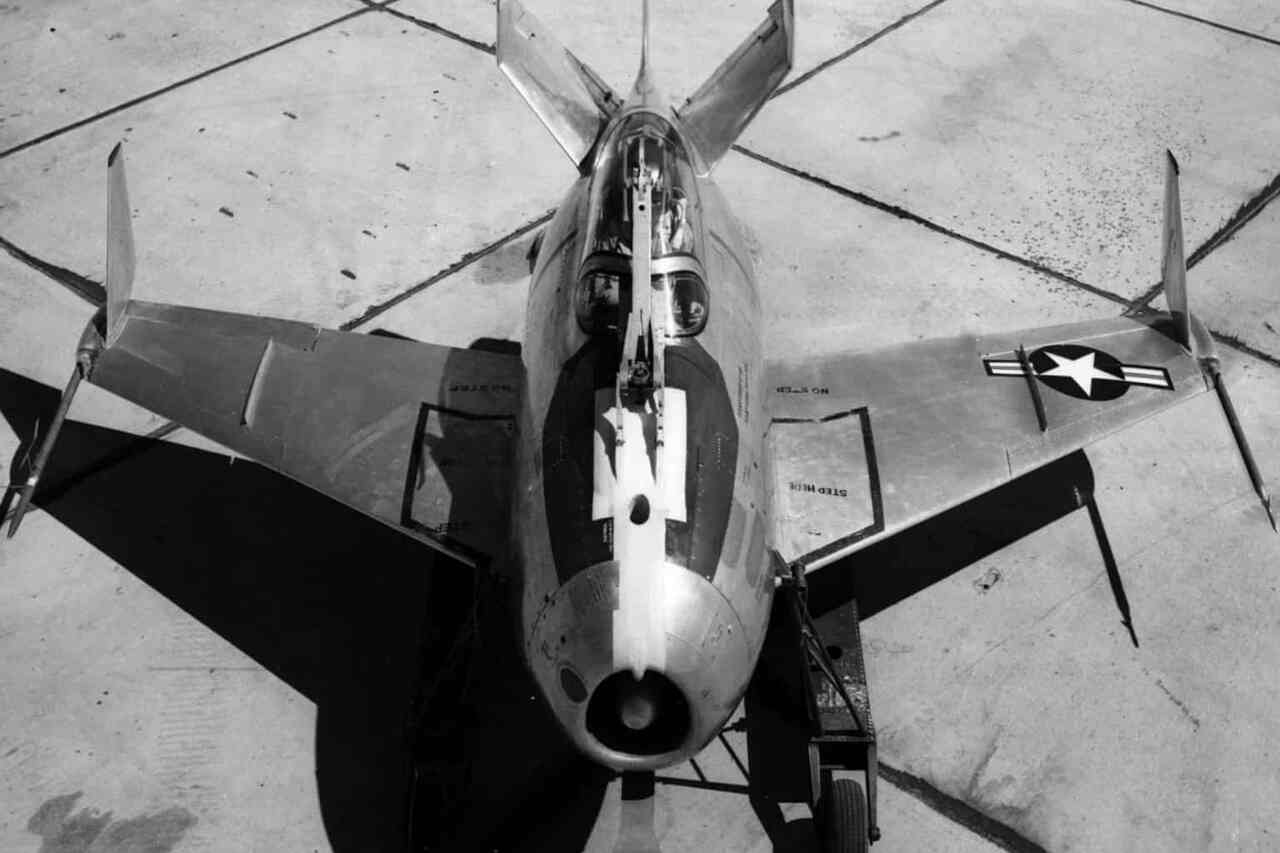
It was one of the smallest fighters ever produced, measuring just 4.5 m in length and 6.4 m in wingspan, with a weight of 2.27 tons. In theory, the Goblin would be launched from the bomber’s bomb bay and act as an escort in areas that conventional fighters could not reach.
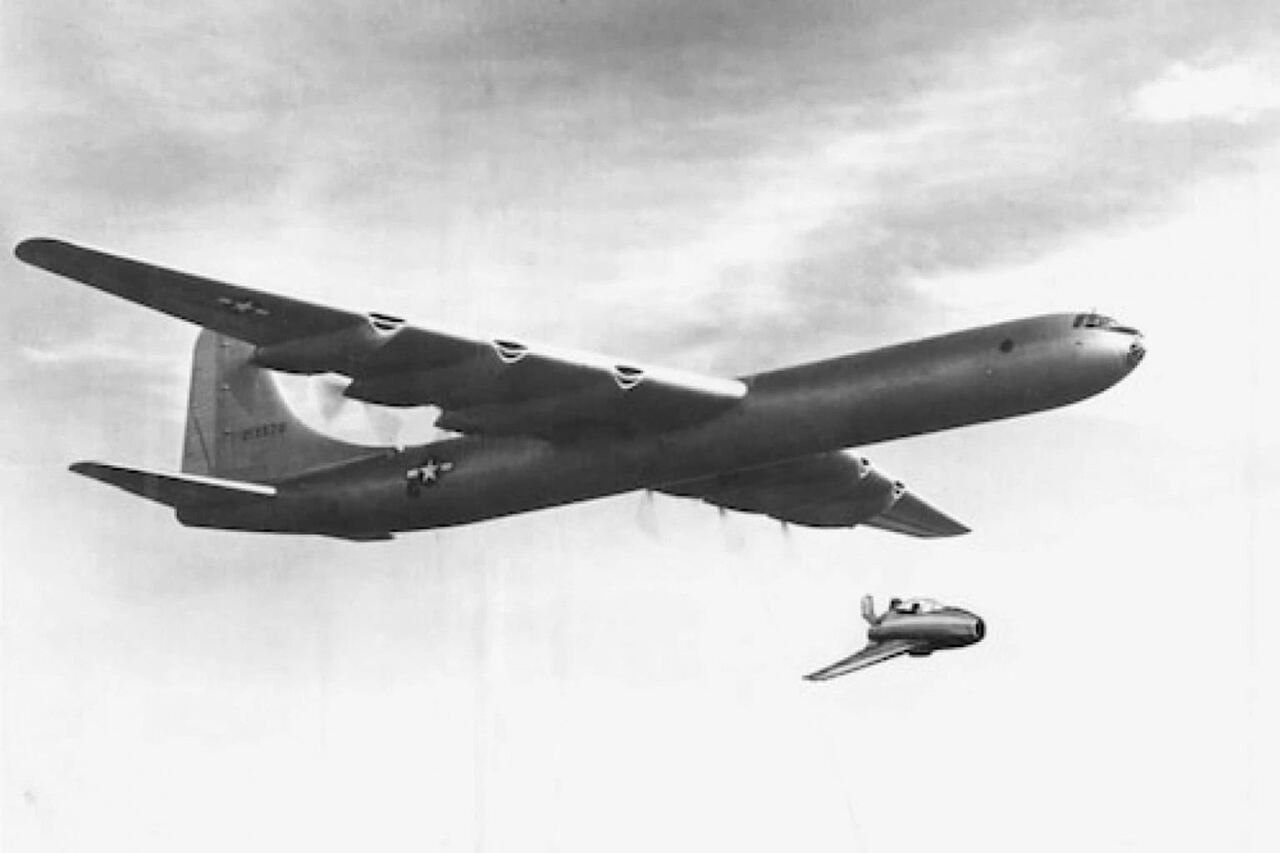
The small fighter was powered by a Westinghouse J34-WE-7 turbojet engine, which gave it a cruising speed of 362 km/h and a maximum endurance of 30 minutes.
Meanwhile, its armament consisted of four .50-caliber M2 Browning machine guns, designed for self-defense against enemy interceptors.
The idea was ingenious, but in practice, the Goblin’s design raised serious questions about its practicality and safety, particularly due to its lack of landing gear.
In the event of a missed docking attempt with the bomber, the Goblin could only perform a belly landing, a maneuver considered extremely risky.
The concept also had other flaws, including the trapeze mechanism installed on the bomber that was supposed to launch the Goblin. The idea was that the fighter would be released in mid-flight, fly to intercept enemy aircraft, and then return to the bomber, reconnecting to the trapeze.

However, the turbulence generated by the bomber’s movement through the air caused major difficulties during test flights. When the Goblin attempted to dock, it was often thrown off course by violent air currents, and recovery missions frequently ended in emergency belly landings.
In fact, during the test program, half of the flights ended with these emergency landings due to failed recovery attempts. Despite the Goblin’s agility in flight, these operational challenges led many pilots to question the viability of the program.
Despite its promising performance in some aspects, the Goblin was deemed too risky for continued development, and the project was officially canceled in 1949 after only a few years of testing.
Today, the two surviving XF-85 Goblin prototypes are on display at the National Museum of the United States Air Force in Ohio and at the Strategic Air and Space Museum in Nebraska.
Photos: United States Air Force. This content was created with the help of AI and reviewed by the editorial team.
