

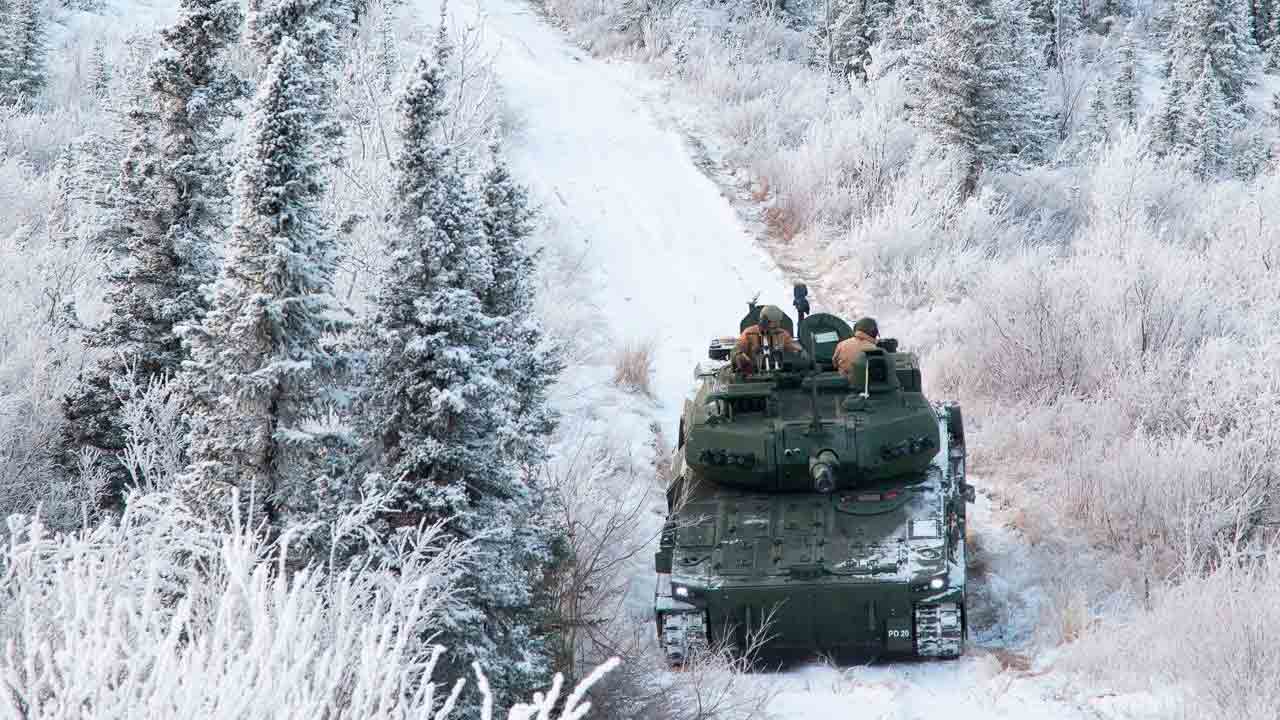
The United States Army is conducting extreme condition tests on its new light armored vehicle, the M10 Booker, at Fort Greely, Alaska.
+ Video: New Zealand Navy Fires AGM-119 Penguin Anti-Ship Missile for the First Time
The objective is to evaluate the vehicle’s performance in a challenging Arctic environment at a time when the region is becoming increasingly strategic for the U.S.
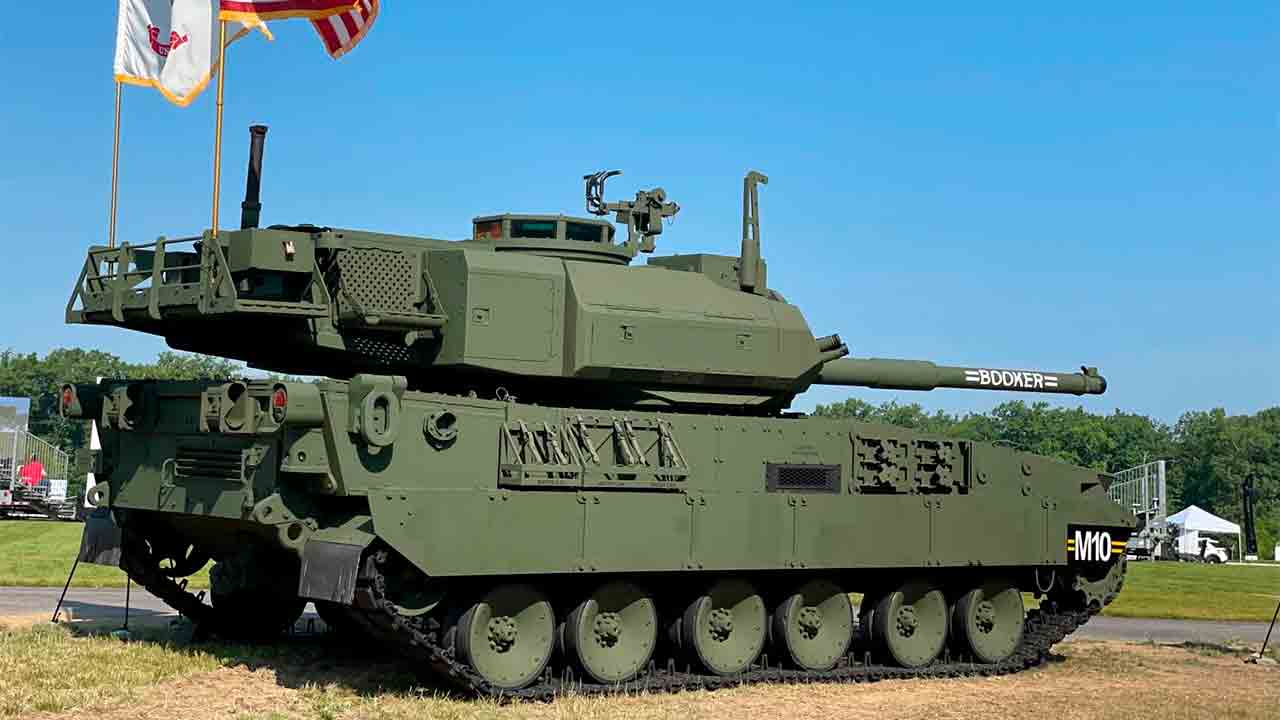
Developed as part of the Mobile Protected Firepower (MPF) program, the M10 Booker was designed to fill the gap between heavy tanks like the M1 Abrams and lighter vehicles such as the Stryker. It is equipped with a 105 mm cannon, a 7.62 mm coaxial machine gun, and a 12.7 mm machine gun, providing versatile attack capabilities against various threats.
The M10 features an 800 hp diesel engine, allowing it to reach a maximum speed of 65 km/h and a range of 305 km, ensuring mobility and operational efficiency. Weighing approximately 38,000 kg, it offers stability while maintaining the agility needed for rapid deployments, including air transportability with two units fitting into a single C-17 Globemaster III.
The vehicle is also equipped with advanced computerized fire control systems, panoramic vision, and both day and night vision systems, ensuring effective performance in low-visibility conditions. Its protection includes armor against small arms fire, artillery shell fragments, and threats such as improvised explosive devices (IEDs). Additionally, it features an NBC (nuclear, biological, and chemical) protection system, enhancing crew safety in modern combat environments.
Arctic Testing
Testing at Fort Greely is essential to assess the reliability of the M10 Booker in extreme cold conditions, where temperatures can drop to -25°C. Evaluations include challenges such as fuel solidification, reduced efficiency of batteries and electronic systems, as well as the operation of transmission and weapon systems under severe climatic conditions.
The U.S. Army is investing heavily in strengthening its presence in the Arctic, as the region has become a strategic point due to the retreat of ice, opening new maritime routes and access to natural resources. With increasing geopolitical competition involving Russia and China, the M10 Booker plays a crucial role in the U.S.’s ability to respond swiftly to threats in this region.
Future Prospects
Designed to be operated by a four-person crew, the M10 Booker combines firepower, protection, and mobility, enabling effective performance in high-intensity combat missions. The Army plans to acquire more than 500 units by 2035, expanding its response capabilities and security in the Arctic.
The current tests are a crucial step in determining the M10 Booker’s ability to operate in extreme conditions and ensuring that it meets the U.S.’s strategic needs in the region. Approving this vehicle for operations in severe cold reinforces its importance as one of the United States’ key military assets for future challenges in the Arctic.
Photos: LinkedIn: Peter George, Product Manager, Booker Combat Vehicle / USArmy. This content was created with the help of AI and reviewed by the editorial team.
