
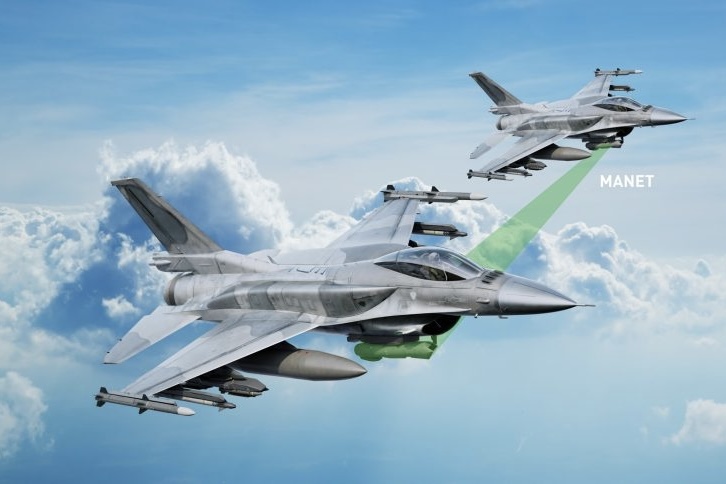
Lockheed Martin has completed the first demonstration of the Sniper Networked Targeting Pod (NTP), validating a new real-time data-sharing capability between F-16s and ground stations.
According to The Aviationist, the information was confirmed by Lockheed Martin in a statement released on January 30. According to the company, the demonstration follows the unveiling of the system in November 2025.
The event marks the inaugural flight test of the Sniper NTP in a networked configuration. The demonstration was conducted with the support of Lockheed Martin Aeronautics and its 5G.MIL initiative, which focuses on resilient, high-speed communications for military applications.
According to the company, the flight validated the ability of two upgraded Sniper pods to exchange targeting information with each other and simultaneously transmit this data to a ground station, creating a shared tactical picture for both airborne and ground users.
Lockheed Martin said this represents a step forward in transforming a long-established electro-optical/infrared (EO/IR) targeting pod into what the company describes as a “battle space connector,” capable of sharing sensor data between platforms in near real time.
Unlike traditional targeting pods, which primarily serve the host aircraft, the Sniper NTP was designed to function as a network node within a broader command-and-control architecture.
According to Lockheed Martin, the pod can connect via mobile ad hoc network (MANET) radios and secure data links, allowing aircraft to exchange sensor data directly and automatically reestablish connectivity if a link is disrupted.
These attributes are highly relevant for both current scenarios and future conflicts in contested environments where interference or intermittent connectivity is expected—a lesson being learned from the war in Ukraine, where electronic warfare is being used to disrupt UAV control links and targeting systems.
“In today’s battlespace, seconds matter,” Lockheed Martin said in its statement, emphasizing that intelligence, surveillance, and reconnaissance (ISR) functions are increasingly carried out in parallel rather than sequentially.
Photo: Lockheed Martin. This content was created with the help of AI and reviewed by the editorial team.
