
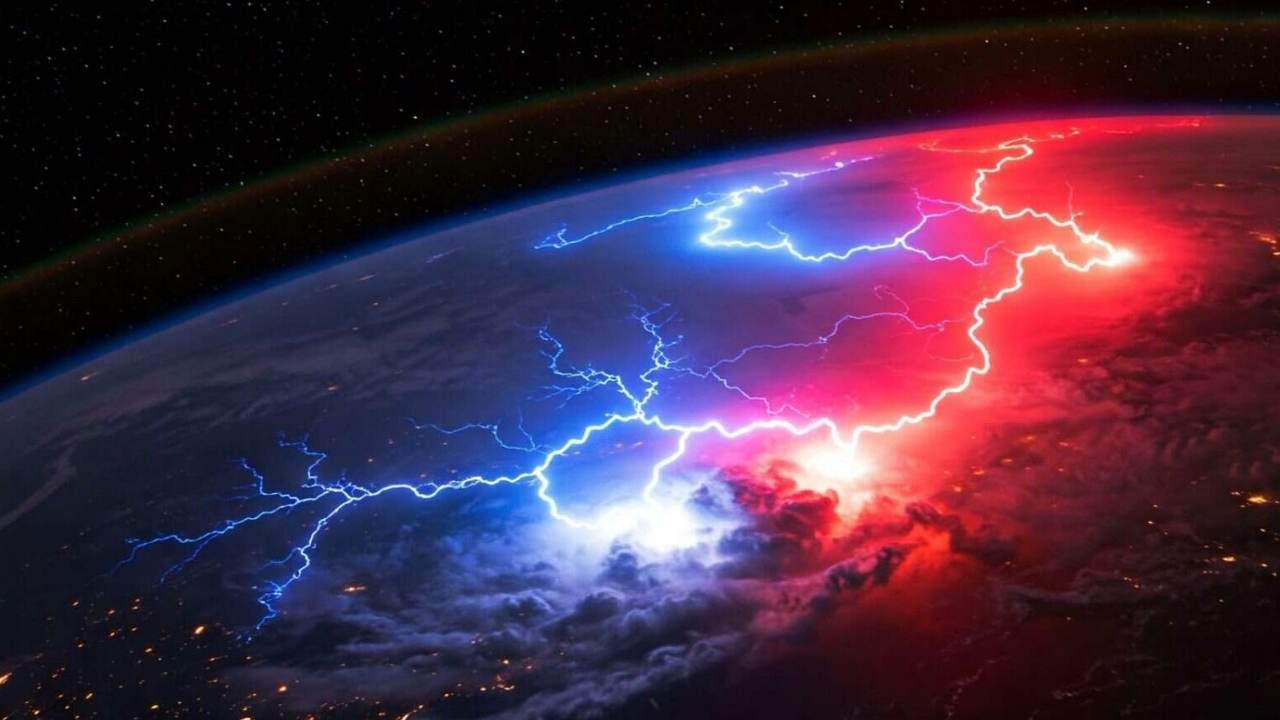
Images captured by astronauts reveal a rare atmospheric phenomenon and help uncover the electrical secrets of the upper atmosphere
The International Space Station (ISS) has once again amazed with impressive images of Earth. This time, the station’s lenses captured a rare atmospheric phenomenon: the so-called sprites, colorful lightning flashes that briefly illuminate the upper layers of the atmosphere.
The images were taken by Don Pettit, a NASA astronaut, while orbiting South America. The vibrant flashes were filmed above the Amazon rainforest, offering a rare glimpse of what are known as Transient Luminous Events (TLEs).
Unlike conventional lightning, which moves from clouds to the ground, sprites appear at high altitudes—around 80 kilometers—and propagate upwards. The result is a plasma explosion visible in the ionosphere, with colors ranging from red to blue and violet.
OK, this is kind of out there and caters to your inner Uber-Geek. Nadir view of Transient Luminous Events (TLE ) or upper atmospheric lightning. This clip real time is about 6 seconds over the Amazon basin and shows a number of TLE displays from Sprites to blue jets from a… pic.twitter.com/IE0Edtm2Rl
— Don Pettit (@astro_Pettit) April 3, 2025
The occurrence of these phenomena is brief and, for a long time, remained shrouded in mystery. Although sporadic reports date back to the 19th century, sprites were only confirmed on video in 1989. Since then, technological advances and space-based observation have significantly contributed to their study.
In 2024, astronaut Matthew Dominick also managed to capture red sprites during an intense storm, reinforcing the ISS’s importance as a platform for scientific observation.
These records help not only to understand the dynamics of storms but also the effects of such electrical events on the upper atmosphere. The ionosphere, where sprites occur, directly interferes with radio communications and navigation systems and can be affected by these electrical discharges.
Each new image captured from Earth’s orbit represents a step forward in investigating atmospheric phenomena. And as science advances, sprites continue to fascinate both researchers and the public with their unexpected and enigmatic glow in the night sky.
Source and images: Olhar Digital / X @astro_Pettit / AI/Gabriel Sérvio/Olhar Digital. This content was created with the help of AI and reviewed by the editorial team.
