

Footage published by Hezbollah’s Central Military Media Service shows an FPV drone striking an Israeli Merkava Mk4 tank parked in southern Lebanon.
The recording suggests significant damage to the vehicle but does not allow independent confirmation of whether the armored unit was destroyed.
Hezbollah released a video that, according to the group, shows an FPV drone attack on an Israeli Merkava Mk4 tank in Lebanon. The material was published by Hezbollah’s Central Military Media Service on Telegram and later circulated by defense-focused outlets.
In the footage, the drone approaches a stationary Merkava Mk4 equipped with an improvised overhead protection structure, commonly referred to as a “cage.” Despite the added protection, the impact occurs on the upper part of the vehicle, followed by signs of internal combustion, attributed to ammunition ignition.
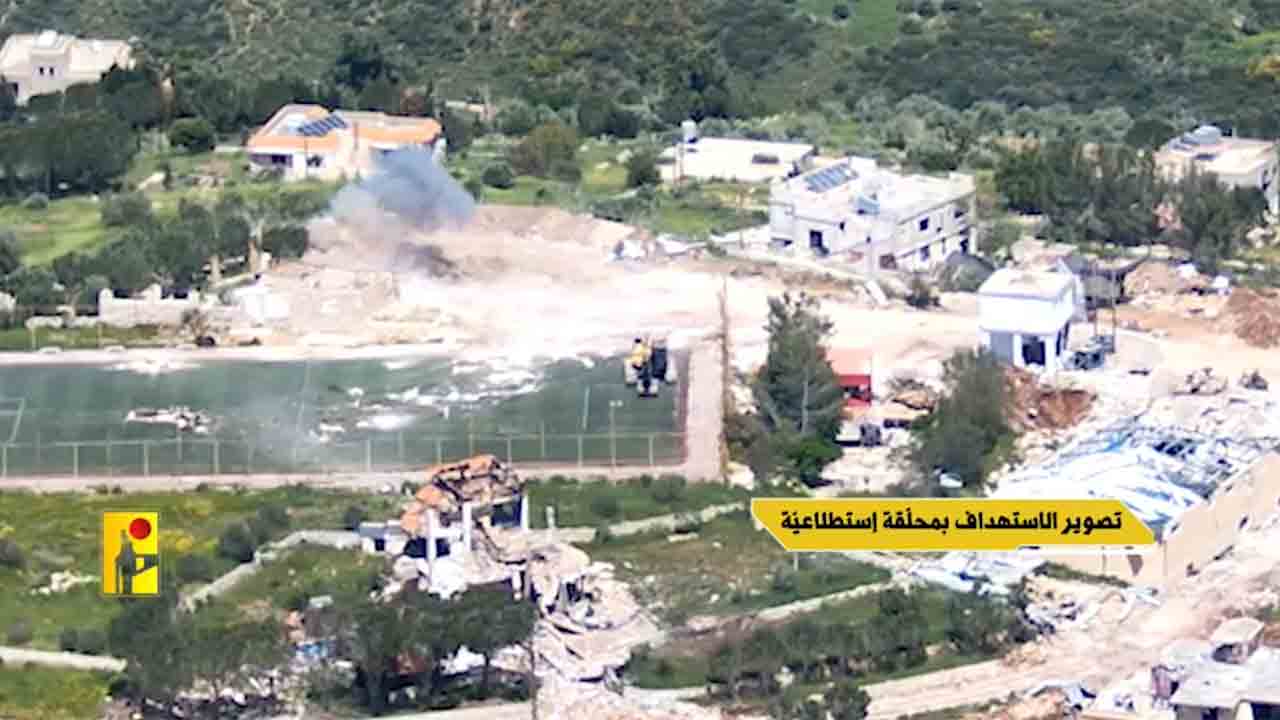
However, the footage cuts off shortly after the strike. As a result, it is not possible to confirm the final extent of the damage to the tank or whether it was completely destroyed. This type of editing is common in content released by Hezbollah-linked channels, which often show the moment of impact without documenting the aftermath.
What makes the Merkava Mk4 different
The Merkava Mk4 is one of the most modern versions of Israel’s tank family and features a more protected ammunition storage system compared to the Merkava Mk3. In the Mk4, part of the ammunition is stored in isolated compartments, a design intended to reduce risks to the crew in case of fire or internal detonation.

This detail makes the episode relevant from a military standpoint. If the destruction of the armored vehicle is confirmed, it could represent one of the first recorded cases attributed to Hezbollah of a Merkava Mk4 being seriously damaged by an FPV drone in Lebanon.
Still, analysts warn that the video does not reveal whether the crew left any internal compartment open at the time of the attack, nor whether the observed fire fully compromised the vehicle.
FPV drones increase pressure on Israeli armored vehicles
The incident comes amid the growing use of FPV drones by Hezbollah against Israeli forces in southern Lebanon. These drones, now common in modern conflicts, have proven difficult to counter—especially when used against stationary vehicles, exposed positions, or moving troops. Recent reports indicate that Israeli forces have been improvising protective measures and seeking new responses to this type of threat.
According to Militarnyi, Hezbollah had already released footage in March 2026 showing an attack on a Merkava Mk3, in which the drone struck the rear of the tank. This area is considered more vulnerable in earlier Merkava variants, particularly due to the internal layout of components and ammunition.
In another recent incident, also attributed to Hezbollah, an FPV drone attacked a Black Hawk helicopter involved in an evacuation mission. According to Militarnyi, Israeli sergeant Idan Fuchs was killed and six other soldiers were injured—four of them seriously—following the drone strike.
The attack reportedly took place near the village of Al-Tayyiba, close to the border with Israel, where elements of the 77th Battalion of the 7th Armored Brigade were operating alongside troops from the Golani Brigade. Reports indicate the crew was conducting repairs on a tank in an open area when it was hit.
Military impact still depends on confirmation
Despite the video’s circulation, the destruction of the Merkava Mk4 should still be treated as a claim. Without continuous post-impact footage, independent verification, or official Israeli confirmation, the incident remains within the realm of visual analysis and information warfare.
+ U.S. Marines plan to operate MQ-58 drones with F-35 fighters by 2029
Source and images: Militarnyi | Hezbollah Central Military Media Service / Telegram @mmirleb. This content was created with the help of AI and reviewed by the editorial team.
