
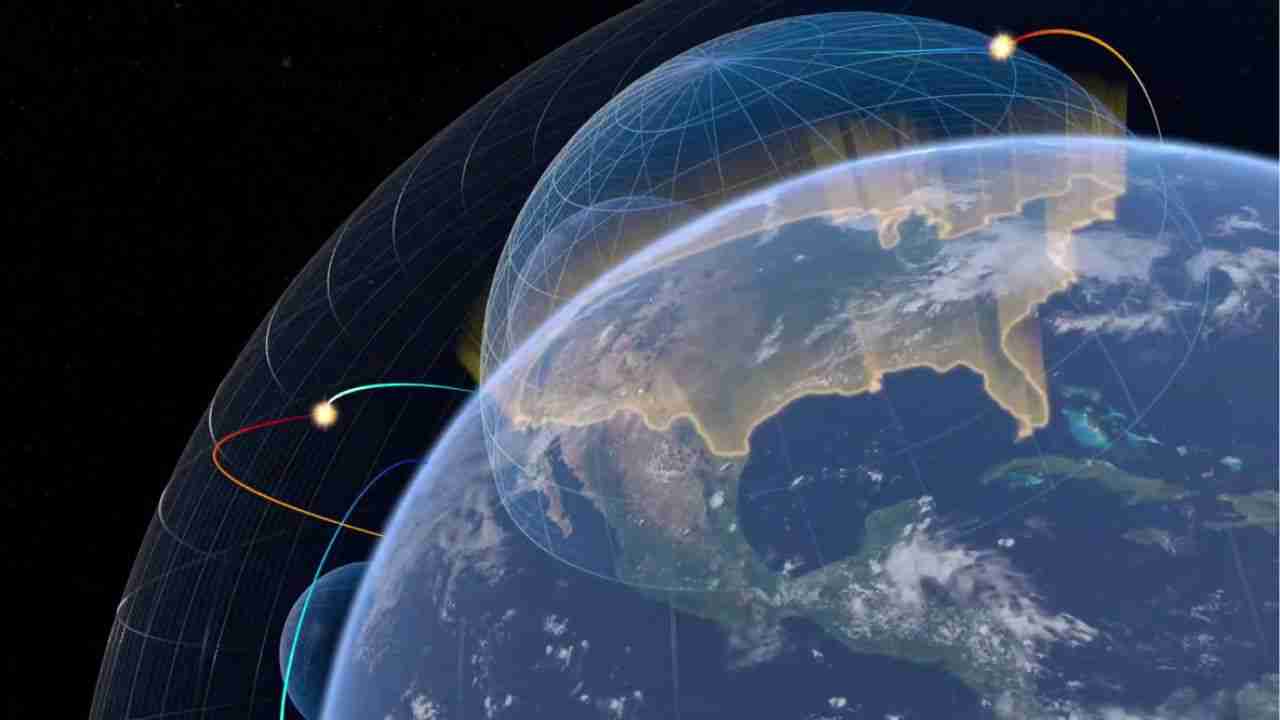
Northrop Grumman is making progress in testing space-based missile interceptors as part of the ambitious Golden Dome project, a US defense initiative aimed at protecting the national territory from ballistic and hypersonic threats.
The company, which is competing for multi-billion-dollar contracts in the program, revealed that it is conducting ground tests of orbital missiles, though technical details remain classified. The system, expected to be operational by 2028, involves an integrated network of satellites, radars, and intercept vehicles capable of neutralizing targets both in space and in the atmosphere.
The Golden Dome, originally called Iron Dome, faces complex challenges, especially in developing fast and precise interceptors to attack enemy missiles during the most vulnerable phases (ascent and midcourse). The US Space Force has already requested industry proposals for innovative solutions, including exo-atmospheric versions (above 120 km altitude) and endo-atmospheric versions.
However, critics warn of the risks of militarizing space, while authorities defend the urgency in light of China’s and Russia’s advancements in anti-satellite and hypersonic weapons.
The technological dominance battle for Golden Dome took on political overtones after the rift between Donald Trump and Elon Musk, whose SpaceX was seen as a key player in the program. Now, the government is exploring alternatives, such as Amazon’s Kuiper Project, to reduce dependence on a single supplier.
With projected investments of $175 billion, the project has already received $5.6 billion in federal funds for space interception, signaling a race against time — and global rivals — to make the future missile defense shield a reality.
Source: The War Zone | Photo: X @northropgrumman | This content was created with the help of AI and reviewed by the editorial team
Missiles move fast — but America’s Golden Dome will move faster, and we’re ready to power it.
Discover the future of missile defense in Golden Dome and how we’re leading the way. https://t.co/xVPTBHHVEN pic.twitter.com/VmDBYjRAC8
— Northrop Grumman (@northropgrumman) June 11, 2025
