

Bugatti has unveiled the W16 Mistral “Blanc Éternel”, a one-off configuration created by the Sur Mesure program that blends hypercar, applied art and an unusually high level of craftsmanship. More than a special paint finish, the car acts as a kind of symbolic farewell to the brand’s W16 era.
That is precisely the main point. The Mistral already carries historical weight because it represents the final road-going expression of the W16 engine, an architecture that helped redefine modern hypercars since the Veyron. In the Blanc Éternel version, Bugatti uses this farewell to connect past and present: on one side, the memory of the Veyron Grand Sport “L’Or Blanc”, created 15 years ago in partnership with Königliche Porzellan-Manufaktur Berlin, KPM; on the other, the digital language used in the development of the Mistral.
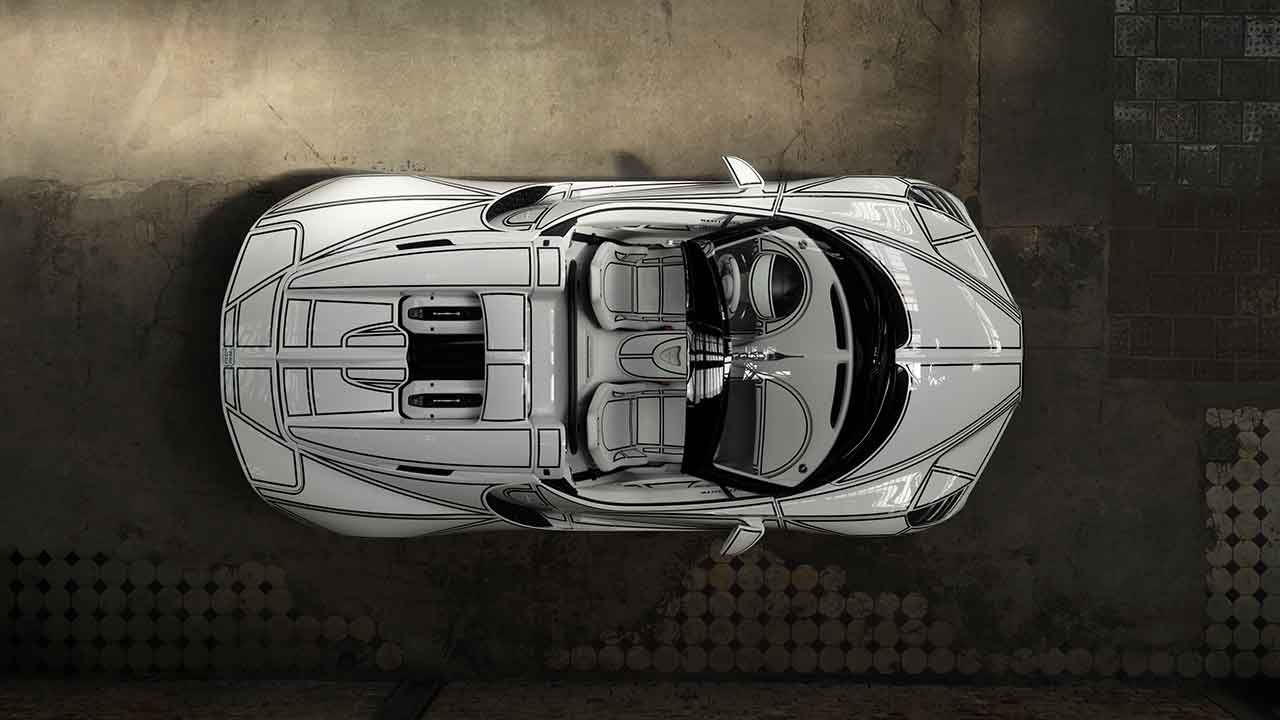
The most interesting curiosity lies in the design of the black lines that run across the white bodywork. They are not merely decorative graphics. According to Bugatti, the pattern was inspired by the very digital structure used to model the car, made up of mathematical surfaces known as NURBS. In simple terms, it is as if part of the project’s “invisible skeleton” had been revealed in the final paintwork.
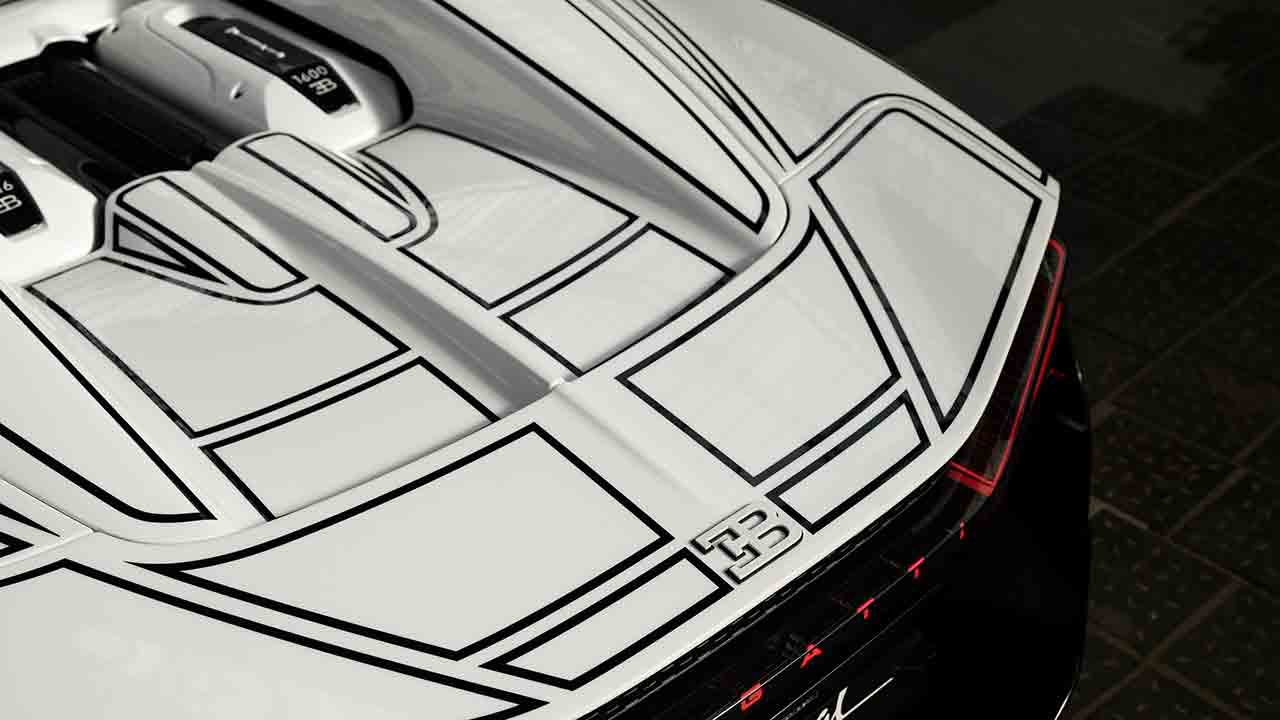
Visually, the effect stands out because the W16 Mistral looks at once like a porcelain sculpture and an exposed technical prototype. The black lines run across the front end, follow the reinterpreted horseshoe grille, highlight the C-shaped side section, cross the air intakes and reach the rear, marked by the X-shaped lighting signature. The black-and-white contrast reinforces the idea of precision, while the name “Blanc Éternel” refers to the visual purity of white porcelain and to the lasting historical presence of the W16 engine within Bugatti.
Despite the digital origin of the design, the execution is far from automatic. The bodywork was first painted in pure white, then sanded and prepared. After that, each black line was manually positioned with masking tape. The surrounding areas were protected, the original tapes were removed and the resulting channels received black paint. It is a slow process that requires a precise reading of the car’s three-dimensional forms so the graphic pattern does not appear distorted when viewed from different angles.
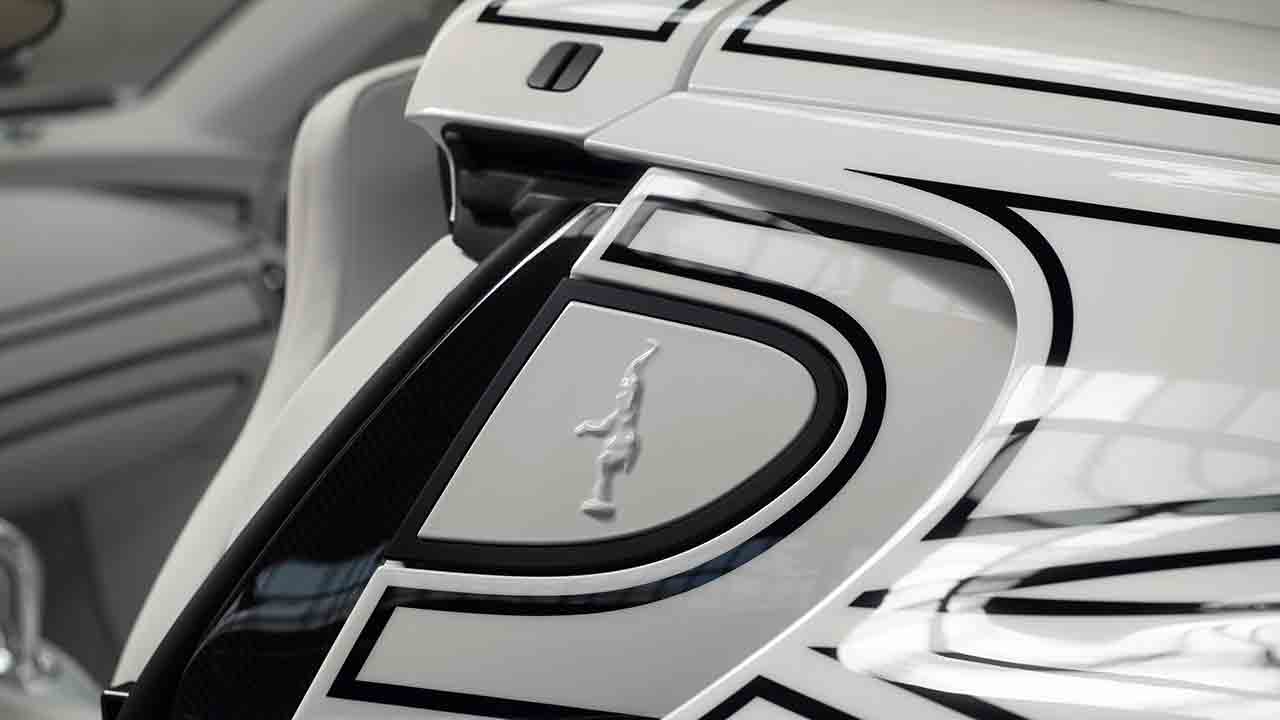
The partnership with KPM Berlin also appears in porcelain details applied to the exterior, such as the EB emblem, the fuel and oil caps and inserts on the engine cover featuring the royal scepter, the symbol of the German manufactory. The use of the material brings an unusual technical challenge for an automobile: porcelain shrinks by about 17% during kiln firing, forcing specialists to anticipate this contraction during the modeling phase so that each piece fits correctly once finished.
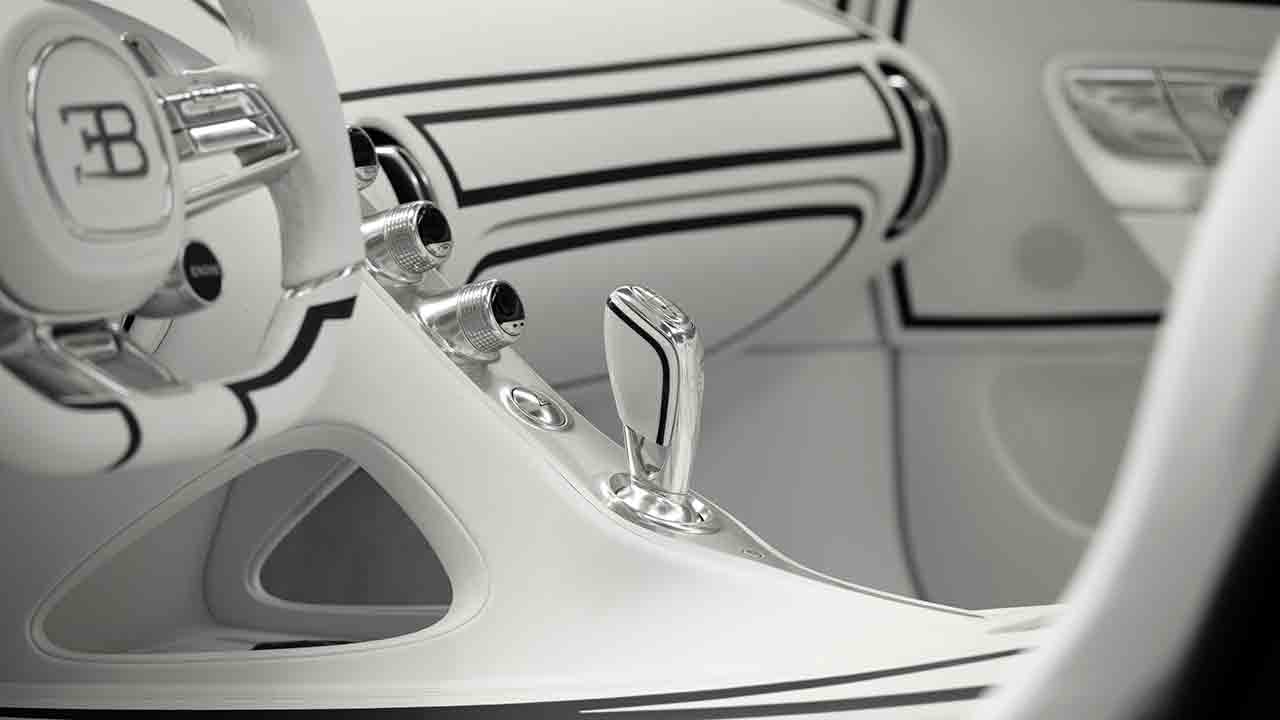
Inside, the same visual logic was carried over to the white leather. The pattern of black lines was masked and hand-painted, creating continuity between the cabin and the bodywork. Porcelain was also not limited to decorative pieces: it appears on the speaker covers, knee pads, gear selector shells, the center console armrest and even the window buttons.
This detail helps explain why the Blanc Éternel matters beyond its exoticism. In a market where ultra-luxury cars often rely only on exclusive colors and rare finishes, Bugatti tries to turn the car’s own creation process into part of the narrative. The Mistral does not simply receive a special decoration; it shows, on its surface, how it was digitally conceived while also preserving the manual intervention of artisans.
The result is a one-off hypercar that closes a cycle started by the Veyron and pushed to the limit by the W16 Mistral. The Blanc Éternel does not try to be discreet, but it also does not rely on gratuitous visual excess. Its strength lies in the contrast between technology and craftsmanship: a car born from digital modeling, finished by hand and punctuated by real porcelain, created to mark the end of one of the most emblematic phases of modern Bugatti.
Source and images: Bugatti. This content was created with the help of AI and reviewed by the editorial team.
