
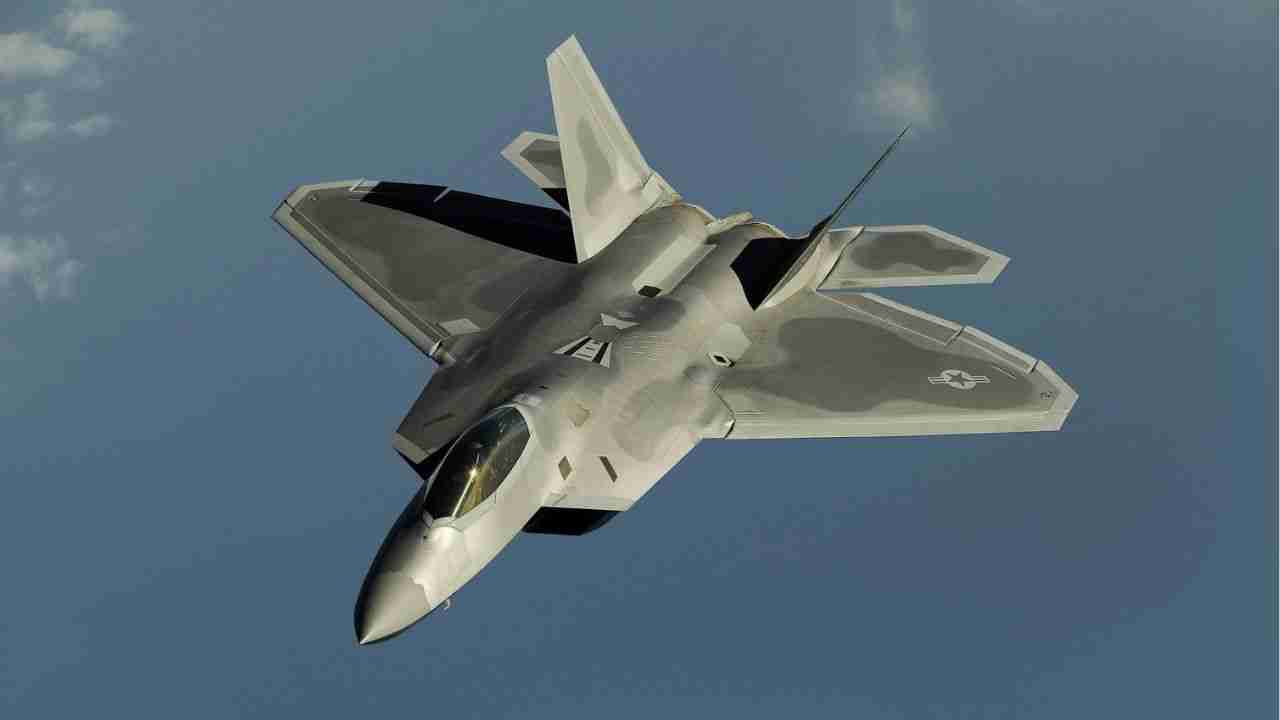
 F-22 takes control of the MQ-20 drone in a test advancing collaborative air combat (X @Osint613)
The U.S. Air Force modernization program took a decisive step after another demonstration where the F-22 took control of the MQ-20, reinforcing the role of the fighter as the first air controller for the future fleet of CCA (Collaborative Combat Aircraft) drones.
At recent events in the Nevada Test and Training Range, a pilot remotely commanded an MQ-20 Avenger drone directly from the cockpit of the F-22, in a simulated combat mission marking another advance in the integration of manned and unmanned aircraft.
The operation used software-defined radios from L3Harris, connected via open interfaces from Lockheed Martin, along with an integrated Pilot Vehicle Interface tablet linked to the F-22’s GRACE module. This setup allowed the pilot to transmit commands to the drone throughout the flight, demonstrating a non-proprietary, reusable communication architecture aligned with the Open Mission Systems concept. The MQ-20, used for years as a test platform, once again showed maturity in autonomy and collaborative control.
General Atomics, responsible for the Avenger, highlighted that the aircraft serves as an autonomy accelerator, regularly flying in CCA configuration. Created as a faster and stealthier successor to the Predator line, the MQ-20 is powered by a Pratt & Whitney turbofan and can operate from short runways, carry about 1,360 kg of weapons or sensors, and conduct missions lasting over 20 hours. Its stealth design and rapid redeployment capability make it ideal for surveillance missions, time-sensitive strikes, and support for operations in contested airspace.
Meanwhile, the Air Force has already defined that the F-22 will be the first fighter to command CCA drones in real operations, even before the arrival of sixth-generation fighters. Recent documents sent to Congress outline a 10-year plan prioritizing the integration of hundreds of drones into the U.S. arsenal, with YFQ-42A and YFQ-44A models, developed by General Atomics and Anduril, already in flight testing. The goal is for the first operational CCAs to enter service by the end of the decade.
With the growing sophistication of adversary air defenses, the U.S. is betting on a combination of advanced fighters and autonomous drones as force multipliers and means to reduce risks in critical missions. For the American industry, the demonstration reinforces that the country maintains a significant technological advantage, while the F-22 progresses toward becoming the core of future collaborative air operations.
Source: UK Defence Journal / The War Zone | Photo: X @Osint613 | This content was created with the help of AI and reviewed by the editorial team
