
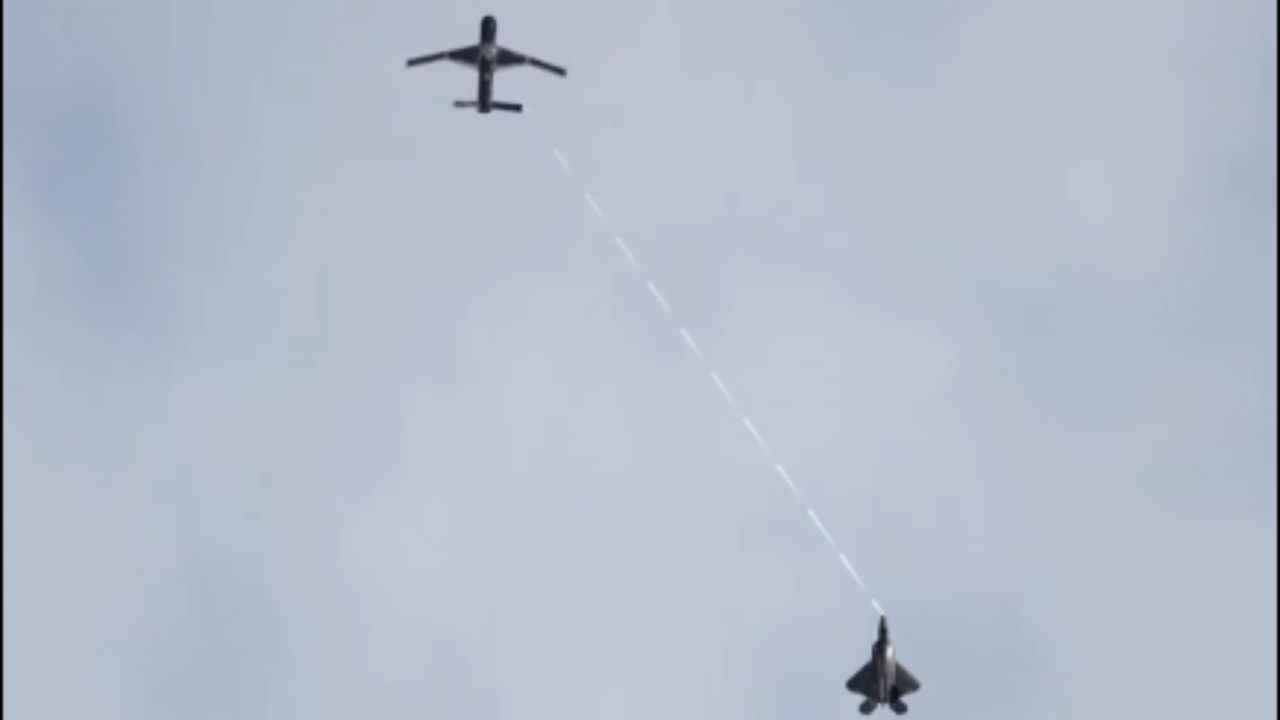
Lockheed Martin achieved a historic milestone by allowing an F-22 Raptor pilot to control, in mid-flight, a drone through an integrated interface in the cockpit.
The test took place at Nellis Air Force Base and used a simplified system called the pilot vehicle interface, which enables the pilot to send mission directives to unmanned aircraft in an intuitive manner. This breakthrough reinforces the company’s advancements in operations combining human and autonomous capabilities on the battlefield.
According to the company, the experiment is part of a broader effort to integrate AI-equipped drones into the fleets of F-22s and F-35s. The strategy aims to enhance pilots’ situational awareness, improve aircraft survivability, and strengthen the “family of systems” concept advocated by the U.S. Air Force. Skunk Works, Lockheed Martin’s advanced division, describes the interface as flexible and compatible with current and future platforms.
The test concludes years of development and simulations dedicated to cooperation between fifth-generation fighters and autonomous drones. According to Lockheed Martin, this breakthrough demonstrates how pilots will be able to exercise direct control over uncrewed assets during real missions, enabling distributed and cooperative air operations. The company will continue to assess new applications to support the U.S. Air Force’s long-term plans.
Source: UK Defence Journal | Photo: X @LockheedMartin | This content was created with the help of AI and reviewed by the editorial team
Another breakthrough by Skunk Works®. 🦨
Our technology enabled an F-22 pilot to control an uncrewed system in flight, advancing integrated teaming. pic.twitter.com/x82rmeCNGb
— Lockheed Martin (@LockheedMartin) November 19, 2025
