
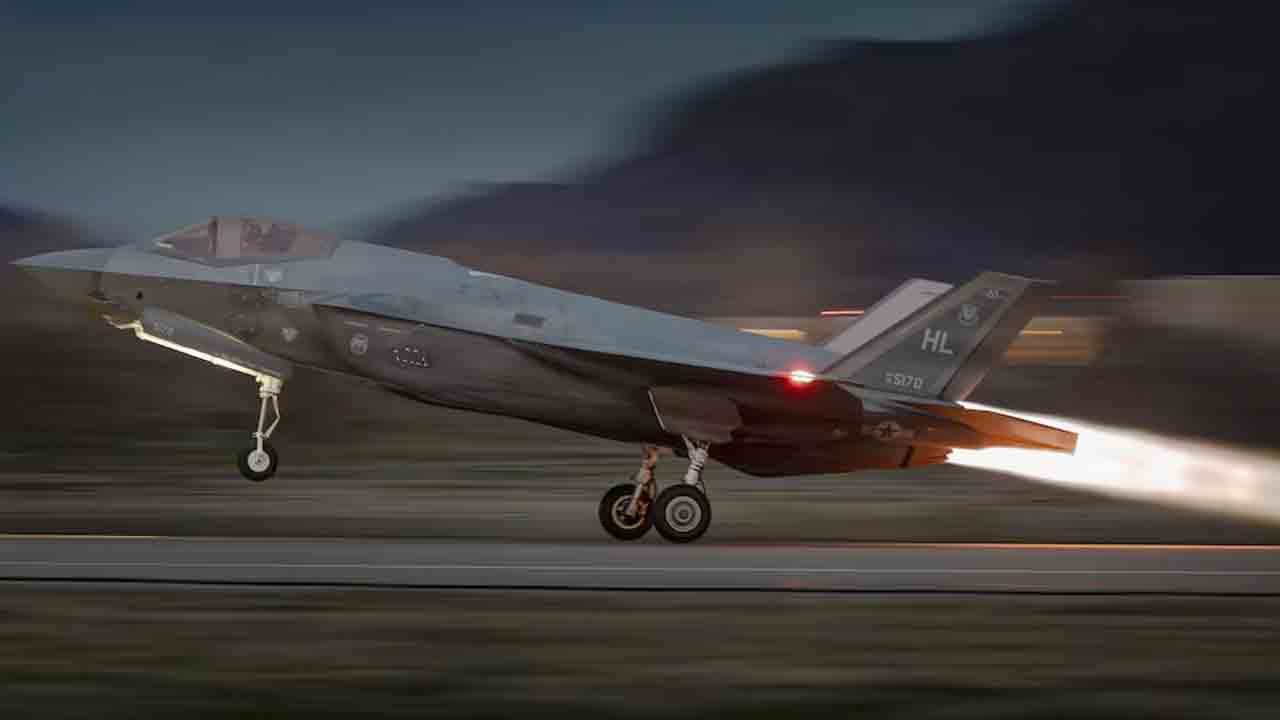
A unit of F-35A fighters from the Royal Netherlands Air Force is taking part throughout March in a large-scale integration and training activity with the United States Air Force at Hill Air Force Base, in the state of Utah.
The operation is part of the Lightning Forge exercise, conducted jointly with aircraft from the 388th Fighter Wing.
The main objective of the mission is to enhance combat readiness in a realistic and contested environment, with an emphasis on integration among NATO allies. In addition to the fighters, the deployment includes support teams from the Dutch Air Combat Command.
According to the lieutenant colonel known by the callsign “Swinger,” commander of the 313 Squadron, training in Utah offers conditions very different from the operational reality of the Netherlands. He noted that the vast Utah Test and Training Range allows training in a more demanding scenario, with simulated threats and complex missions carried out in close cooperation with U.S. partners.

According to the officer, both the 388th Fighter Wing and the Dutch squadron are considered top-tier units within their respective air forces, often positioned on the front line of combat operations. For this reason, Hill Air Force Base was seen as a strategic location for exchanging experience and best practices.
The exercise also marks the largest deployment ever carried out by the Dutch Air Force with F-35 aircraft. Throughout the month, the detachment has been sustaining two sortie lines per day, employing both live and inert munitions while also testing maintenance capabilities with a reduced number of aircraft.
The high operational tempo was designed as a direct challenge to the unit’s ability to keep aircraft and personnel ready in a high-demand scenario. The aim is to assess not only aircraft availability, but also the preparedness of personnel and the logistical means required to sustain intense operations over an extended period.
The activity also plays an important role in training less experienced pilots. For many of them, this is their first participation in an exercise of this scale and intensity. The Dutch command expects that, by the end of the mission, these personnel will return home with greater confidence both in the aircraft and in their own skills.

Another central aspect of the training is the use of the Utah Test and Training Range, considered one of the main training areas in the United States. The facility includes advanced threat emitters and realistic targets, allowing pilots to more thoroughly explore the capabilities of the F-35 in an environment that simulates modern threats more accurately than would be possible in Dutch territory.
According to the commander of the 313 Squadron, the training range realistically penalizes tactical errors, making the exercise both a confidence-building factor and a concrete assessment of the operational limits of the platform and its crews.
For U.S. personnel, the presence of allied fighters also enhances the realism of local training. Major Cody Bown, a reservist from the 419th Fighter Wing and currently deputy commander of the 388th Operations Group, stated that Dutch participation increases the number of aircraft involved, diversifies pilot profiles, and makes the scenarios closer to real operations.
As the exercise progresses, the goal of the Dutch unit is to return to Europe confident in its ability to conduct large-scale deployments, sustain high-tempo combat operations, and fully integrate with its key allies.
The Dutch command also highlighted the support received from the Hill base team, describing the reception as one of the best ever seen in international deployments.
Source and images: United States Air Force. This content was created with the help of AI and reviewed by the editorial team.
