
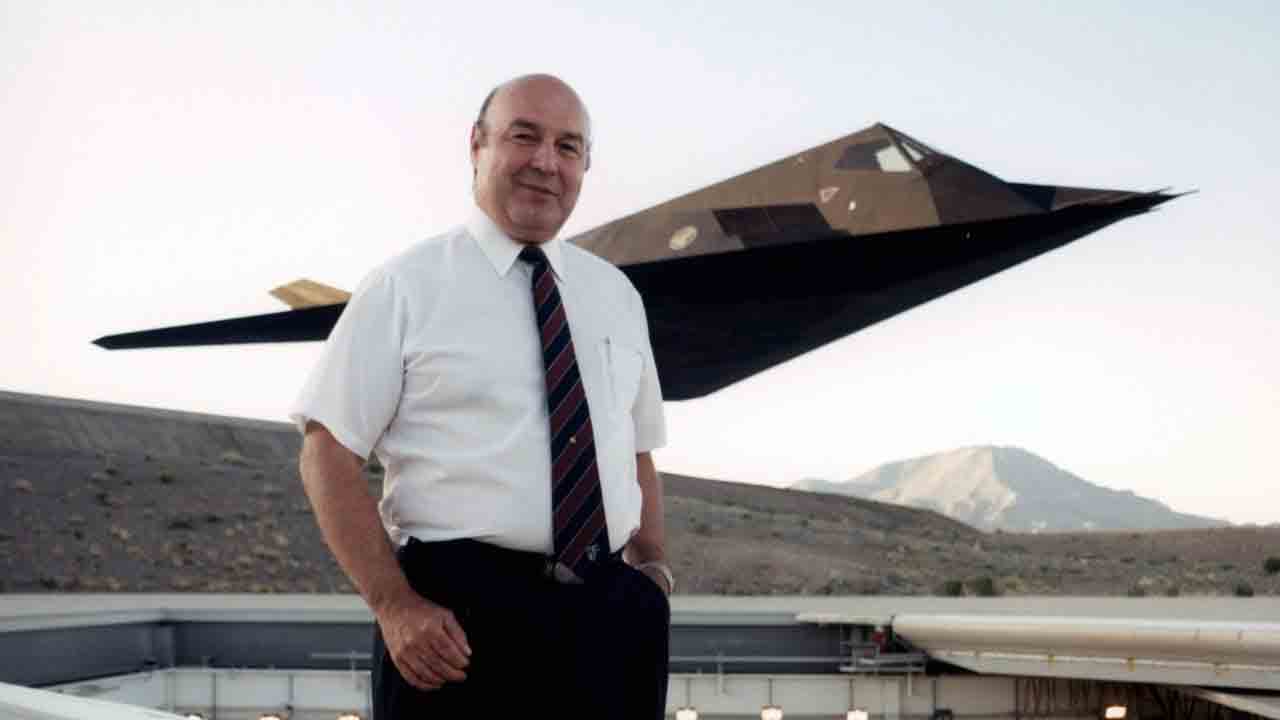
Denys Overholser, an engineer at Skunk Works, Lockheed Martin’s advanced projects division, died this week. Recognized for decisive contributions to the development of stealth technology, Overholser played a central role in creating the foundations that enabled the emergence of the F-117 Nighthawk and influenced later generations of low-observable aircraft.
According to Lockheed Martin, Overholser was one of the most important figures behind the transformation of radar stealth from a theoretical concept into an operational capability applied to modern military aviation. His work helped change the way aircraft were designed to operate in contested environments.
In the mid-1970s, Overholser gained access to a Soviet physics paper translated into English. While many saw its content as academic theory, he realized that the calculations could be used to accurately predict how certain shapes would reflect radar waves before an aircraft was even built.
From that insight came ECHO 1, a computer program developed to model an aircraft’s radar signature. The tool was essential in guiding the design of faceted surfaces and contributed directly to the development of the F-117, considered one of the milestones of stealth aviation.
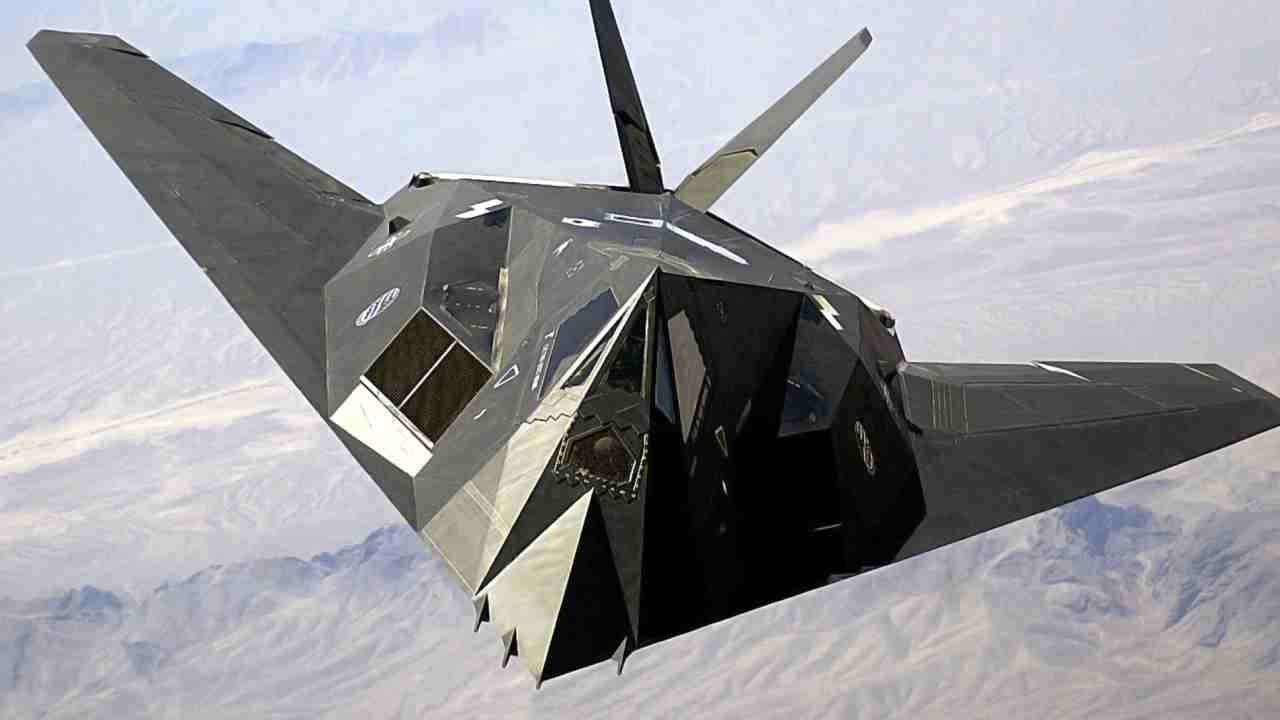
The F-117 Nighthawk demonstrated in practice that stealth technology could offer a new dimension of operational survivability. The aircraft was designed to reduce its detectability by radar and enable missions in high-threat areas, expanding the possibilities for operations in heavily defended airspace.
Overholser’s contribution, however, was not limited to the F-117. The principle established by his work went on to influence the development of later platforms, in which low observability ceased to be an isolated feature and became part of the broader concept of design, operation and combat survivability.
This technological legacy can be seen in fifth-generation aircraft such as the F-22 Raptor and the F-35 Lightning II, in which stealth is combined with advanced sensors, data fusion and an operational architecture designed for highly complex environments.
Within Skunk Works, Overholser is remembered as an engineer capable of identifying solutions where others saw only theoretical limitations. His work established a new approach to the development of advanced systems: understanding the threat, designing the aircraft around it and incorporating the advantage from the earliest phase of the project.
For the defense community, his legacy remains associated with a structural shift in military aeronautical engineering. More than reducing radar signatures, his contributions helped create a new design logic for aircraft intended to operate in increasingly contested scenarios.
Source and images: Lockheed Martin/Skunk Works. This content was created with the help of AI and reviewed by the editorial team.
