
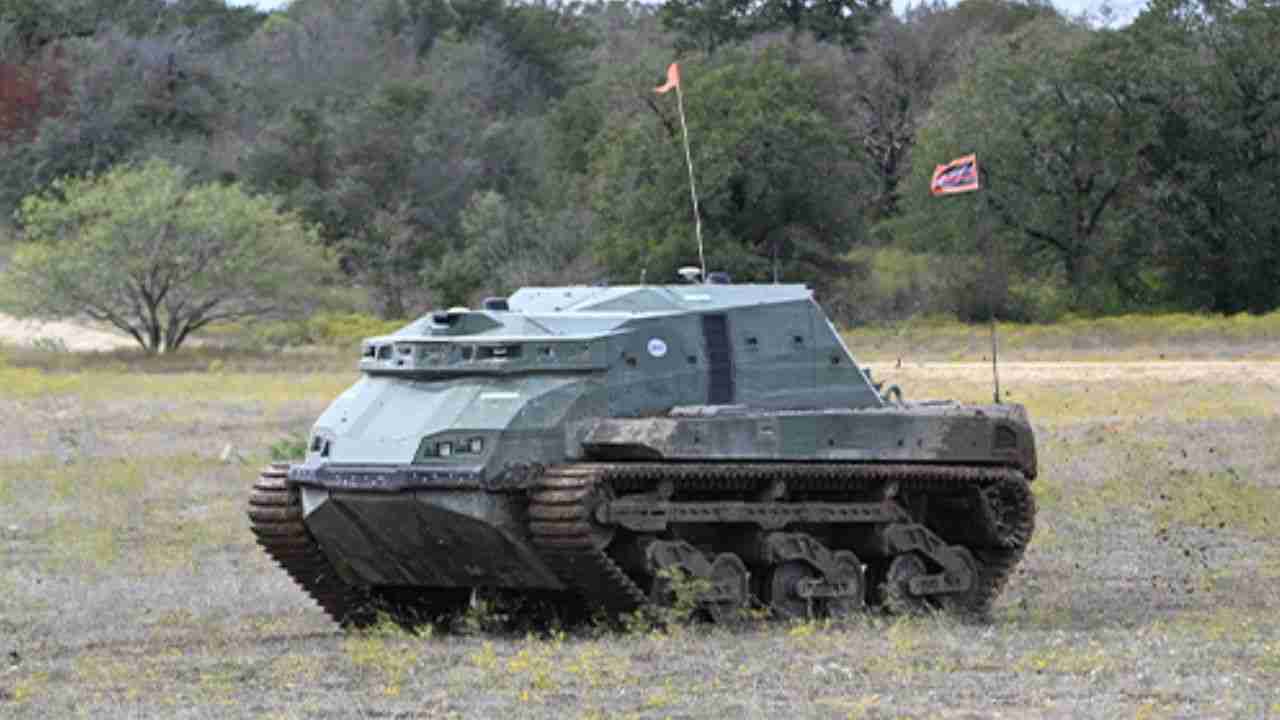
DARPA has announced the completion of the final tests of the RACER program, focused on developing robotic autonomy for ground vehicles operating in complex environments.
According to the agency, the technology is ready to be transferred both to U.S. military units and to commercial applications, following demonstrations conducted in 2025 with the Army and the Marine Corps. The tests proved the vehicles’ ability to operate without GPS, pre-mapped routes, or direct human control.
Unlike programs focused on a single vehicle, RACER consists of a reusable software stack made up of algorithms, databases, and neural-network models. This architecture allows different sensor-equipped platforms to become autonomous vehicles capable of operating in degraded and contested environments, fulfilling a promise that began with the DARPA challenges held between 2004 and 2005.
During operational demonstrations, the system was employed in realistic combat scenarios, such as autonomously opening corridors through minefields and conducting long-range reconnaissance missions. In exercises at the National Training Center in California, Army units used RACER vehicles as an opposing force, validating the technology’s performance in tactical operations and highlighting reduced risk to soldiers during dangerous missions.
+ U.S. Army orders Oshkosh trucks configured for air landings and Arctic operations

Another significant advance of the program was RACER’s perception architecture, capable of predicting terrain and adapting vehicle behavior in unknown environments in about one day—a major leap compared to previous systems. With the program’s conclusion, DARPA stated that the technology is ready for broad adoption, highlighting its dual-use potential and the emergence of companies already applying the developed autonomy in civilian sectors such as agriculture, mining, construction, and transportation.
Source: Defence Blog | Photo: X @DARPA | This content was created with the help of AI and reviewed by the editorial team
