
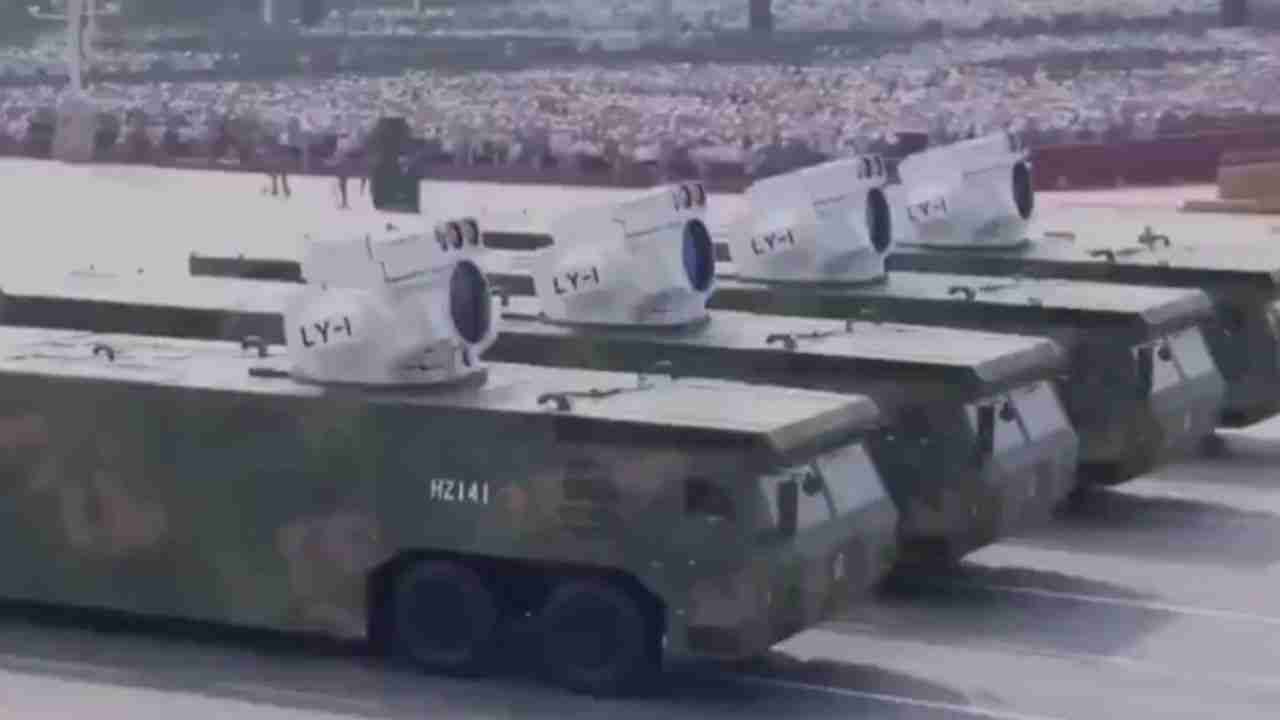
In a majestic military parade in Beijing, celebrating the 80th anniversary of victory over Japan in World War II, China showcased one of its newest and most impressive warfighting capabilities: the high-power laser weapon system LY-1.
The weapon, mounted on an eight-wheeled mobile platform, was publicly displayed for the first time, marking a significant step in the country’s directed energy weapons program. Despite the unveiling, critical details such as its exact power and operational development stage remain officially undisclosed.
According to analysts and Chinese state media, the LY-1 is primarily designed for naval air defense, providing a low-cost layer of protection against modern threats such as drones and anti-ship missiles. Its large circular aperture and robust configuration, similar to systems under development by Western navies, suggest it is a high-energy weapon capable of inflicting physical damage on targets, not just blinding their sensors. Confirmation of a similar prototype spotted on an amphibious ship in 2021 supports its intended naval use.
However, the version on display, mounted on a ground vehicle, strongly indicates dual-use ambitions, also for ground-based air defense. Experts suggest a land-based version could intercept drones, cruise missiles, and other aerial threats, complementing existing defenses.
The unveiling of the LY-1, along with other directed energy weapons such as the “Hurricane 3000” microwave cannon at the same event, underscores China’s strategic determination to advance and deploy these futuristic technologies across multiple battle domains, keeping pace with and challenging rival nations like the United States.
Source: The War Zone | Photo: X @PolymarketIntel | This content was created with the help of AI and reviewed by the editorial team
Touted as the "world’s most powerful," China’s LY-1 ship-based laser air defense system was displayed on an eight-wheeled truck, with no specs released. pic.twitter.com/WalkQffaA9
— Polymarket Intel (@PolymarketIntel) September 3, 2025
