
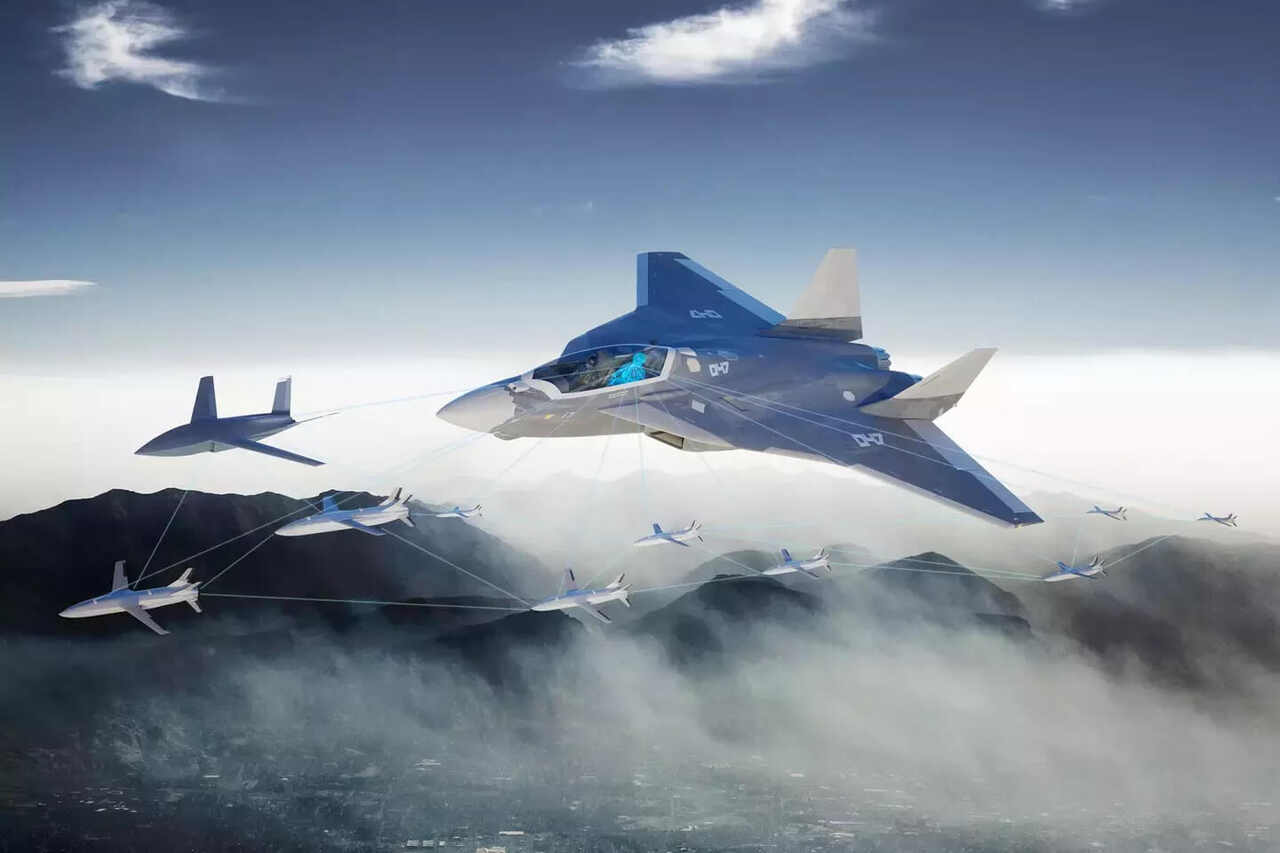
A representative of the CDU/CSU group on the Bundestag Defense Committee, responsible for the Air Force, is demanding that Germany withdraw from the European 6th-generation fighter project.
The German government had promised to make a decision before Christmas on how this project, currently in crisis, would proceed—or even whether it would proceed at all.
According to Volker Mayer-Lay, the Future Combat Air System (FCAS) was considered Europe’s defense project of the century, intended to result in a European sixth-generation fighter.
The goal was to combine Europe’s industrial capabilities, strengthen its technological sovereignty, and ensure equal participation on the international stage.
“Today, very little of that vision remains. Instead of a constructive partnership, we are witnessing power games, deadlocks, and national ambitions that are paralyzing the project,” Mayer-Lay explained.
Now, as reported by the portal hartpunkt, Mayer-Lay said he sees no future for the program after trust between the governments and companies involved was seriously damaged.
Thus, according to him, shutting down the Future Combat Air System project is the only practical solution to the existing problems.
A controlled exit, according to Mayer-Lay, will not pose a security risk but will open the possibility for a genuine restart.
“The Franco-German friendship will survive this, but the German industry cannot withstand another delay,” the politician said in a recent statement.
Mayer-Lay emphasized that further delays threaten not only to cost millions but also to lose valuable time that should be invested in developing a new fighter.
He also criticized Éric Trappier, CEO of Dassault, who had demanded that France take the lead on FCAS and recently threatened to withdraw from the project if Dassault did not gain full control over decision-making.
“Those who act this way demand subordination. Those who exclude others do not seek partnership,” Mayer-Lay analyzed.
“The rich industrial culture of Germany and the leading companies currently working on FCAS are capable of directly transferring the knowledge gained to the new project.”
Citing companies such as Airbus, Diehl Aviation, Diehl Defense, and Hensoldt, Mayer-Lay said that “Germany is in a comfortable position to consistently defend its point of view against Dassault’s demands.” “We must choose between dependence and a cooperative solution,” he argued.
Accordingly, Mayer-Lay said he is considering transferring Germany’s knowledge to the Global Combat Air Program (GCAP), a partnership between the UK, Italy, and Japan to build a 6th-generation fighter by 2035.
“Thus, Germany has an excellent opportunity to complete the development of the next-generation fighter, utilize the knowledge and technology acquired, and at the same time establish new partnerships.”
Photo: Airbus. This content was created with the help of AI and reviewed by the editorial team.
