
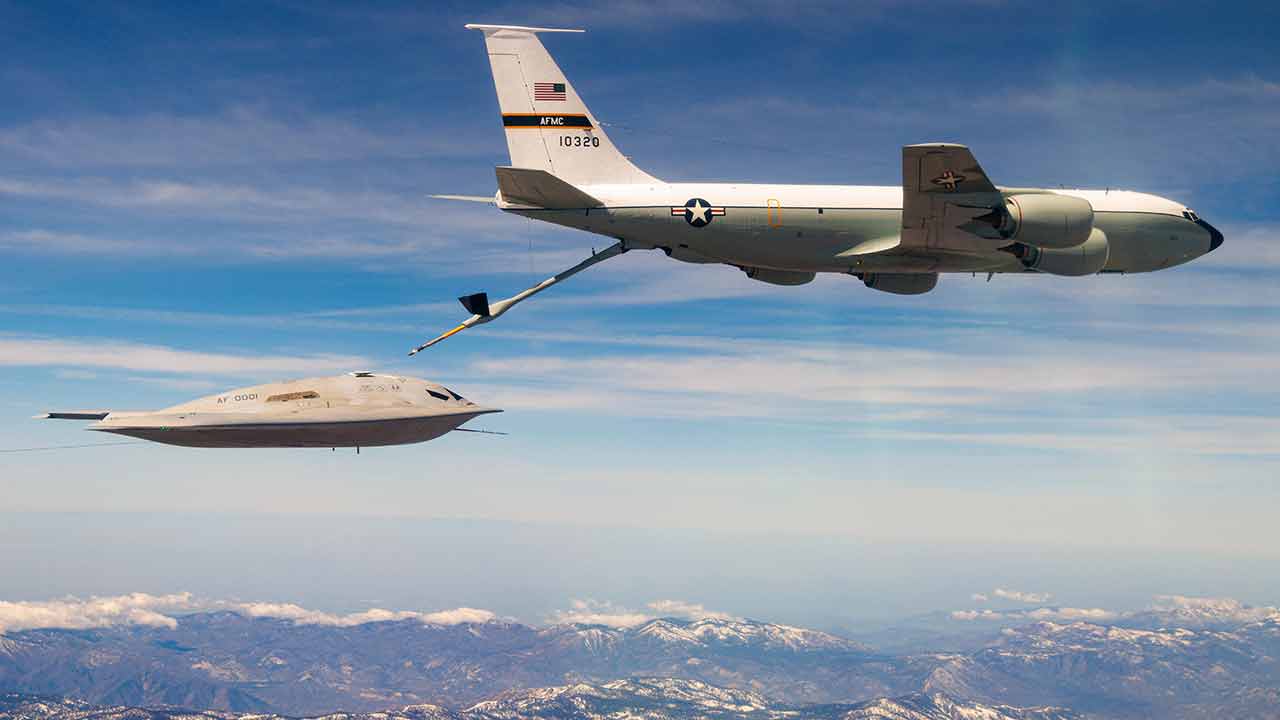
A new milestone with in-flight aerial refueling shows the maturity of the stealth bomber and brings closer the entry into service of one of the most important platforms of the next generation of the USAF.
The B-21 Raider program gained new momentum with the confirmation of another relevant advancement in its testing campaign. The United States’ next-generation strategic bomber performed aerial refueling with a KC-135 Stratotanker, demonstrating the rapid evolution of the system and reinforcing expectations that the new aircraft will soon become one of the pillars of the U.S. Air Force’s long-range strike capability.
According to the U.S. Air Force, the progress of the B-21 symbolizes a new military acquisition approach adopted by the Department of the Air Force, which prioritizes speed, integration, and delivery of operational capability from the early stages of the program. The concept combines digital engineering, modern production processes, and continuous testing to reduce risks and accelerate system maturity.
For General Dale White, the B-21 represents the frontline of this transformation. According to him, each test reinforces confidence in a platform already considered mature and highly capable, while the industrial base prepares to scale up production at a pace aligned with current strategic demands.
One of the most highlighted aspects by the Air Force is the aircraft’s high fuel efficiency. The B-21 has been described as the most efficient bomber ever built, consuming significantly less fuel than legacy models. Operationally, this reduces pressure on tanker fleets and expands commanders’ flexibility to assemble more adaptable force packages in high-intensity scenarios.
Air Force Chief of Staff General Ken Wilsbach stated that this efficiency is one of the central elements of the Raider’s lethality. According to him, the aircraft will help reduce demand on the refueling fleet, freeing up assets to support other joint missions and expanding strategic employment options for U.S. forces.
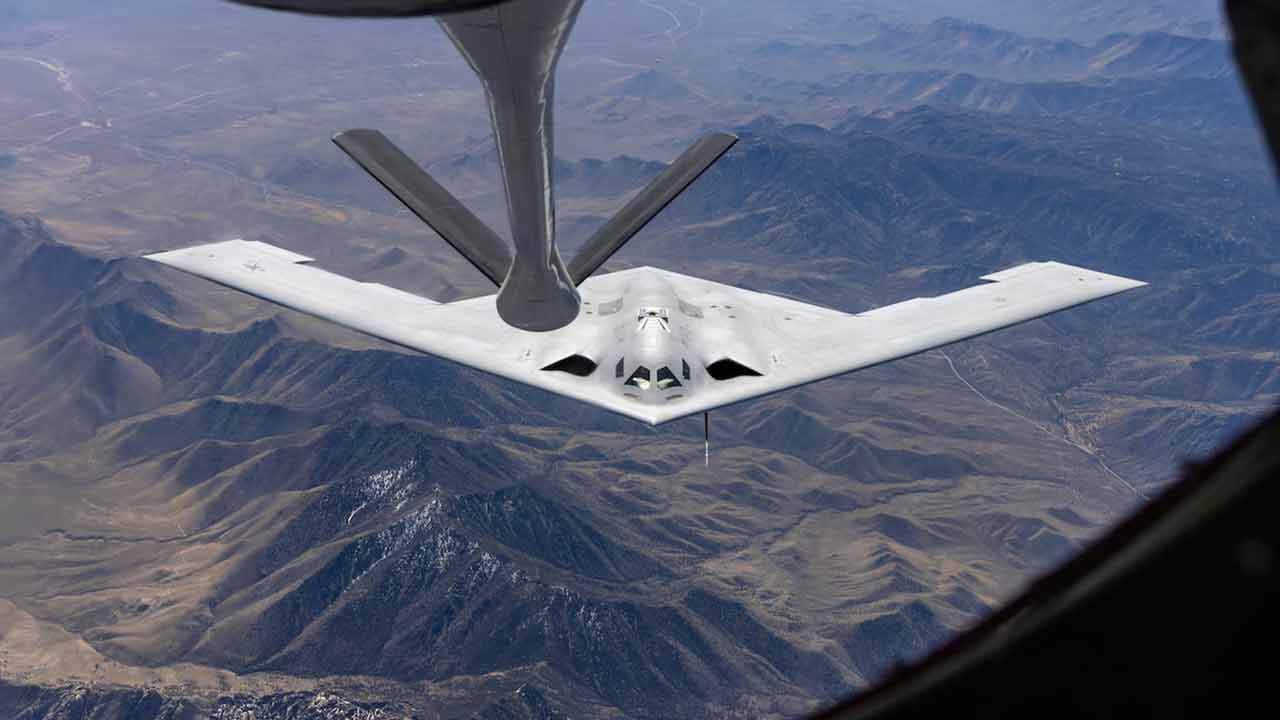
The ability to refuel in flight is considered essential to the B-21’s mission. The bomber was designed to ensure global power projection, support strategic deterrence, reassure allies and partners, and provide combatant commands with the capability to conduct long-range strikes with great flexibility in any theater of operations.
In the assessment of General S.L. Davis, commander of the Air Force Global Strike Command, this advancement directly strengthens the readiness of the bomber force. He emphasized that the system will enable long-range penetrating strikes anywhere in the world, at any time, strengthening the United States’ response capability against complex threats.
Aligned with the National Defense Strategy, the B-21 was developed to operate in high-threat environments and is expected to employ both conventional and nuclear weapons, consolidating itself as a visible and flexible part of the U.S. nuclear triad. Another distinguishing feature is its open systems architecture, which will allow the rapid integration of new technologies and capabilities throughout the platform’s service life.
Testing continues at Edwards Air Force Base in California, in cooperation between the Air Force Test Center, the 412th Test Wing, and Northrop Grumman. The goal is to reduce risks, mature the weapons system, and bring the B-21 Raider into operational service as soon as possible.
+ 10 facts about the B-21 Raider, the new U.S. strategic bomber
Source and images: U.S. Air Force | Northrop Grumman. This content was created with the help of AI and reviewed by the editorial team.
