
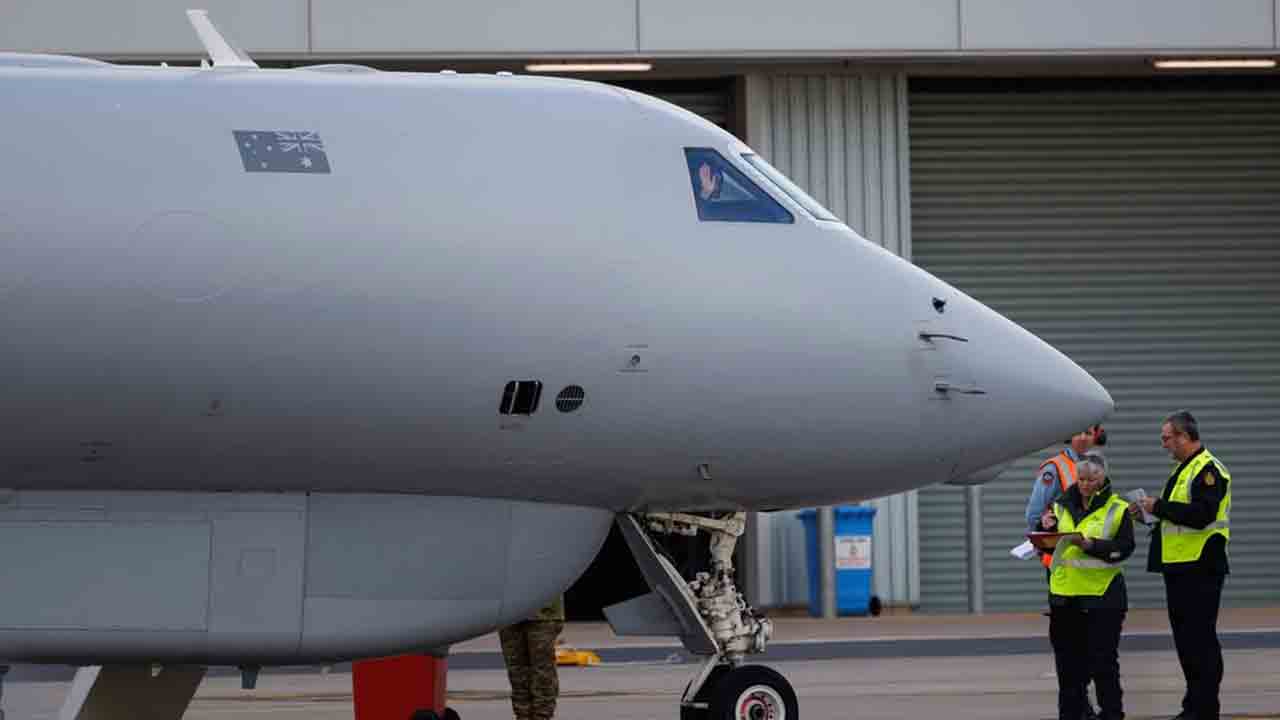
The Royal Australian Air Force has received its third MC-55A Peregrine at RAAF Base Edinburgh, in South Australia, bringing the country closer to completing one of the most advanced electronic surveillance fleets in the Indo-Pacific. With the new arrival, three of the four planned jets are now on Australian soil, while full operational capability for the fleet remains planned for 2028.
The MC-55A Peregrine is based on the Gulfstream G550, a jet well known in the civil and government markets, but deeply modified for military intelligence, surveillance, reconnaissance and electronic warfare missions. The transformation is carried out by the U.S. company L3Harris Technologies, which converts the aircraft into a platform capable of detecting, identifying and locating radars, communication networks and other electronic emitters at long distances.
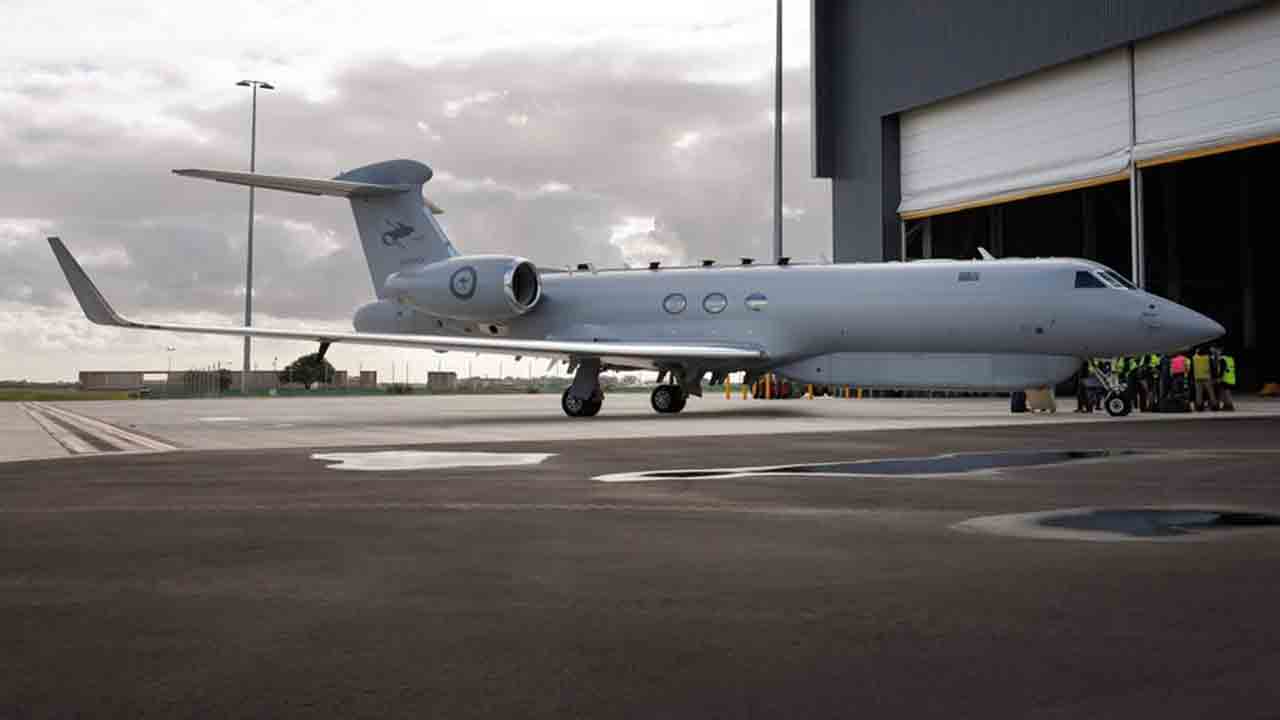
Australia is located in an increasingly contested region. The Indo-Pacific concentrates essential sea routes for global trade and is now an area of growing military activity. With the Peregrine, Australia expands its ability to monitor threats, track adversary movements and support joint operations with allies without needing to move directly into risk areas.
The MC-55A still retains the elegant silhouette of a Gulfstream G550 business jet, but its interior and systems have been redesigned for a completely different role. Instead of transporting authorities or executives, the aircraft acts as a sophisticated airborne intelligence-gathering center, capable of mapping the surrounding “electromagnetic environment” — in other words, everything that emits signals, such as radars, communications and defense systems.
What stands out about the Peregrine is precisely this combination of discreet appearance and sensitive mission. The executive-jet fuselage contrasts with the external modifications, antennas and fairings associated with electronic sensors. This type of configuration allows the aircraft to operate over long distances, with the range and altitude typical of a high-performance jet, while collecting information considered critical for modern military operations.
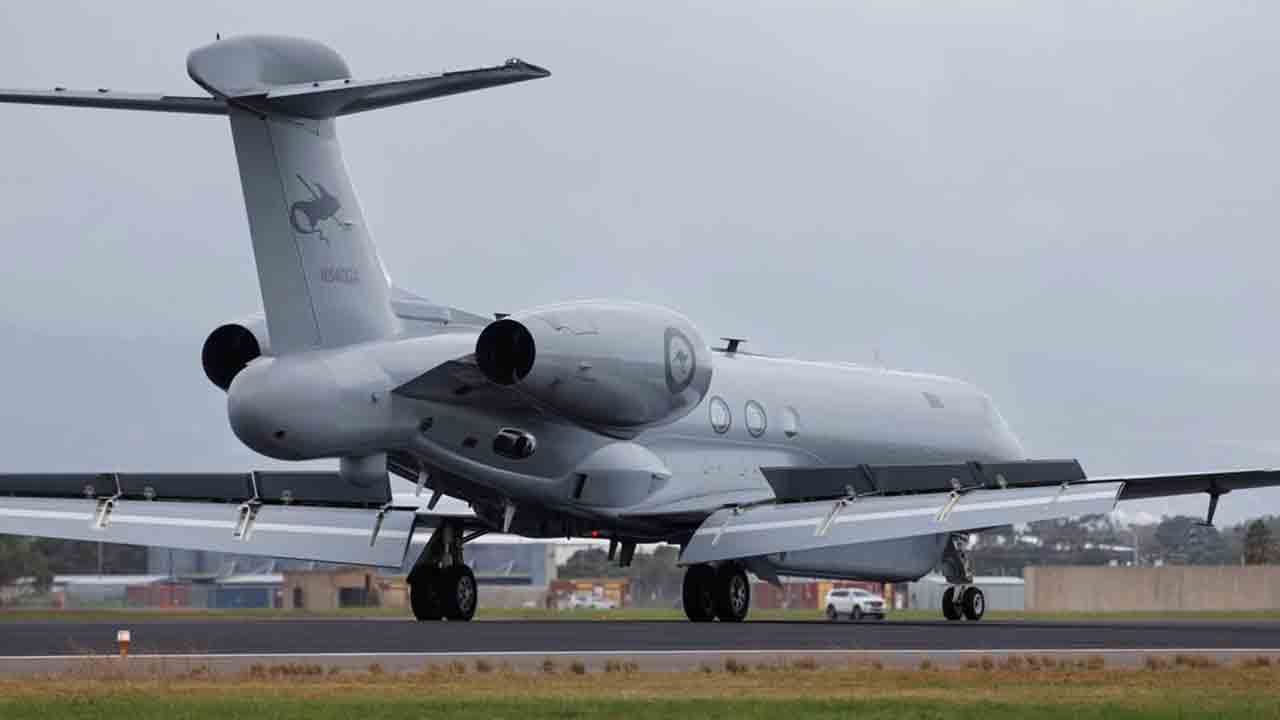
All four MC-55A aircraft will be operated by No. 10 Squadron of the RAAF, based at Edinburgh. The unit has a long tradition in signals intelligence missions and previously used two AP-3C Orion aircraft modified for electronic warfare. These aircraft, converted in the 1990s under a classified project known as Peacemate, made their final flight on December 5, 2023, before being retired.
The transition to the MC-55A represents a technological leap. While the Orion originated from a maritime patrol platform, the Peregrine is based on a faster, more modern and more efficient long-range jet. The new fleet is part of the AIR 555 Phase 1 project and was acquired through the U.S. Foreign Military Sales program, a mechanism used by the United States to sell sensitive military equipment to allied countries.
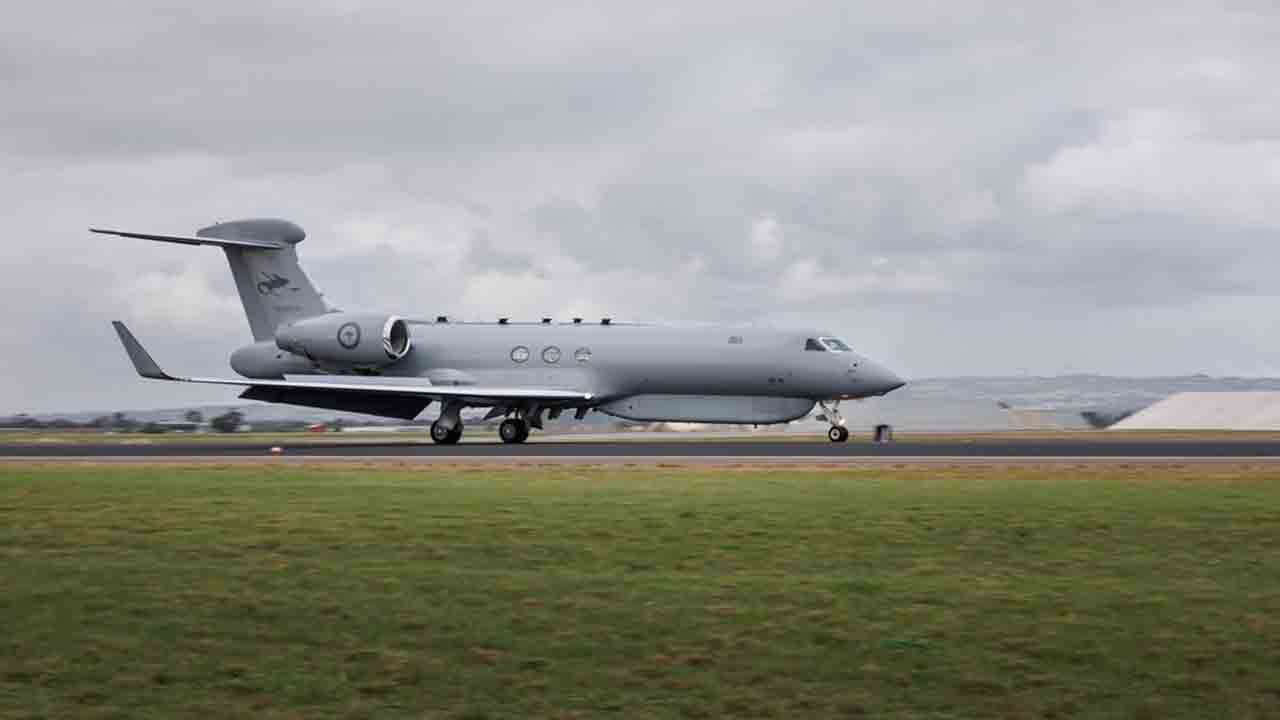
The delivery schedule advanced rapidly in 2026. The first MC-55A arrived at RAAF Base Edinburgh in January, the second landed in March after a ferry flight from Texas with stops in Hawaii and Guam, and now the third has joined the fleet. Systems integration is carried out by L3Harris in Greenville, Texas, while Sierra Nevada Corporation provides additional support in Australia during the aircraft’s entry into service.
At Edinburgh, the Peregrine will operate alongside other key platforms for Australian surveillance, such as the P-8A Poseidon, used for maritime patrol and anti-submarine warfare, and the MQ-4C Triton, a high-altitude drone developed for persistent observation of vast ocean areas. Together, these assets form a surveillance architecture designed to give Australia greater situational awareness over its maritime approaches and strategic areas.
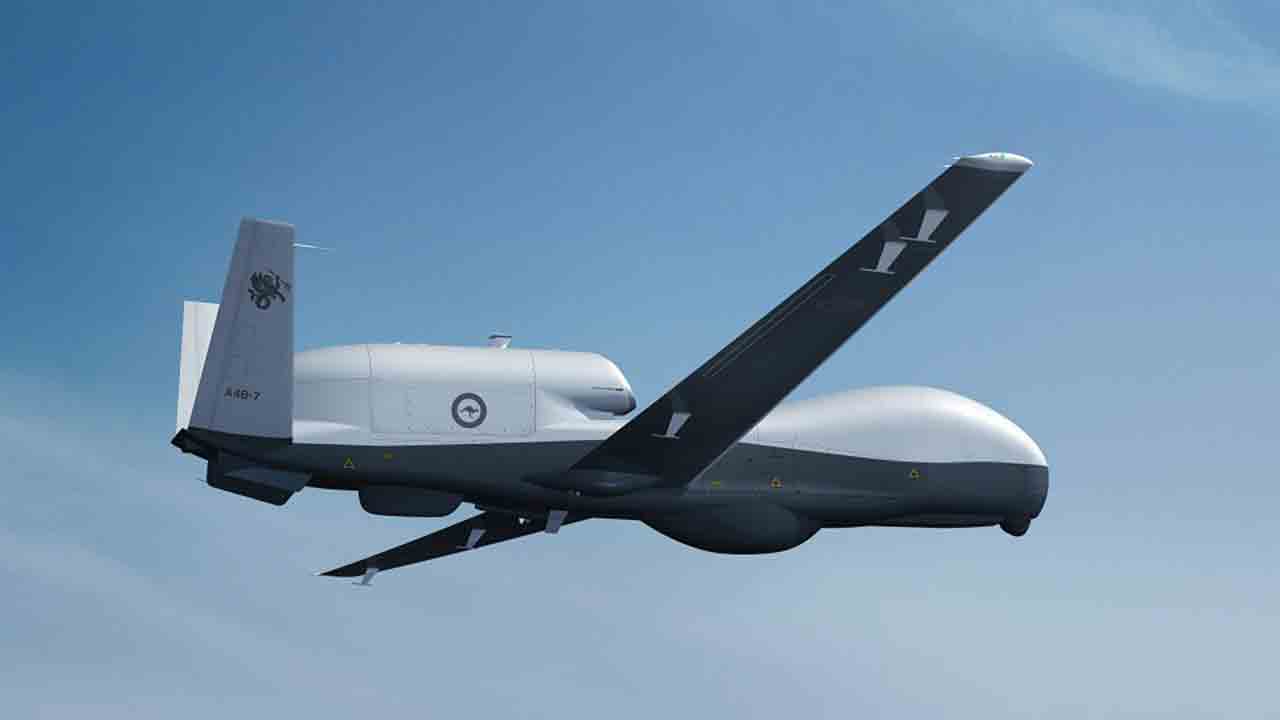
The central point is that the MC-55A Peregrine is not a traditional combat aircraft, nor was it designed to attack targets directly. Its main function is to see first: locate signals, identify threats, support military decisions and provide a more accurate picture of what is happening in distant regions. In modern conflicts, this capability can be as decisive as fighters, ships or missiles.
According to the RAAF itself, the Peregrine strengthens the Australian Defence Force’s capability by delivering critical intelligence in support of operations and by expanding the country’s ability to monitor its strategic area of interest, including key maritime approaches — a permanent priority of Australia’s National Defence Strategy.
Source and images: Royal Australian Air Force. This content was created with the help of AI and reviewed by the editorial team.
