
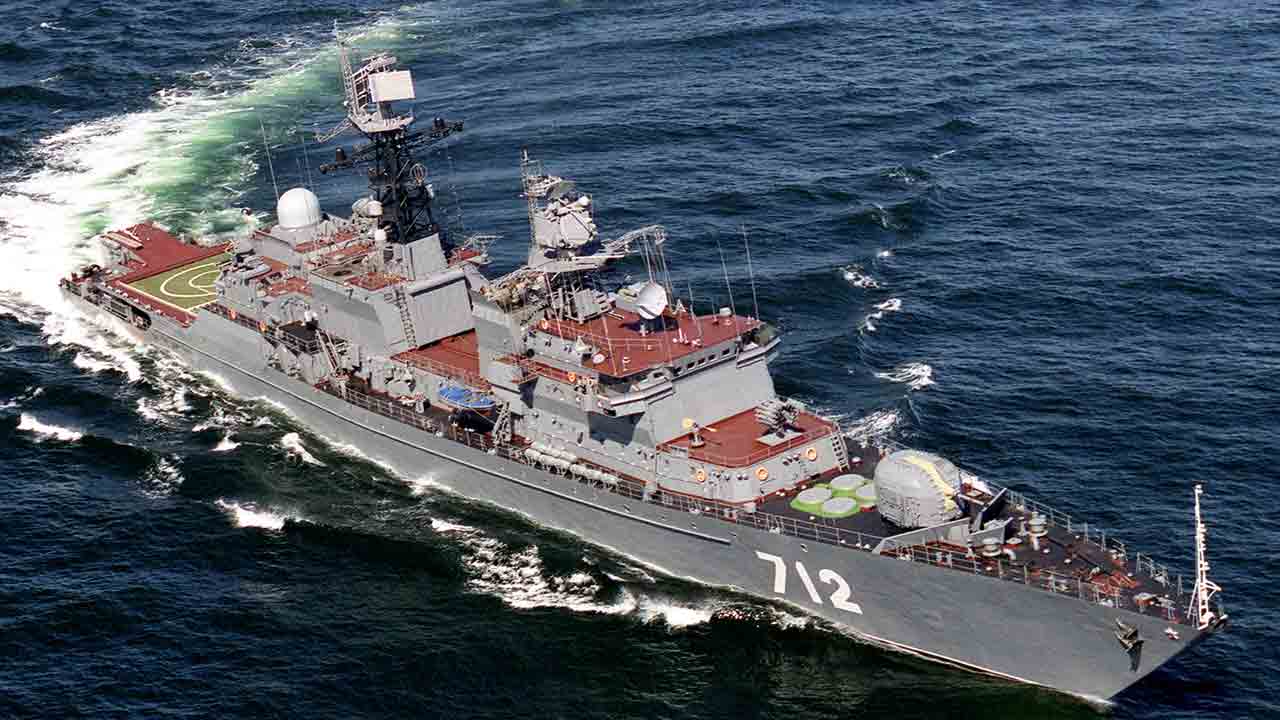
Neustrashimy carried out training fire for 30 minutes in international waters south of Plymouth while being monitored by the patrol ship HMS Tyne
The Russian frigate Neustrashimy conducted a live-fire artillery exercise near the southern coast of England, in an area located about 40 nautical miles — roughly 74 kilometers — south of Plymouth. The activity took place on Monday, July 20, while the ship was closely monitored by the British Royal Navy.
Before beginning the firing exercise, the Russian crew informed the patrol ship HMS Tyne of its intentions and requested that the British vessel move to a position considered safe. The Tyne repositioned itself but continued to observe the entire activity, which lasted about 30 minutes. A French military aircraft also reportedly established radio contact with the frigate to clarify the planned procedures.
Despite its proximity to the British coastline, the training took place in international waters. In situations of this kind, military vessels may conduct exercises provided that they notify nearby units, establish a safety zone, and take measures to reduce risks to navigation. According to the UK Ministry of Defence, the required maritime procedures were followed, and there was no indication of offensive action against British territory or vessels.
Even so, the choice of an area close to one of Europe’s busiest shipping routes drew the attention of British authorities. Exercises of this kind are usually planned and announced further in advance, especially in the English Channel, where commercial ships, ferries, and military vessels from different countries operate every day.
Russian naval presence remains constant in the region
Neustrashimy recently arrived in the region to replace the frigate Admiral Grigorovich, which remained for approximately three months between the English Channel and the North Sea. Russian ships have maintained a frequent presence around the British Isles, including escorting oil tankers and other vessels considered strategic by Moscow.
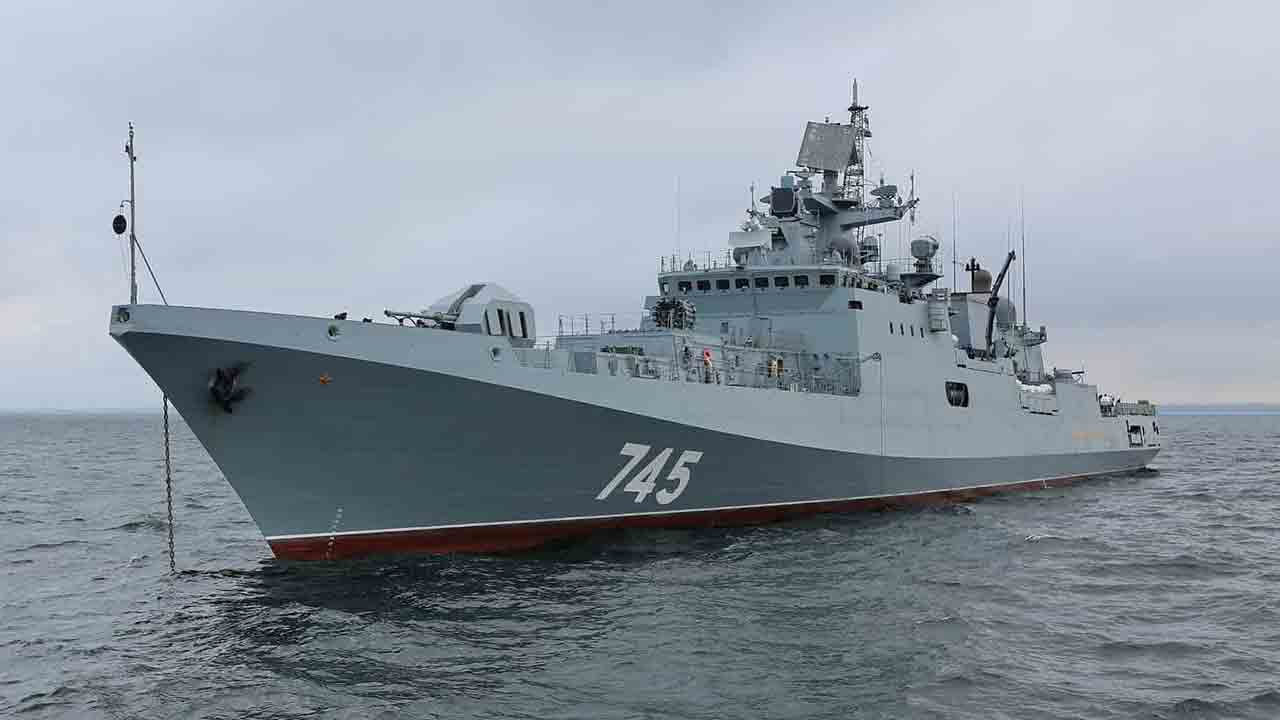
These movements require the Royal Navy to keep ships on standby to identify, track, and record the activities of Russian units. Monitoring does not necessarily mean interception, but it allows British authorities to follow changes in course, communications, and any exercises carried out near areas of interest.
After the training, responsibility for monitoring Neustrashimy was reportedly transferred from HMS Tyne to HMS Mersey, another River-class patrol ship. The Russian frigate was observed heading east, possibly toward the North Sea.
Frigate was designed in the final years of the Soviet Union
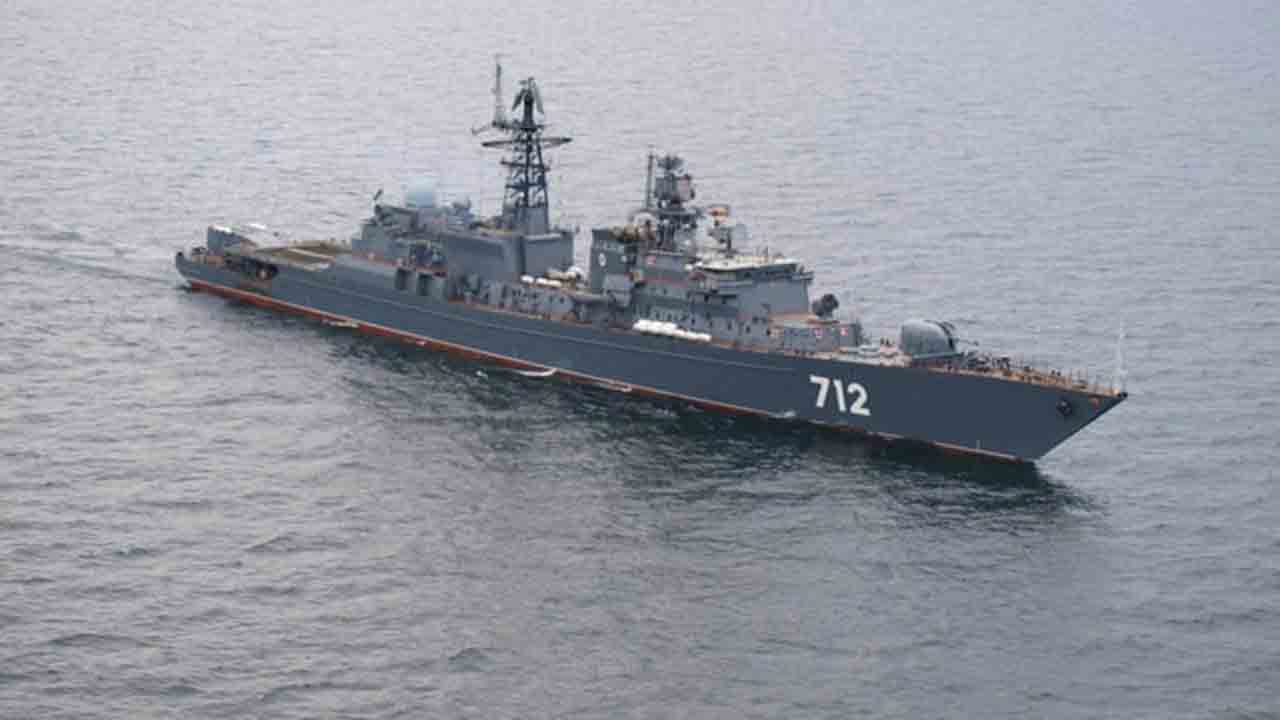
Neustrashimy is the first unit of Project 11540 Yastreb, developed during the final years of the Soviet Union as a successor to the Krivak-class patrol ships. Its construction began at the Yantar shipyard in Kaliningrad in 1987. The ship was launched the following year and commissioned into the Baltic Fleet in 1993.
Measuring approximately 129 meters in length and displacing nearly 4,400 tons at full load, the frigate was designed mainly for escort and anti-submarine warfare missions. Its systems include a 100 mm naval gun, short-range air-defense capabilities, torpedo tubes, anti-submarine launchers, and a hangar capable of operating a Ka-27 helicopter.
The vessel underwent a lengthy maintenance and modernization process that began in 2014. Technical problems and delays extended the work for several years until it returned to regular Baltic Fleet operations. Today, Neustrashimy is among the oldest combat ships used by Russia for naval presence missions in the English Channel.
HMS Tyne operates mainly in maritime surveillance
Responsible for monitoring the exercise, HMS Tyne is a River-class offshore patrol vessel that has been in service since 2003. The ship was originally built for fisheries protection, maritime enforcement, and patrol duties in British waters, but it is now regularly used to monitor foreign military vessels.
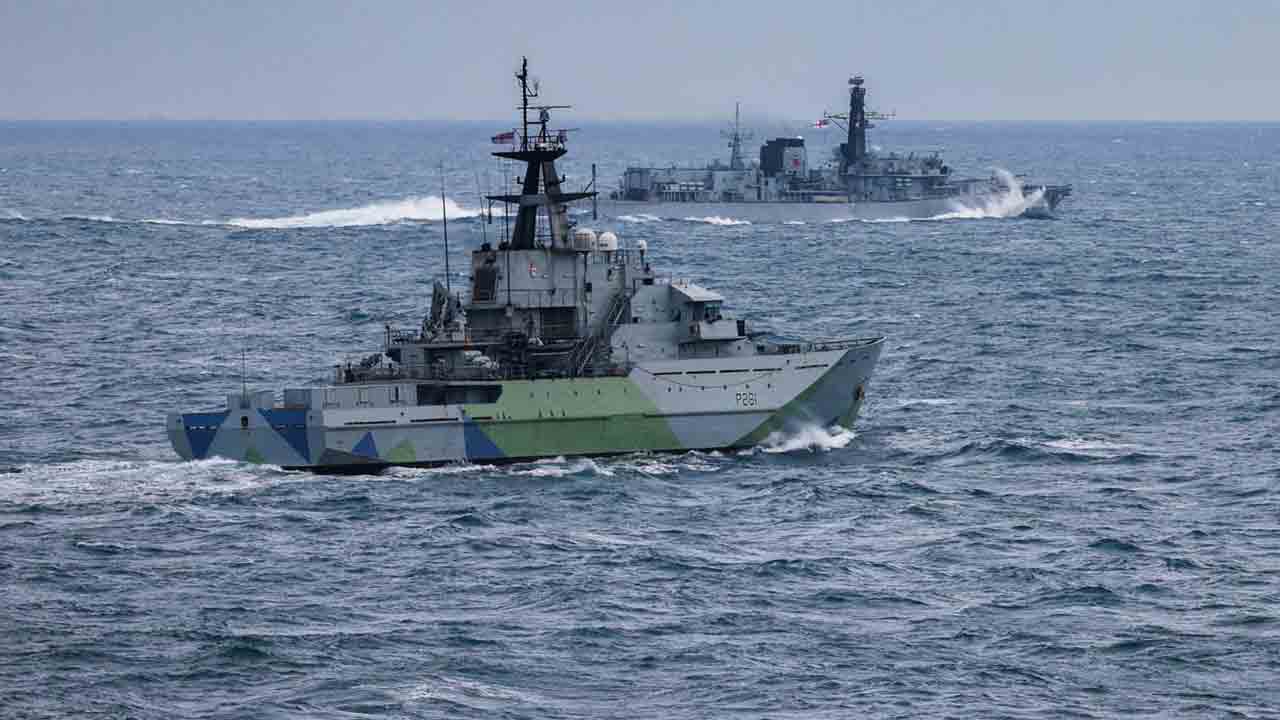
Smaller and simpler than a frigate, Tyne was not designed to confront large warships. Its main advantages are operational availability, relatively low costs, and the ability to remain at sea for long periods, serving as the Royal Navy’s “eyes and ears” near the United Kingdom.
The incident coincided with a change of government in London. On the same day, Keir Starmer stepped down as prime minister, and Andy Burnham was officially invited by King Charles III to form a new administration. So far, however, there is no public evidence that the timing of the Russian exercise was directly related to Britain’s political transition.
+ Ukrainian F-16 shoots down Russian fighter in air-to-air combat for the first time
Source: BBC, UK Ministry of Defence, and Royal Navy. Images: Russian Ministry of Defense — Telegram @mod_russia | Royal Navy. This content was created with the assistance of AI and reviewed by the editorial team.
