
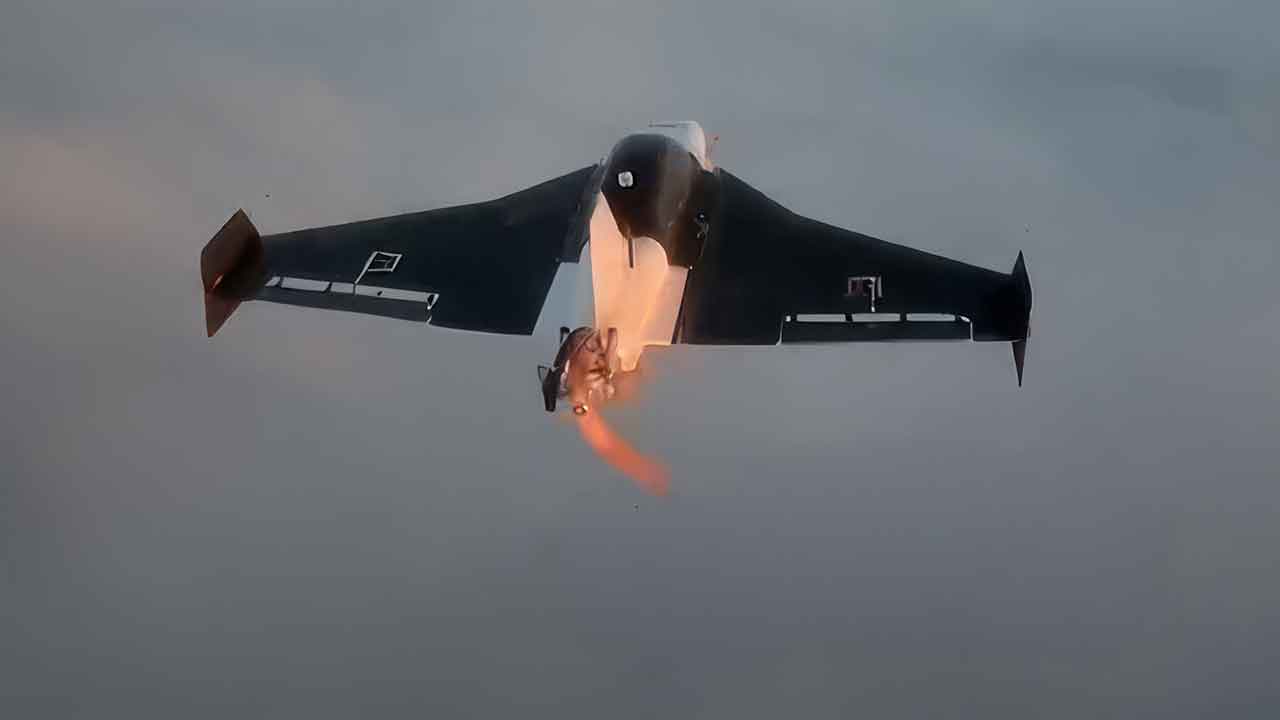
Modifications observed in images released by the Sternenko Community organization indicate an attempt to improve the aerodynamic efficiency and endurance of Gerbera drones.
Russian developers have begun incorporating structural changes into Gerbera drones, focusing on increasing flight performance, endurance and payload-carrying capacity. The changes were pointed out by the Ukrainian volunteer organization Sternenko Community, which released images showing new configurations applied to the model.
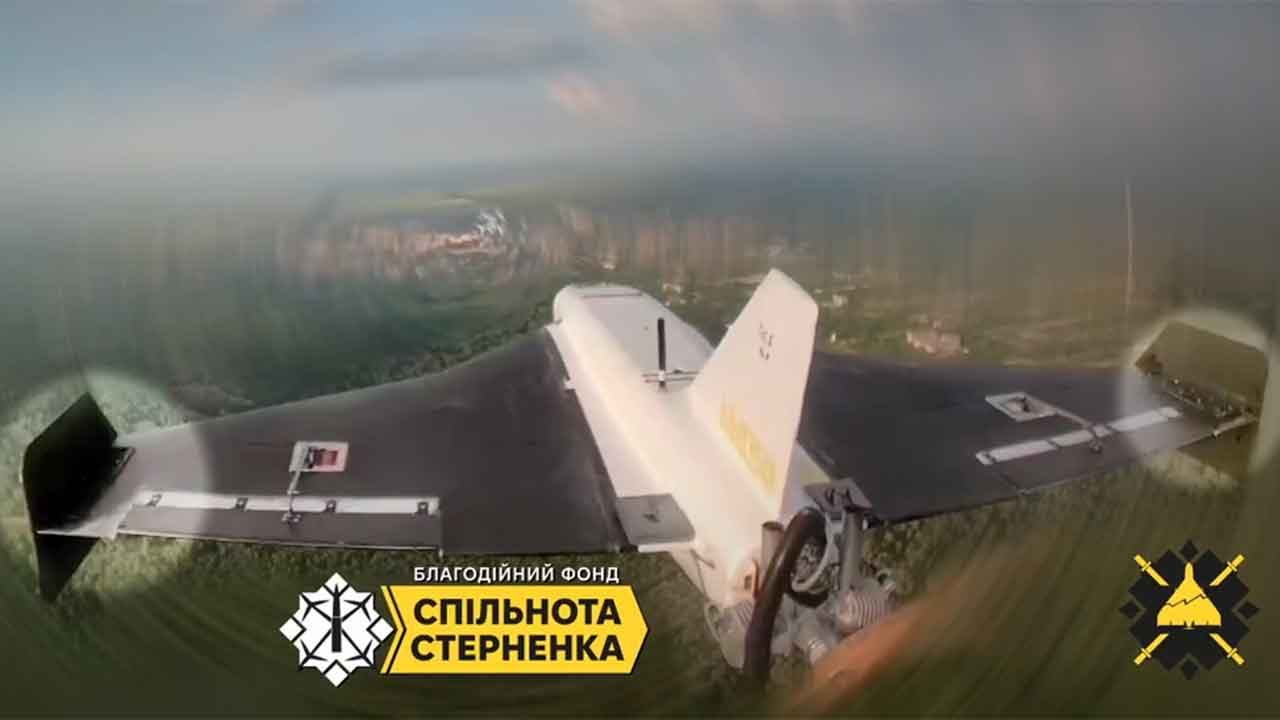
The main visible change is at the wingtips. The drones received winglets, small aerodynamic surfaces installed at the tips of the wings to reduce the drag caused by vortices generated during flight.
In practice, this type of solution improves wing efficiency, increases lift and can reduce fuel consumption. In low-cost unmanned aircraft, even small aerodynamic improvements can represent a relevant gain in operational range.
External tank increases endurance
The images also show the presence of a conformal external tank installed on top of the Gerbera’s fuselage. This type of component follows the shape of the aircraft’s body, reducing part of the aerodynamic impact compared with more protruding conventional tanks.
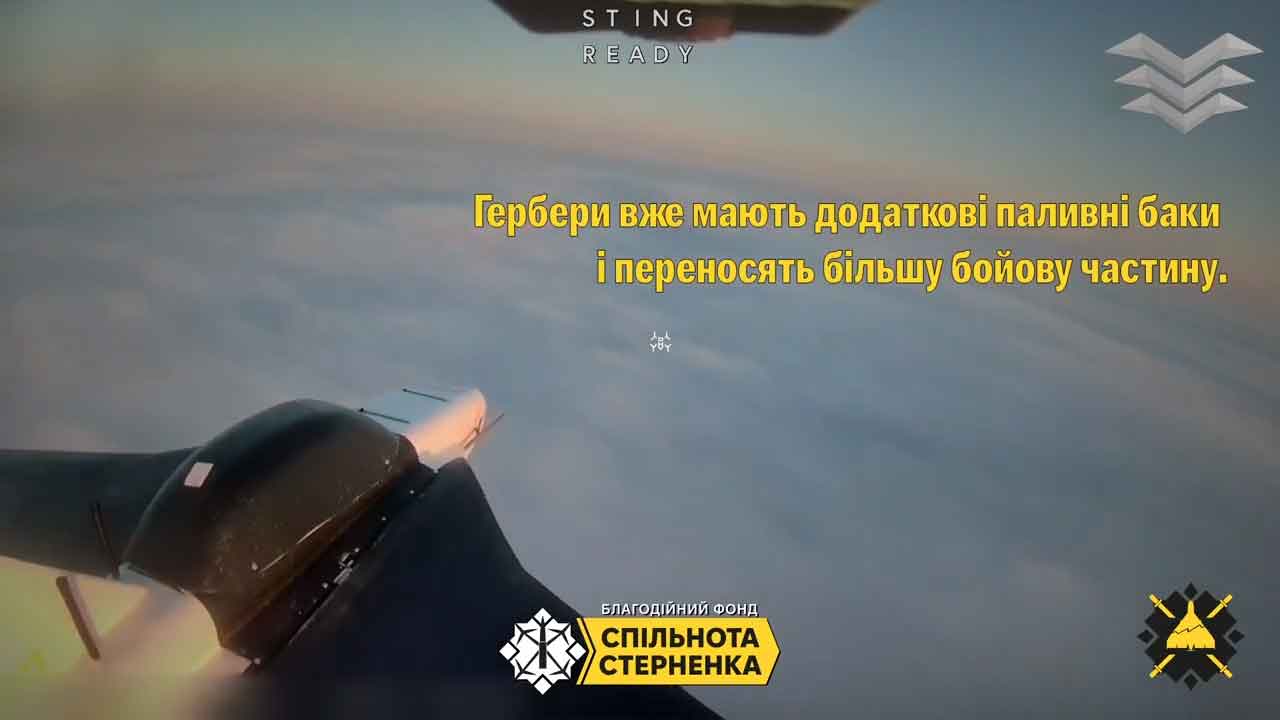
The adoption of additional fuel capacity indicates an attempt to expand the drone’s operational radius, allowing longer flights or less direct trajectories. In addition, by moving part of the fuel to an external tank, designers may free up internal space in the fuselage for other systems or for a larger payload, depending on the chosen configuration.
Gerbera is used as a low-cost platform
The Gerbera has been associated with a category of simpler-production drones used to saturate defenses, collect data or carry out long-range missions at a lower cost than more sophisticated systems. For this reason, changes such as winglets and additional tanks draw attention: they suggest a process of continuous adaptation, with incremental adjustments to improve performance without radically transforming the platform.
For defense analysts, this type of evolution is relevant because it shows that drone warfare follows a rapid learning cycle. Each modification, even an apparently small one, can change the way these systems are detected, tracked and neutralized.
Impact on the operational scenario
The increase in endurance may allow Gerbera drones to be used on longer routes or in flight profiles designed to make their trajectories less predictable. Winglets, meanwhile, may contribute to greater stability and efficiency during certain phases of flight.
There is still no independent confirmation of the exact gain in range, consumption or payload capacity after the modifications. However, the images indicate that Russian developers continue to adjust the design to respond to battlefield demands and the defense measures adopted by Ukraine.
Ворог не стоїть на місці.
росіяни постійно випробовують нові методи терористичних атак проти нашої країни.
Нещодавно вони почали активно застосовувати Гербери з вертикальними стабілізаторами. Ймовірно їх додали для більшої стійкості конструкції, дальності польоту та збільшення… pic.twitter.com/T3EDaOQ23Y
— Спільнота Стерненка (@sternenkofund) July 1, 2026
+ Philippines choose Thai amphibious armored vehicle after beating international rivals
Source and images: X @sternenkofund. This content was created with the help of AI and reviewed by the editorial team.
