
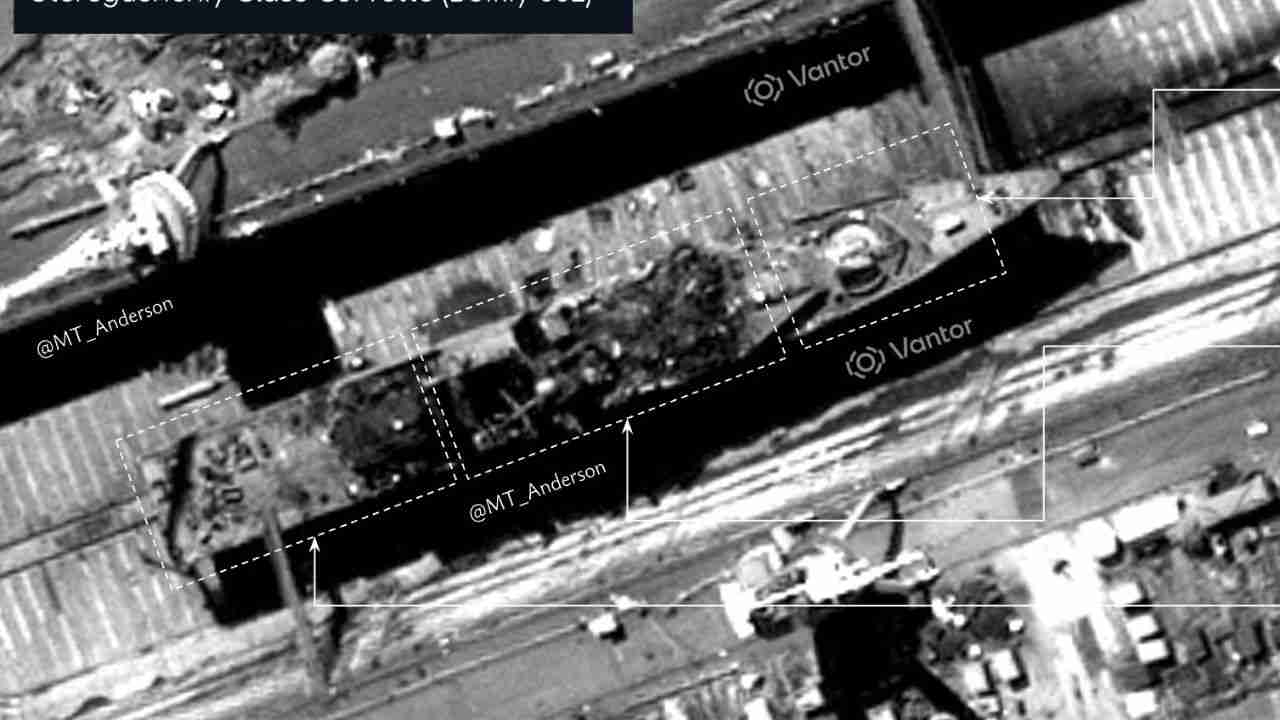
The Russian corvette Boikiy, belonging to Project 20380, may have been permanently lost after sustaining severe damage during a Ukrainian drone attack on the Kronstadt Naval Base in Saint Petersburg.
New satellite images analyzed by researcher MT Anderson show that the vessel’s superstructure was almost completely destroyed and that its hull shows severe deformation.
According to the analysis, the fire caused by the impacts may have reached extremely high temperatures, compromising internal compartments, exhaust systems, and essential electronic equipment. The intense heat also caused the collapse of the mast housing radars, communication antennas, and identification systems, all key elements for the vessel’s operations.
The attack took place on June 3, when the Boikiy was undergoing maintenance in a dry dock where it had remained since February of this year. Video footage suggests that at least two drones struck the ship, triggering a major fire that could be seen by residents from several kilometers away.
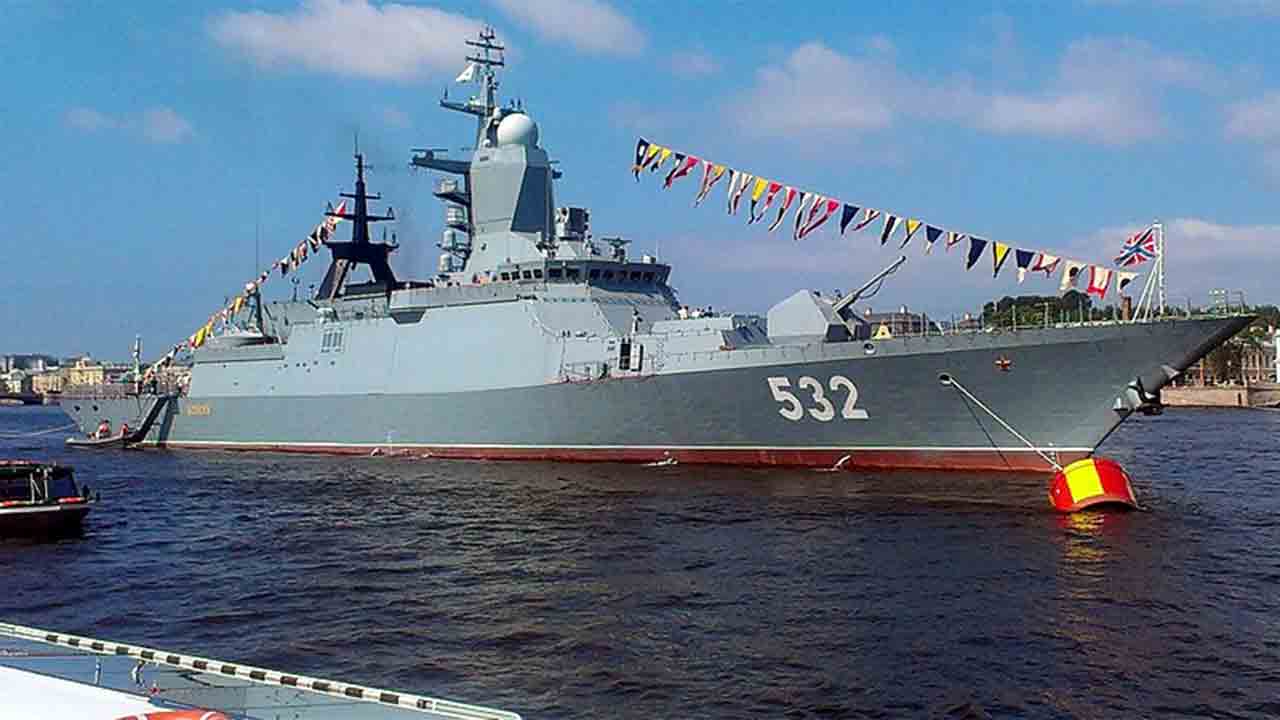
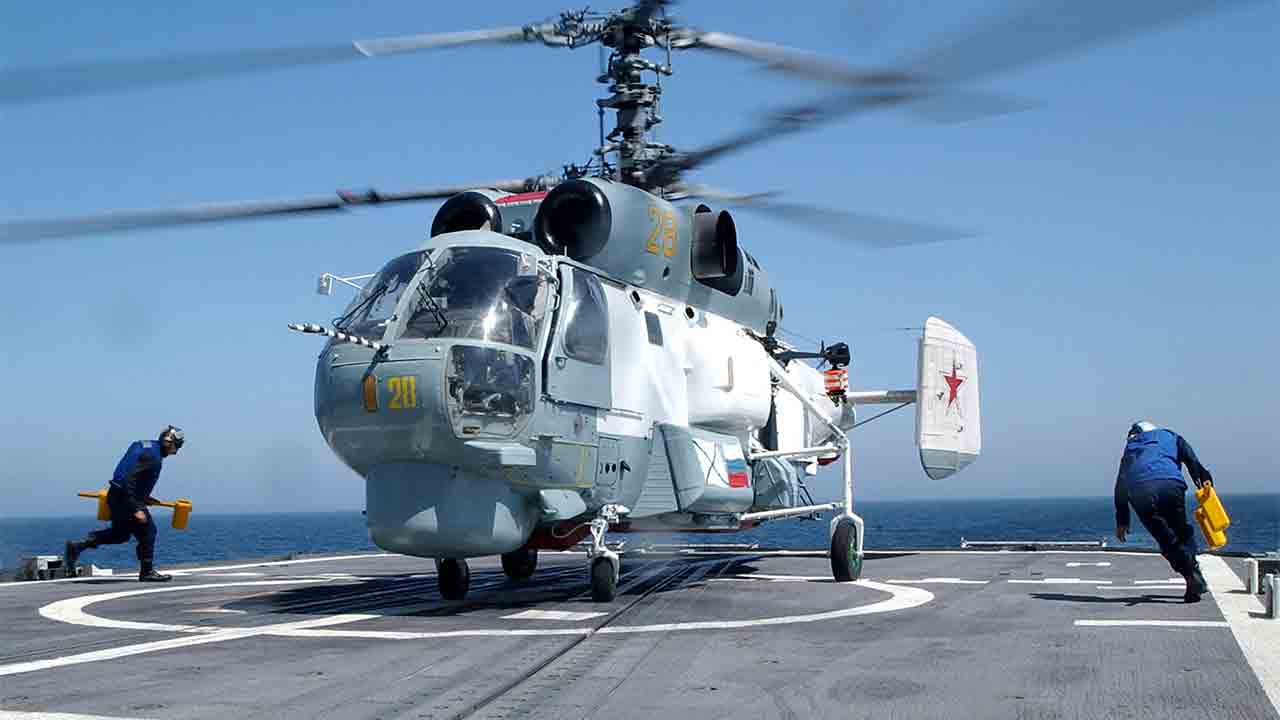
Part of the Russian Navy’s Baltic Fleet since 2013, the Boikiy is equipped with Kh-35 anti-ship missiles, the Redut air defense system, anti-submarine torpedoes, and the ability to operate Ka-27 helicopters. However, according to the assessment by the researcher responsible for analyzing the images, the extent of the damage indicates that the corvette is unlikely to be recovered or return to active service.
BATTLE DAMAGE ASSESSMENT: 🇷🇺Corvette Boikiy Devastated (🧵1/2)
High Res📷 of the Steregushchiy Class corvette Boikiy inside the Dry Dock at Kronstadt shows substantial damage following the June 3 deep-strike 🇺🇦drone operation.🔸 Primary Impacts: The structural core is heavily… pic.twitter.com/ajyDmKHFc9
— MT Anderson (@MT_Anderson) June 10, 2026
Source: Militarnyi | Photo: X @MT_Anderson | This content was created with the help of AI and reviewed by the editorial team
