
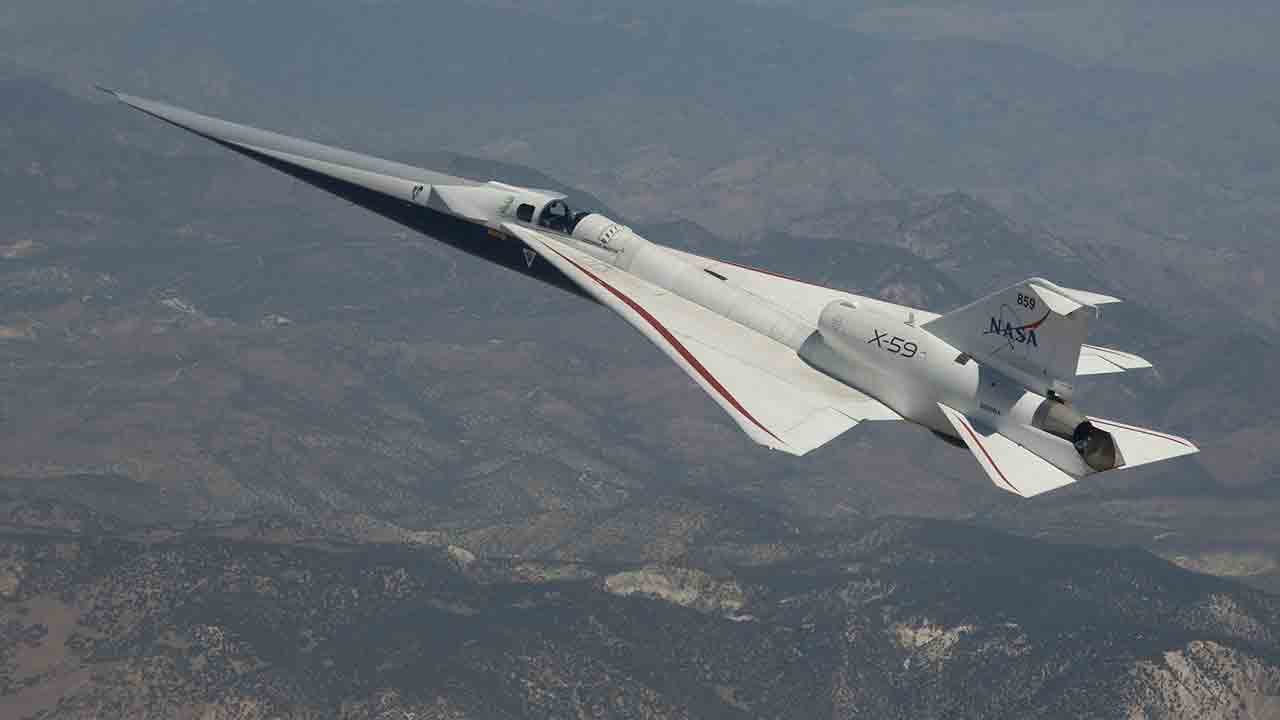
NASA is approaching one of the most important milestones of the X-59 program, an experimental aircraft developed to fly faster than the speed of sound without producing traditional sonic booms. According to the agency, the aircraft is expected to carry out its first supersonic flights soon.
The X-59 is part of the QueSST mission, short for Quiet Supersonic Technology, which aims to demonstrate the feasibility of supersonic flights over populated areas. Currently, this type of operation is severely restricted in several countries due to the strong noise impact caused by sonic booms.
After months of testing, the aircraft has already completed several gradual flight envelope expansion missions, progressively increasing altitude and speed. NASA said the next step will be to exceed the speed of sound for the first time, in flights expected to take place at around 42,000 feet.
At a later stage, the X-59 is expected to reach Mach 1.4, equivalent to approximately 1,488 km/h, flying at around 52,000 feet. At its maximum capability, the project can reach approximately 1,980 km/h while flying at around 60,000 feet.
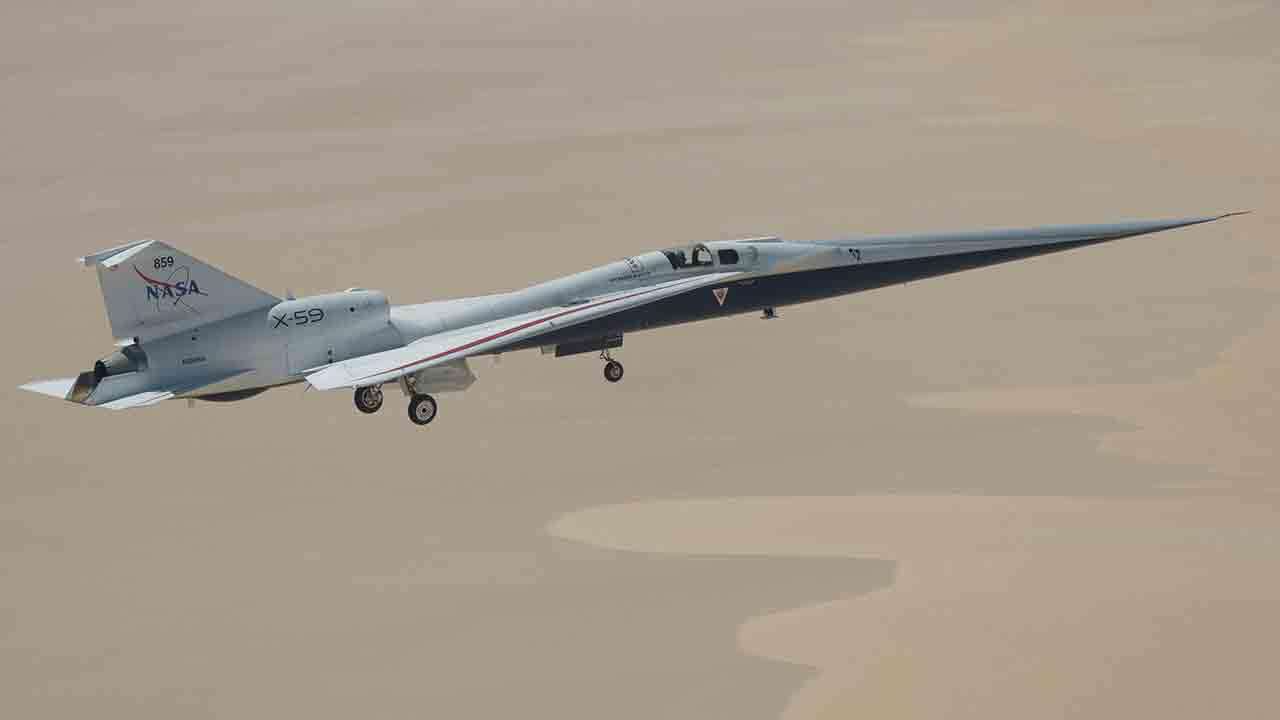
The project’s key difference lies in the extremely elongated design of the aircraft’s fuselage and nose, developed to disperse shock waves and transform the traditional supersonic boom into a much softer sound.
The test campaign will also be used to collect data on the shock waves generated by the aircraft. During some flights, the X-59 will be accompanied by F-15 fighter jets equipped with specialized sensors to measure the behavior of these disturbances in the air.
If the program is successful, NASA intends to use the data obtained to help regulators establish new noise limits for supersonic flights. The expectation is that this could pave the way for a new generation of commercial aircraft capable of significantly reducing travel times on routes over land.
Photo: Jim Ross/NASA. This content was created with the help of AI and reviewed by the editorial team.
