
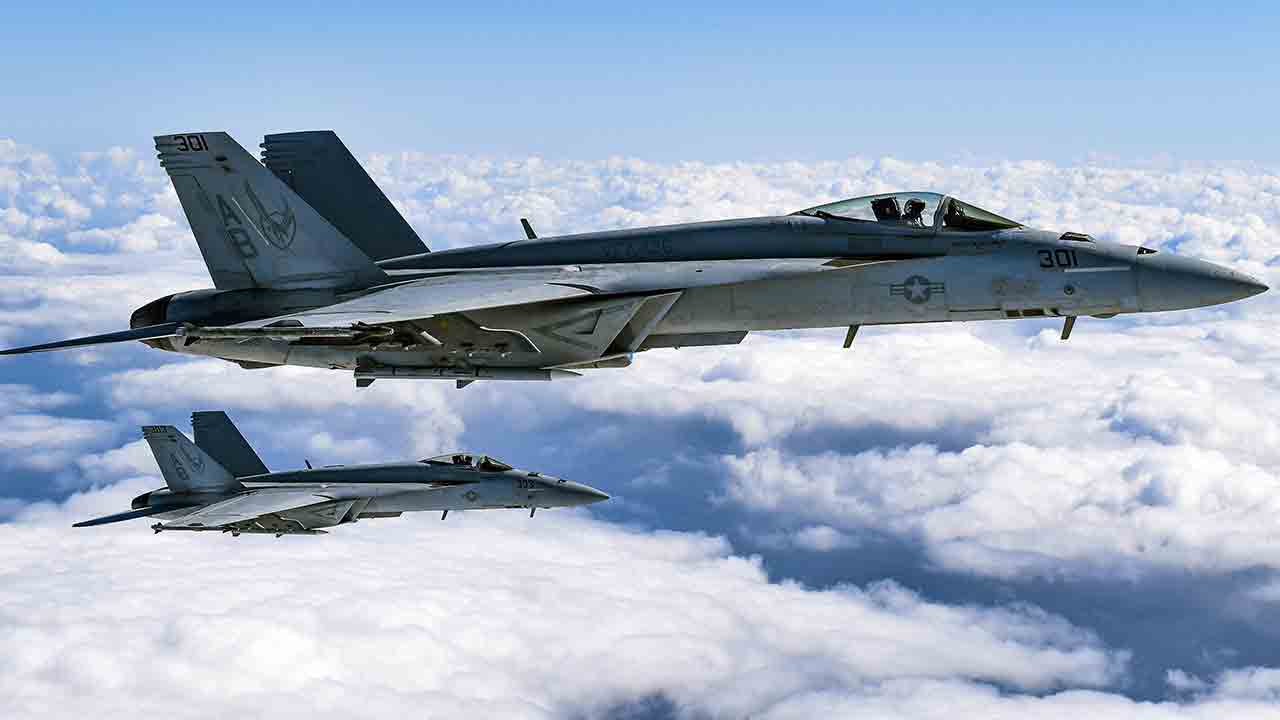
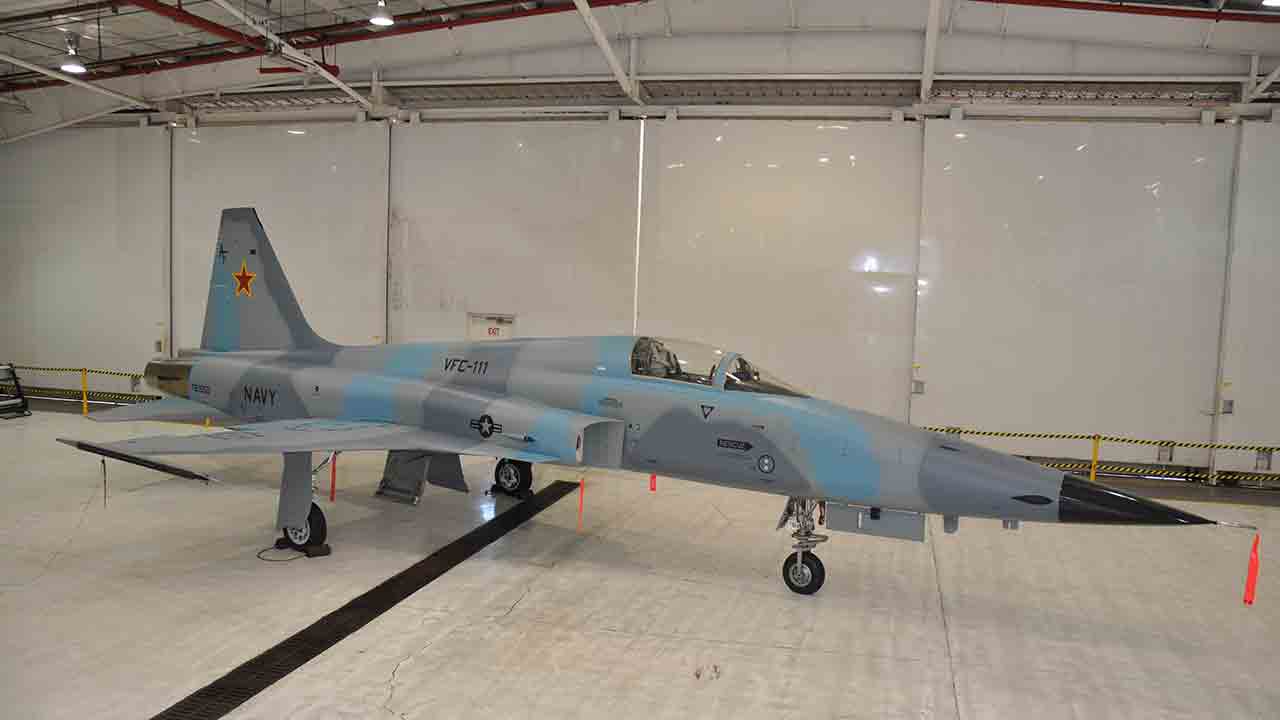
The future of the U.S. Navy’s adversary fighter fleet could see a significant shift with the possible replacement of the veteran F-5 Tiger II by the F/A-18E/F Super Hornet.
The move comes amid a growing need for more realistic training against modern threats, particularly advanced Chinese aircraft such as the J-16 Flanker.
Despite extensive upgrades carried out under the ARTEMIS program, the F-5 remains an aircraft based on an aging design originally conceived during the Cold War. The Navy acknowledges that even with modernization efforts, these fighters can no longer adequately replicate the performance and sensor capabilities of fourth- and fifth-generation aircraft, something essential for today’s combat scenarios.
The Super Hornet is emerging as a more capable solution for the “red air” role thanks to its AN/APG-79 AESA radar, advanced sensors, IRST systems, and improved aerodynamic performance. In addition, the fighter possesses flight characteristics that allow it to simulate modern threats more accurately, providing more demanding training for carrier-based pilots.
At the same time, the United States continues expanding the use of more sophisticated adversary aircraft, including F-35s dedicated to this mission and future Collaborative Combat Aircraft (CCA) drones. In this environment, the traditional F-5 appears to be approaching the end of its long service career with the U.S. Navy, closing a historic chapter closely tied to the legacy of Top Gun and Cold War-era air combat training.
+ France Conducts First Firing Tests of X-Fire System, Europe’s HIMARS Rival
Source: The War Zone | Photos: Navair | This content was created with the assistance of AI and reviewed by the editorial team
