
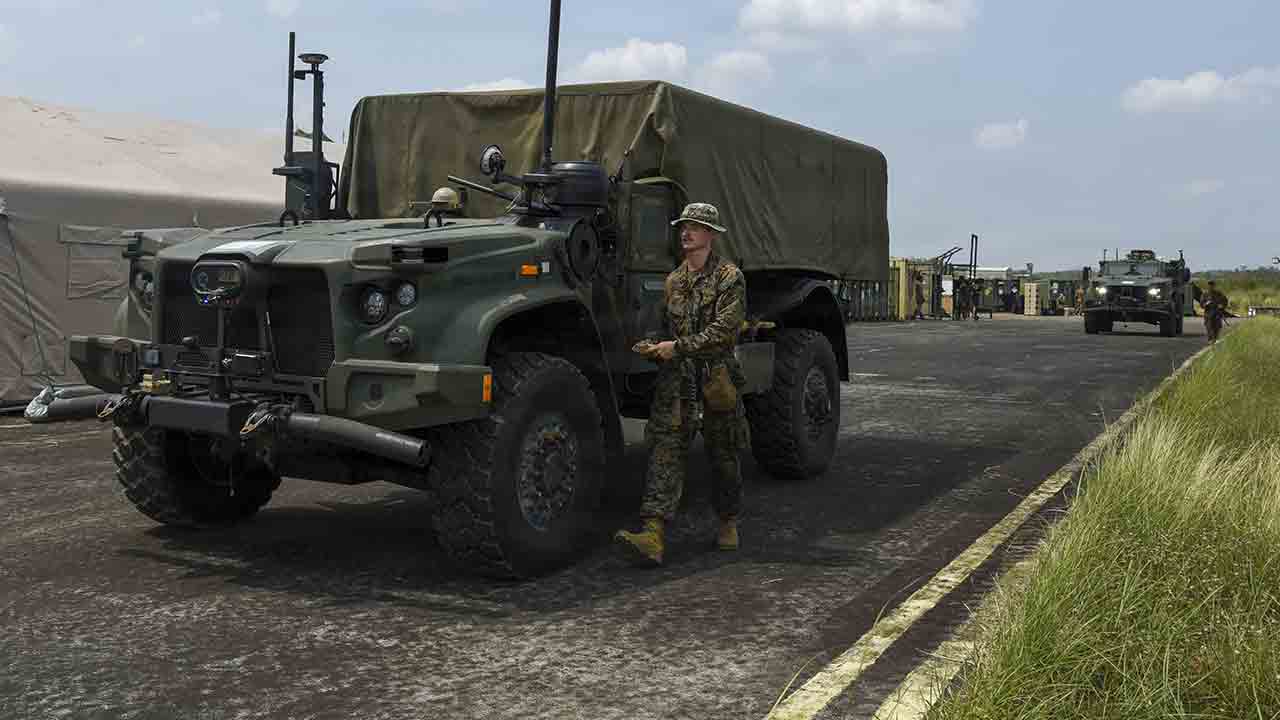
United States Marines have deployed NMESIS anti-ship launchers to the northern Philippines, in a strategic area near the Luzon Strait, during the Balikatan 2026 exercise.
The United States has positioned anti-ship missile launchers in the northern Philippines during Balikatan 2026, the largest annual military exercise held by Washington and Manila. The move comes amid increased strategic attention on the Luzon Strait, a critical maritime route between the Philippines and Taiwan.
According to the U.S. Marine Corps, more than 1,300 Marines and sailors from the 3rd Marine Littoral Regiment, a Hawaii-based unit, are taking part in the 41st edition of Balikatan. The exercise brings together more than 17,000 troops from countries including the Philippines, the United States, Australia, Japan, Canada, France and New Zealand, between April 20 and May 8, 2026.
The system being used is NMESIS — short for Navy-Marine Expeditionary Ship Interdiction System — a mobile platform equipped with Naval Strike Missile anti-ship missiles. According to images and information released by the Marines, the launchers were seen at Cagayan North International Airport, also known as Lal-lo Airport, in northern Luzon.
The location carries strategic weight. From northern Luzon, the anti-ship systems expand the ability to simulate area-denial operations, coastal defense and maritime strike missions in a region close to routes connecting the Philippine Sea, the South China Sea and the waters around Taiwan. According to Naval News, the launchers can hit targets up to 185 kilometers away, depending on the operational scenario.
Focus on maritime denial and coastal defense
The 3rd Marine Littoral Regiment was created to operate in littoral environments, with a focus on maritime sensors, air defense, support for joint forces and the ability to deny opposing forces access to key areas. In the 2026 edition, the unit is taking part in simulated exercises involving maritime denial, integrated air and missile defense, security of strategic maritime terrain and defensive operations against landings.
The presence of NMESIS in the Philippines is not unprecedented. The system had already appeared in previous exercises, including Balikatan 2025, when its participation marked an important step in demonstrating the Marines’ expeditionary capabilities in the Indo-Pacific.
During previous exercises, the Marines also tested the mobility of these launchers on islands in the northern Philippines, including the Batanes region, located in the Luzon Strait. The aim is to demonstrate how relatively mobile systems can be rapidly moved to sensitive points along the first island chain, a central concept in the U.S. strategy for the Indo-Pacific.
Balikatan gains a multinational dimension
Balikatan 2026 takes place in the year that marks the 75th anniversary of the Mutual Defense Treaty between the United States and the Philippines. In addition to U.S. and Philippine participation, this year’s exercise includes contingents from allies and partners, reinforcing the multinational dimension of the drills.
The activities also include live-fire exercises and maritime operations in the northern Philippines. Japan is taking part with Type 88 anti-ship systems, while the Philippines is expected to employ its BrahMos missiles in real or simulated maritime strike scenarios, according to the plan released for the drills.
The increased presence of systems such as NMESIS, HIMARS and medium-range platforms in the Philippine archipelago reflects the growing importance of the Philippines in the U.S. defense architecture in the Indo-Pacific. The move also comes amid frequent tensions between Manila and Beijing in the South China Sea, as well as regional concern over any potential crisis involving Taiwan.
+ Indonesian Navy sinks former East German LST during exercise in the Java Sea
Source and images: U.S. Marine Corps | Marines.mil. This content was created with the assistance of AI and reviewed by the editorial team.
