
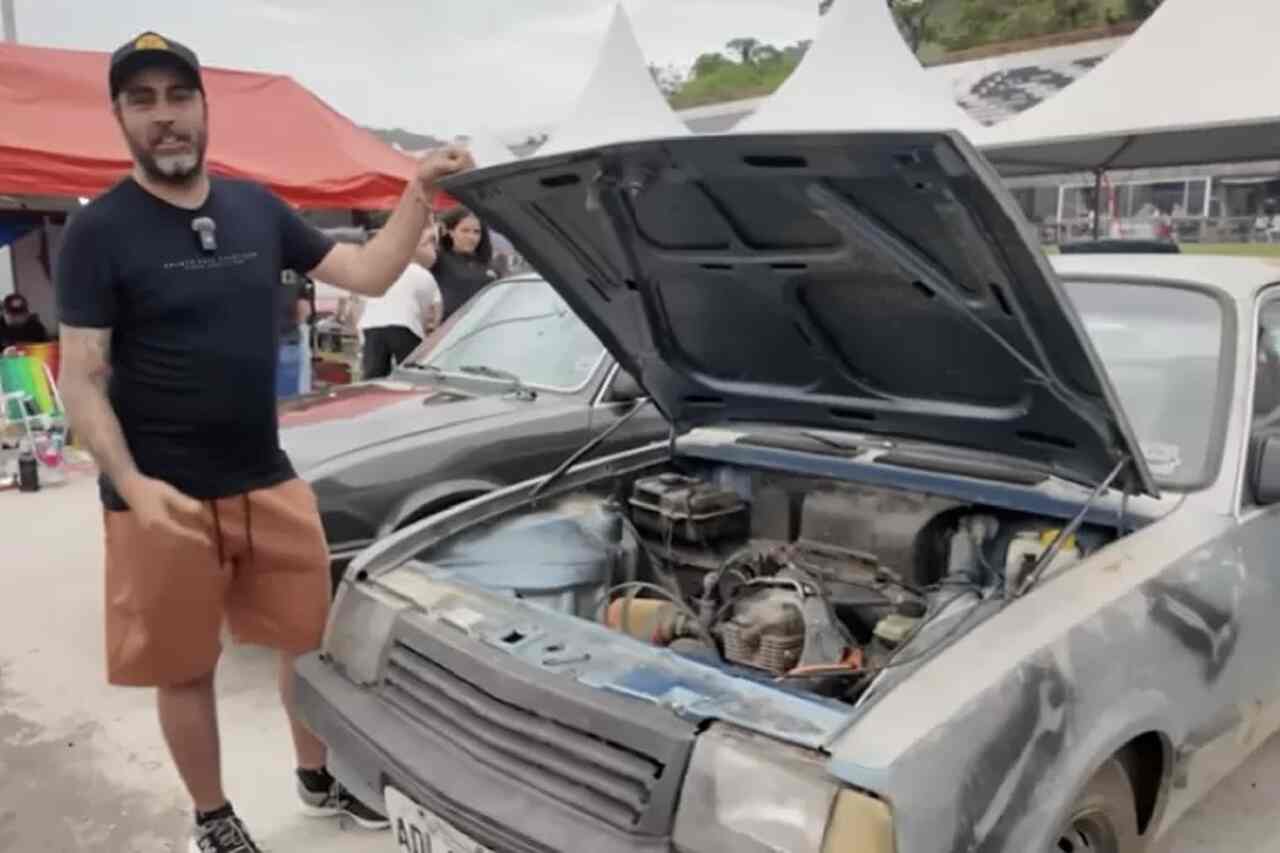
A Brazilian mechanic transformed an old Chevrolet Chevette into his own personal Frankenstein after installing a motorcycle engine under the hood and two gearboxes that add up to 30 gears.
Fagner, who owns the workshop Fagner Motos Preparações in Camboriú, Santa Catarina, Brazil, installed a CG Titan 150 motorcycle engine under the vehicle’s hood, according to a report by Brazilian outlet UOL.
The movement from this engine is routed to two gearboxes—one from the Chevette and the other from the motorcycle—and both operate simultaneously. As a result, the Frankenstein vehicle features 25 forward gears and 5 reverse gears.
According to Fagner, the engine received upgrades to the camshaft and cylinder head, as well as an increase in displacement to 190 cc. This provided a bit more power and now allows it to reach 100 km/h, as long as both fifth gears are engaged at the same time.
“Everything is done in a homemade way. In my car, I used leftover parts from both the Chevette and the motorcycle,” Fagner told the outlet. Despite being creative, this project could cause some headaches for Fagner if he decides to take it onto public roads.
That’s what Marco Fabrício Vieira says—an attorney specializing in traffic law, writer, and advisor to the São Paulo State Traffic Council (Cetran-SP). According to him, any homemade project of this kind must always comply with vehicle construction regulations.
Therefore, for Fagner to regularize the documentation and legally drive on public roads, it would be necessary to obtain a Certificate of Compliance with Traffic Legislation (CAT), with a specific code for brand, model, and version.
Only after obtaining the CAT from the National Traffic Secretariat (Senatran) could Fagner proceed with the registration and licensing process with state authorities. For that, the technical project would need to be signed by an engineer with training or certification in the mechanical field.
Ver essa foto no Instagram
