
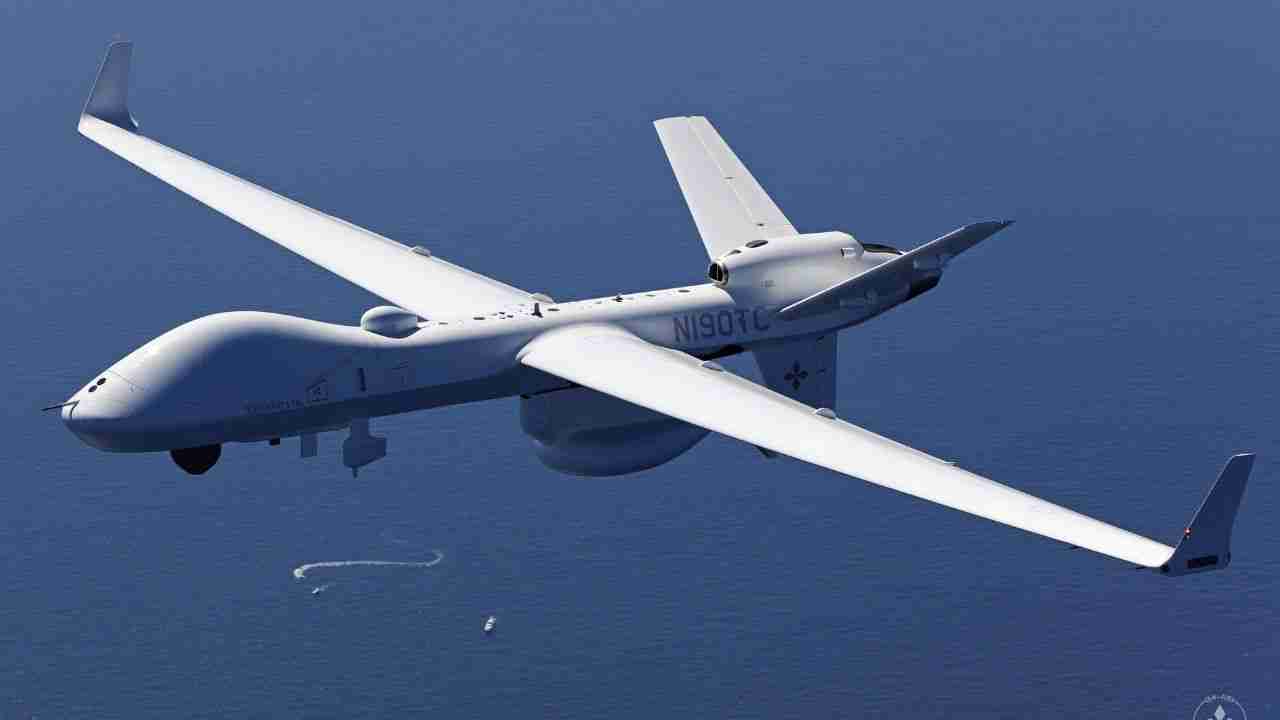
Germany has confirmed the purchase of eight MQ-9B SeaGuardian drones through NATO’s Support and Procurement Agency, expanding its participation in the allied fleet of long-endurance unmanned systems.
The contract also includes four ground control stations, with initial deliveries scheduled for 2028.
The model was selected for its advanced capabilities, such as long range, all-weather operation, and the ability to fly in non-segregated civilian airspace. The SeaGuardian also features global satellite control, de-icing systems, and sensors dedicated to maritime surveillance, as well as the option to integrate anti-submarine warfare capabilities.
According to General Atomics, the acquisition strengthens interoperability among NATO countries, particularly in integration with Germany’s fleet of P-8A maritime patrol aircraft. The company highlights that standardization of the MQ-9B facilitates joint operations, training, and the sharing of doctrine among allied forces.
The agreement was concluded under the NSPA’s MQ-9 Support Partnership program, which aims to simplify multinational procurement and the maintenance of common platforms. With this decision, Germany joins the group of nations that already operate or are incorporating different variants of the MQ-9B, consolidating the model as one of NATO’s main strategic drones.
Source: UK Defence Journal | Photo: X @GenAtomics_ASI | This content was created with the help of AI and reviewed by the editorial team
Germany and @NSPA_NATO have announced the procurement of eight MQ-9B SeaGuardian® #RPAS.
Read the news: https://t.co/PcU0opnSRL#MQ9B #UAS pic.twitter.com/jWjnin24nw
— General Atomics Aeronautical Systems, Inc (GA-ASI) (@GenAtomics_ASI) January 12, 2026
