
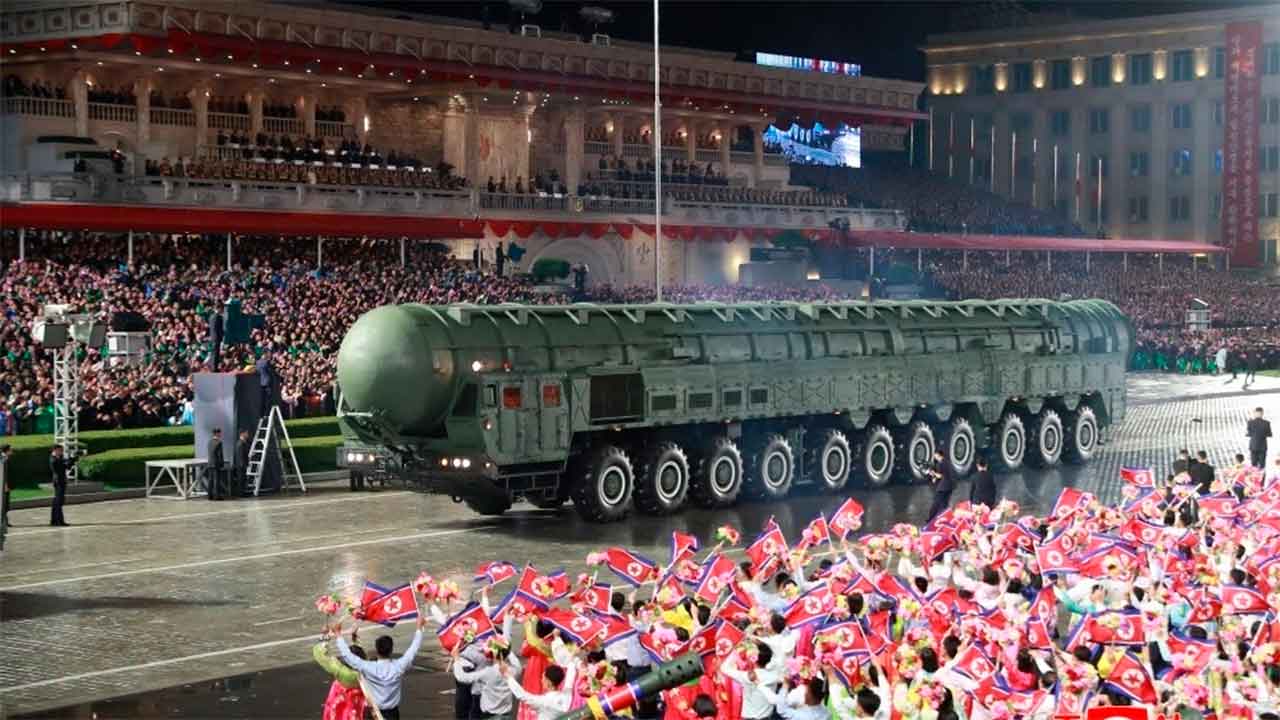
Pyongyang presents its new intercontinental ballistic missile during military parade celebrating the 80th anniversary of the Workers’ Party of Korea
North Korea unveiled for the first time its new intercontinental ballistic missile, the Hwasong-20, during a military parade marking the 80th anniversary of the Workers’ Party of Korea in Pyongyang. The event was attended by leader Kim Jong-un and official delegations from China, Russia, Vietnam, and other countries, according to Yonhap News Agency.
The Hwasong-20 is described by North Korean propaganda as “the most powerful nuclear strategic system” of the DPRK. The missile is the direct successor of the Hwasong-19 and, according to military sources, is capable of carrying multiple nuclear warheads, making interception more difficult. With a range exceeding 15,000 kilometers, the weapon could, in theory, reach targets anywhere on the continental territory of the United States.
The missile was displayed mounted on an 11-axle mobile launcher, similar to the one previously used for the Hwasong-19. Analysts note that the system enhances both mobility and the deterrence power of North Korea’s strategic arsenal.
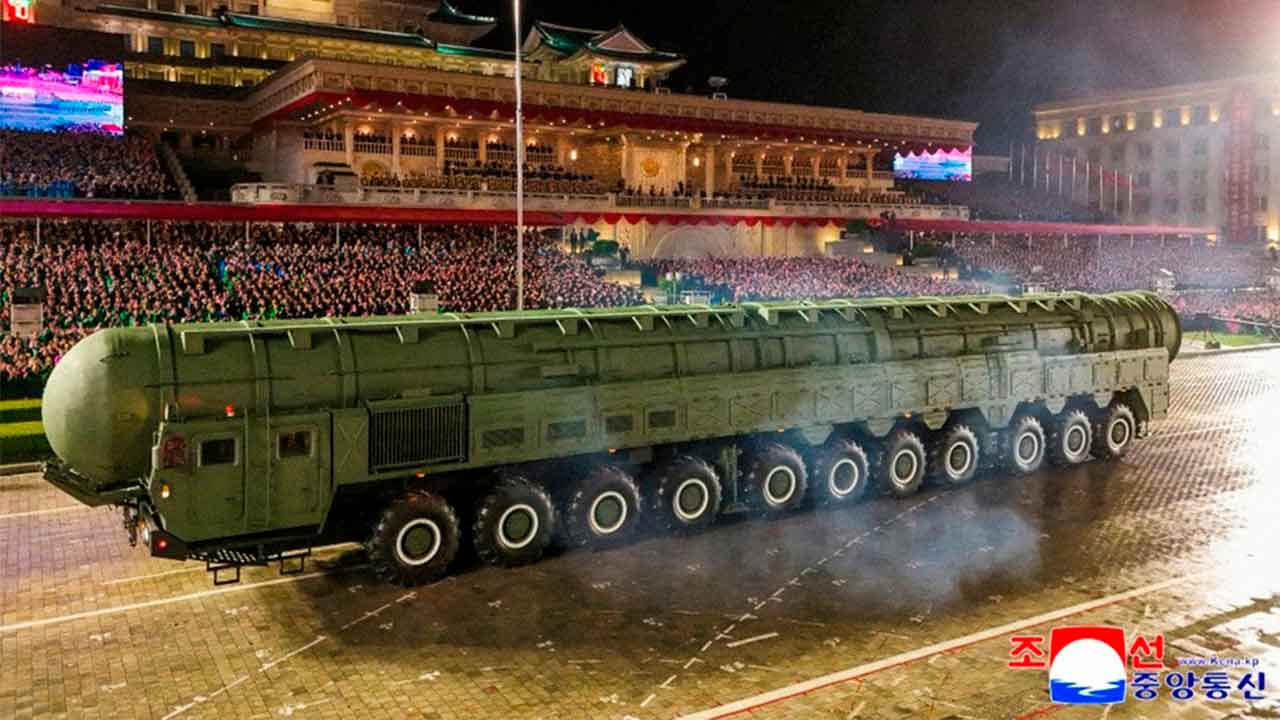
Solid-fuel engine and new weaponry showcased
In September, Kim Jong-un visited a military facility to inspect the development of a new solid-fuel engine with a thrust of 1,960 kN, designed to equip the Hwasong-20. The use of solid fuel represents a technological leap, allowing faster launches and reducing preparation time, which complicates detection by foreign surveillance systems.
In addition to the Hwasong-20, the DPRK also showcased medium- and long-range hypersonic missiles, a new Chonma-20 tank, and kamikaze drones resembling the Russian Lancet model. Another highlight was a modified KN-23 tactical missile, now equipped with a hypersonic glide vehicle similar to those used by Russia in the war against Ukraine.
Strategic message to Washington and Seoul
According to international analysts, the display of the Hwasong-20 carries symbolic and strategic significance, sending a direct message to the United States and South Korea, amid strengthening military alliances between Washington, Seoul, and Tokyo. The parade also sought to reaffirm North Korea’s nuclear power during a period of increasing international sanctions.
Sources and images: Yonhap News Agency | Militarnyi | KCNA. This content was created with the help of AI and reviewed by the editorial team.
