
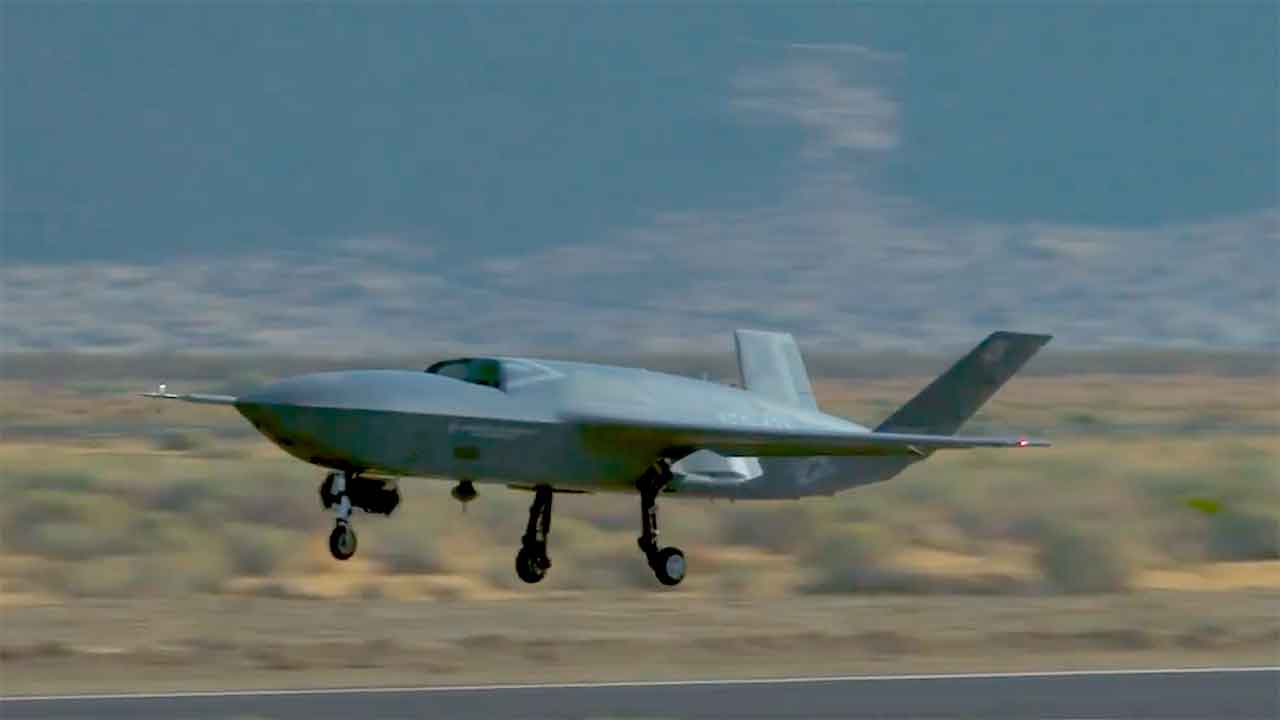
The United States Air Force Department has reached a decisive milestone in the Collaborative Combat Aircraft (CCA) program, which envisions the development of unmanned fighters to operate alongside fifth- and sixth-generation aircraft.
In less than two years after the initiative’s launch, one of the prototypes designated YFQ-42A, developed in partnership with General Atomics, completed its maiden flight at a test facility in California.
+ Click here to watch the video
According to the Air Force, the aircraft provided valuable data for assessing flight safety, operational autonomy, and mission system integration — essential steps to validate the project and accelerate its future incorporation. The program’s goal is to deploy large numbers of modular, affordable, and battlefield-relevant aircraft capable of flying alongside manned fighters.
“This milestone shows what is possible when innovative acquisition meets a motivated industry. In record time, the CCA has moved from concept to flight — proving that we can deliver combat capability at speed when we remove barriers and align around the warfighter’s needs,” stated Air Force Secretary Troy Meink.
Part of the next-generation strategy
The CCA is considered a central element of the Next Generation Air Dominance (NGAD) Family of Systems initiative, which aims to redefine US airpower with a focus on software, modularity, and open integration. The Air Force is betting on solutions developed by multiple vendors, encouraging competition to reduce risks and enable continuous upgrades of autonomous and mission systems.
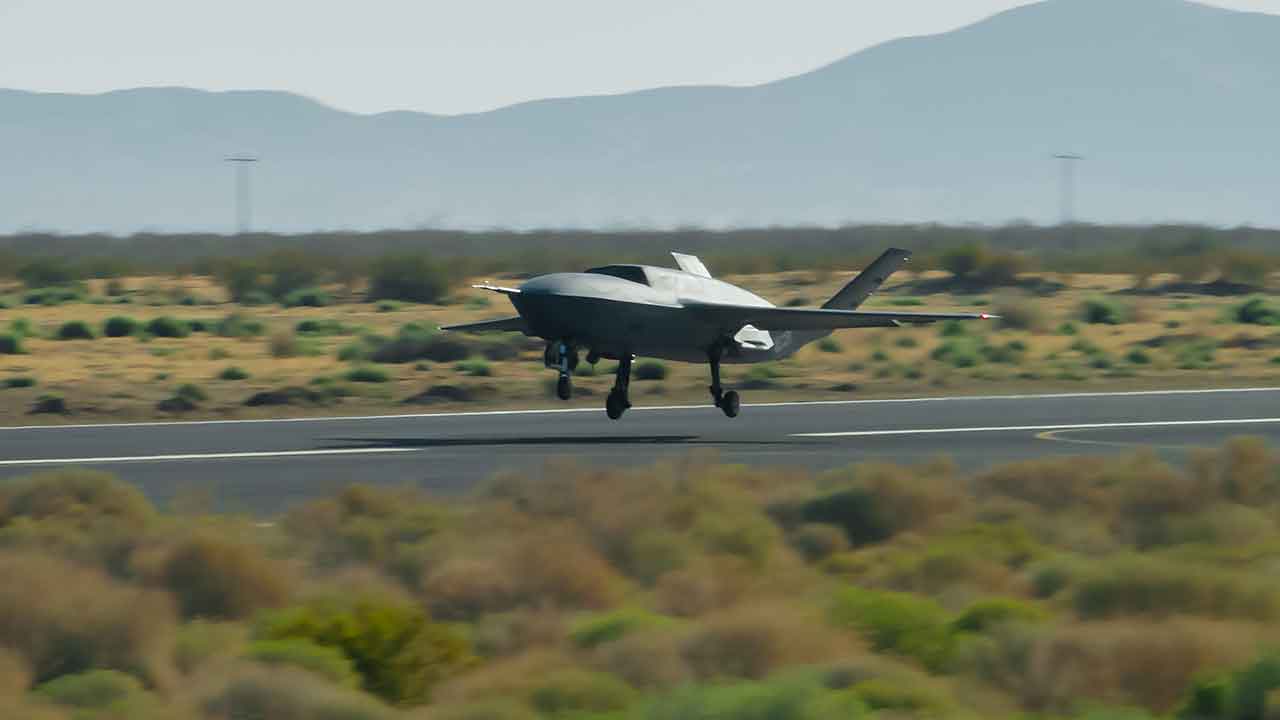
Air Force Chief of Staff General David Allvin reinforced the disruptive nature of the initiative:
“We are not just moving fast — we are learning fast. The CCA will help us rethink the battlefield, extend range, flexibility, and lethality in combat operations, and optimize warfighter performance through human-machine cooperation.”
+ Top 10 Most Produced Military Fighter Aircraft in History
Next steps
To ensure rapid delivery to the battlefield, the program runs a broad learning campaign that includes supplier-conducted tests, independent evaluations at Edwards Air Force Base (California), and operational assessments by the Experimental Operations Unit at Nellis (Nevada). This integrated approach aims to ensure that the Air Force is ready to employ the system as soon as the first production units are delivered.
Currently, General Atomics and Anduril Industries have been selected to develop representative production prototypes. The decision on full-rate production of Increment 1 is expected in fiscal year 2026.
Source and images: Official United States Air Force. This content was created with the help of AI and reviewed by the editorial team.
