
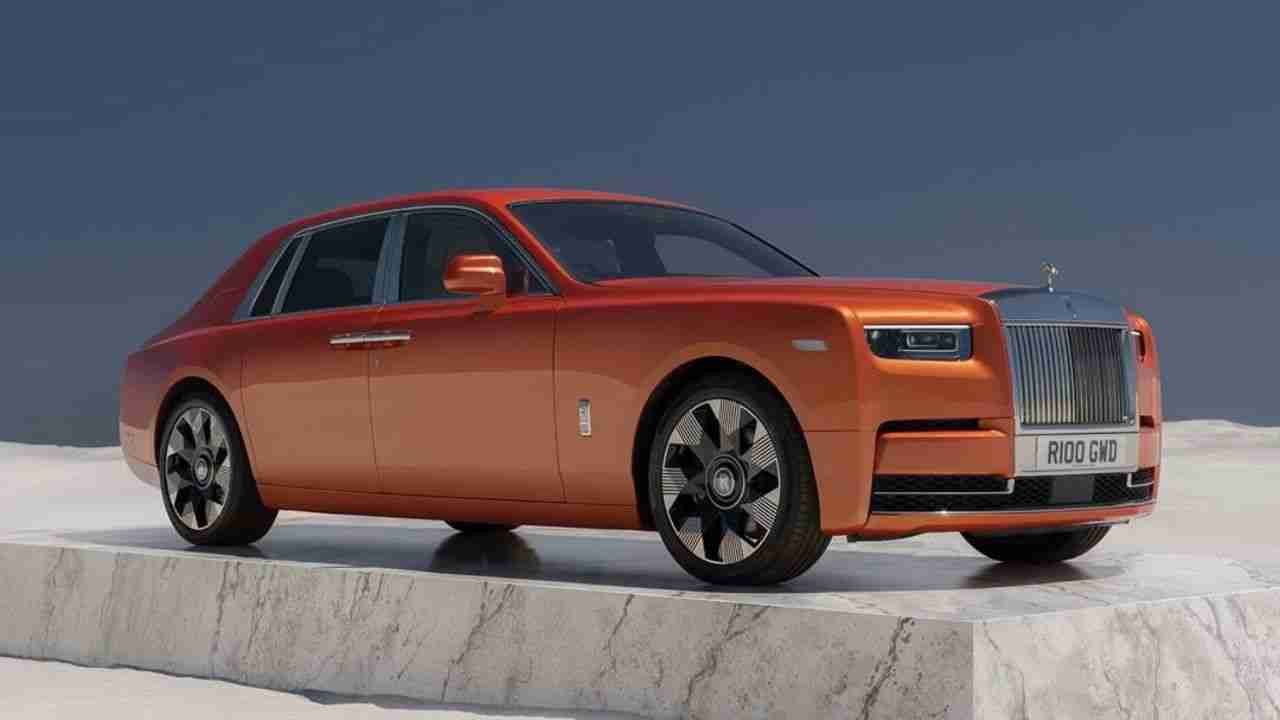
To celebrate the Phantom’s centenary, Rolls-Royce will bring together examples from all generations at the Pebble Beach Concours d’Elegance.
The Phantom is the most iconic car of the British ultraluxury brand, maintaining its relevance for almost a century and remaining in operation even after so many years.
The Phantom’s mission has always been to create “the most magnificent, desirable, and effortless car in the world,” according to CEO Chris Brownridge. Over its generations, the model has constantly evolved, adapting to the trends and technologies of each era.
During Monterey Car Week, six classic Phantoms will participate in the special class “100 Years of Phantom,” highlighting the history and legacy of the line.
Phantom I (1925–1931)
The first official Phantom, initially called New Phantom, was launched in 1925, although some earlier cars had already been named as such. These classic models were sold as chassis for custom coachbuilders, with a 7.7-liter inline-six engine and a four-speed manual transmission. The version shown, an Ascot Phaeton built in Springfield, was customized with polished aluminum and 21-inch wheels by Murphy Coachworks.
Phantom II (1929–1935)
Launched during the Great Depression, the Phantom II received an improved chassis and an updated 7.7-liter inline-six engine. With improved brakes and suspension, the Phantom Continental also emerged, a sportier and lighter version, prioritizing performance without sacrificing luxury, catering to owners who drove their own cars.
Phantom III (1936–1939)
To compete with powerful American engines, Rolls developed the Phantom III with a 7.3-liter V-12 engine, delivering up to 180 horsepower. Independent front suspension and revised steering improved handling and comfort, allowing for higher cruising speeds, while Henry Royce’s influence remained in the development of the model.
Phantom IV (1950–1956)
Produced exclusively for kings and heads of state, the Phantom IV was limited to only 18 units. Equipped with 5.7 and 6.5-liter inline-eight engines, it offered sufficient performance for parades and official events, serving monarchs like Queen Elizabeth II and General Franco.
Phantom V (1959–1968)
The Phantom V maintained its presence among monarchs and also gained fame among 1960s celebrities, including John Lennon and Elvis Presley. Powered by a 6.3-liter V-8 engine, the model featured customized limousines with features like turntables, car phones, and audio systems, reflecting the pop culture of the time.
Phantom VI (1968–1990)
The last generation sold as a chassis for coachbuilders, the Phantom VI had a limited production of 374 units. Equipped with a 6.75-liter V-8 engine, updated air conditioning systems, and hydraulic brakes, it combined classic luxury and advanced technology, maintaining the tradition of limousines and landaulets.
Phantom VII (2003–2017)
After a pause, Rolls launched the Phantom VII with a completely new design, a 6.75-liter twin-turbo V-12 engine, and adaptive air suspension. The model was available in four-door, convertible, and Fixed Head Coupé versions with a “Starlight Headliner” roof, incorporating modern luxury and imposing design.
Phantom VIII (2017–present)
The Phantom VIII is an evolution of the previous model, maintaining its imposing exterior while offering interiors with advanced technologies such as foot massages, heated pillars, and a “Gallery” for custom artworks. It also marks the return of individual and bespoke Rolls orders, with handcrafted finishes and exclusive prices.
Source: Car and Driver | Photo: Instagram @rollsroycecars | This content was created with the help of AI and reviewed by the editorial team
See this post on Instagram
