
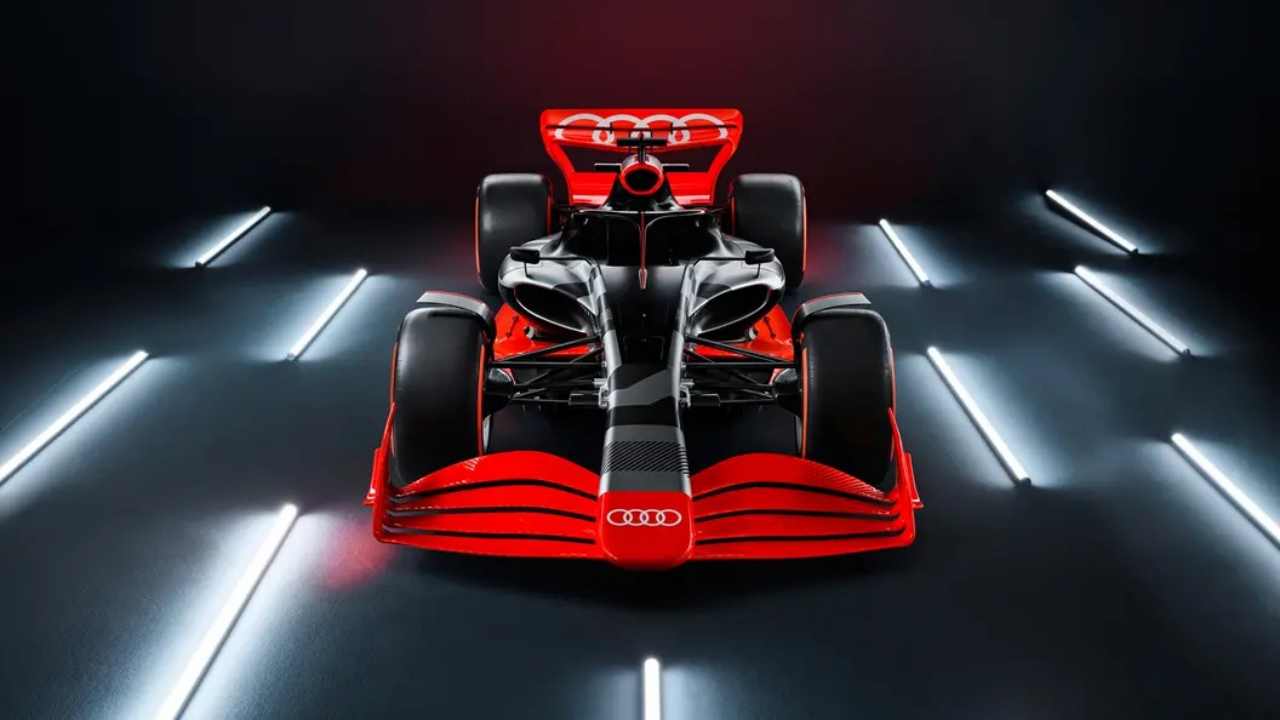
The German automaker faces doubts about its future in the top motorsport category while preparing for 2026
Audi’s entry into Formula 1 has been met with a mix of expectations and skepticism. Despite its successful history at Le Mans, some teams doubt that the brand will become a major player in F1.
Speculations about a possible retreat frequently arise in Germany — most recently with the announcement of the closure of Audi’s factory in Brussels, planned for February. Still, the company denies any intention of abandoning the project. For critics, it is hard to understand the heavy investment in F1 in the face of difficulties faced by the company’s passenger vehicle sector. However, Audi remains firm in its decision.
With the growth of F1 in recent years, the value of teams has risen. Abandoning the project now would only make sense in the face of a billion-dollar proposal. Moreover, Audi has already been part of the grid since the agreement with Sauber, signed in 2022. Although the name will officially change only in 2026, the partnership has been in place for more than two seasons.
Currently, Sauber uses Ferrari engines, but this will change in 2026 with the debut of Audi’s power unit. The development of the 1.6-liter turbo-hybrid engine, in accordance with the new rules requiring a balance between electric energy and combustion, is progressing rapidly at Audi’s technical center in Neuburg an der Donau. In June 2024, Adam Baker, the project lead, stated that the system was already operating in dynamic tests.
The driver lineup is also set: Nico Hulkenberg, coming from Haas, brings the experience Audi desires, while Brazilian Gabriel Bortoleto, 20 years old, a former McLaren developer, represents the bet on youth. CEO Gernot Dollner prioritized an emerging talent, passing over established names like Valtteri Bottas.
Off the track, the team has gone through a turbulent phase. After Frederic Vasseur’s departure to Ferrari, Andreas Seidl took over, but a conflict with Oliver Hoffmann led to both of their departures in July. Now, Mattia Binotto leads as technical and operations director, and in 2025, Jonathan Wheatley — a key figure at Red Bull — will be the new team boss.
However, the challenge on the track is great. Since the agreement was signed, Sauber has dropped from sixth place to last in the championship, signaling a setback. Carlos Sainz’s refusal to accept an offer from Audi to drive for Williams only strengthens the doubts surrounding the brand’s future in F1.
Source and images: Car Magazine / Disclosure. This content was created with the help of AI and reviewed by the editorial team
